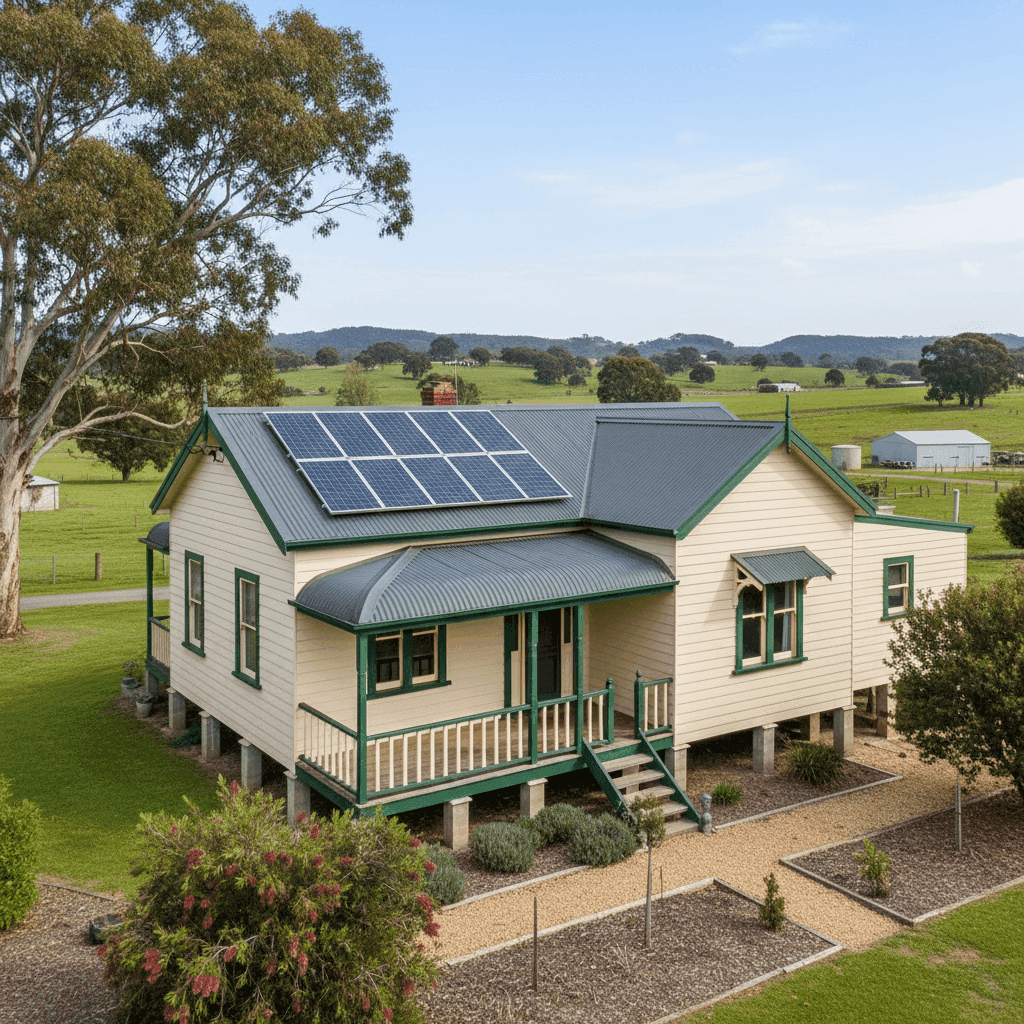
If you own a free standing home in Dumbalk North, VIC 3956, you're likely no stranger to the unique considerations that come with insuring a rural South Gippsland property. From ageing construction to bushfire-adjacent landscapes, there's a lot that insurers weigh up before landing on a premium. This article breaks down a real building insurance quote for a 4-bedroom, 2-bathroom weatherboard home in the area — and helps you understand whether the price stacks up.
---
Is This Quote Fair?
The quote in question comes in at $1,901 per year (or $187/month) for building-only cover with a $500,000 sum insured and a $2,000 building excess. Our analysis rates this as CHEAP — below average for this type of property and location.
That's a meaningful result. In a market where premiums have been climbing steadily across Victoria and nationally, landing a quote that sits well below both state and national benchmarks is genuinely good news for the homeowner. The $2,000 building excess is on the higher side, which does play a role in keeping the premium lower — but even accounting for that, the overall pricing looks competitive.
For context, you can explore broader Victoria home insurance statistics and national home insurance data to see how premiums are trending across the country.
---
How Dumbalk North Compares
While suburb-level comparison data isn't available for Dumbalk North specifically, we can draw meaningful comparisons using state and LGA-level figures:
| Benchmark | Annual Premium |
|---|---|
| This Quote | $1,901 |
| South Gippsland LGA Average | $2,250 |
| VIC State Average | $3,000 |
| VIC State Median | $2,718 |
| National Average | $5,347 |
| National Median | $2,764 |
This quote comes in $349 below the South Gippsland LGA average, $817 below the Victorian median, and a remarkable $863 below the national median. Against the national average — which is heavily influenced by high-risk areas like Far North Queensland and flood-prone regions — the saving is even more striking.
For homeowners in the South Gippsland region, this suggests the quote is well-positioned. That said, premiums vary significantly between insurers, so it's always worth checking Dumbalk North insurance stats as more localised data becomes available, and comparing multiple quotes before committing.
---
Property Features That Affect Your Premium
Several characteristics of this particular property will have influenced how insurers assessed the risk — and therefore the premium.
Weatherboard Timber Walls
Weatherboard construction is extremely common in rural Victoria, particularly in homes built mid-last century. While it has charm and character, timber is more susceptible to fire and moisture damage than brick veneer or double brick. Insurers typically rate weatherboard homes at a slightly higher risk, which can push premiums up. The fact that this quote is still below average despite this factor is a positive sign.
1955 Construction Date
A home built in 1955 is nearly 70 years old. Older homes can carry higher rebuild risk due to outdated wiring, plumbing, and structural components that may not meet modern building codes. Insurers often factor in the cost of bringing a home up to current standards during a rebuild — which is part of why a $500,000 sum insured is sensible here, even for a 105 sqm home.
Steel/Colorbond Roof
This is a genuine positive from an insurance perspective. Colorbond roofing is durable, fire-resistant, and low-maintenance — qualities that insurers favour. Compared to terracotta tiles or older corrugated iron, a Colorbond roof typically attracts a more favourable risk assessment.
Stump Foundation
Homes on stumps (also known as pier foundations) are common in older Victorian rural properties. They can be more vulnerable to subsidence and structural movement over time, and may require periodic maintenance. This is something insurers note, though it doesn't necessarily result in a significant premium increase on its own.
Solar Panels
The property has solar panels installed. These are increasingly common across Australia and are generally covered under building insurance as a fixed structure. However, it's worth confirming with your insurer exactly what's covered — particularly for storm or hail damage — as policy wording varies.
Above-Average Fittings
With above-average quality fittings throughout, the cost to repair or replace internal fixtures during a claim would be higher than a standard home. This is factored into the sum insured and can influence premiums, though it's a reflection of the home's true replacement value rather than an avoidable cost.
---
Tips for Homeowners in Dumbalk North
1. Review Your Sum Insured Annually
Construction costs in regional Victoria have risen sharply in recent years. A $500,000 sum insured may be appropriate today, but it's worth reassessing each year to make sure you wouldn't be underinsured in the event of a total loss. Use a building cost calculator or speak with a local builder to get a realistic estimate.
2. Maintain Your Weatherboard Exterior
Regular painting, sealing, and inspection of your weatherboard walls can reduce the risk of moisture ingress and rot. Some insurers may ask about the condition of the property, and well-maintained homes can attract better terms. It also helps protect your home's structural integrity over time.
3. Check Your Bushfire Risk Rating
South Gippsland has areas with elevated bushfire risk. Make sure your insurer is aware of your property's Bushfire Attack Level (BAL) rating, and check whether your policy includes adequate cover for bushfire-related damage. If your BAL rating has changed due to nearby vegetation changes, your cover may need updating.
4. Compare Quotes Before Renewal
Even if you're happy with your current premium, it pays to shop around at renewal time. The insurance market shifts regularly, and a quote that's competitive today may not be the best available next year. Use a comparison platform like CoverClub to benchmark your renewal offer against the broader market.
---
Ready to Compare?
Whether you're a first-time buyer or a long-term homeowner in Dumbalk North, making sure you have the right cover at the right price is one of the most important financial decisions you can make. CoverClub makes it easy to compare home insurance quotes from a range of insurers — so you can see exactly where your premium sits and whether you're getting a fair deal. Get a quote today and take the guesswork out of home insurance.