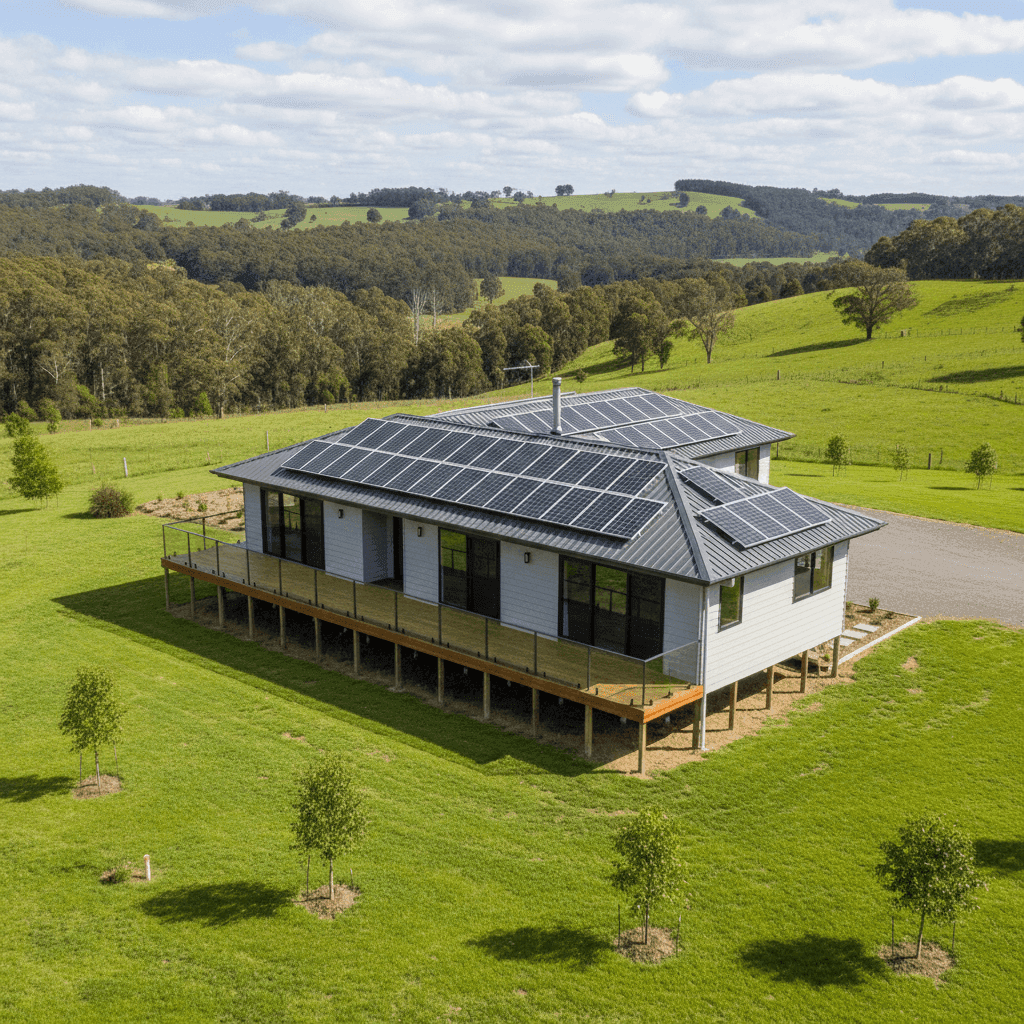
Nestled in the rolling green hills of South Gippsland, Dumbalk North is a quiet rural locality that offers a peaceful lifestyle — but like any regional property, insuring a home here comes with its own set of considerations. This article breaks down a real home and contents insurance quote for a four-bedroom free standing home in Dumbalk North VIC 3956, rated Fair (Around Average), and helps you understand what's driving the cost and how it stacks up against local, state, and national benchmarks.
---
Is This Quote Fair?
The annual premium for this property came in at $3,430 per year (or $329/month), covering a building sum insured of $888,000 and $120,000 in contents. Both the building and contents excess are set at $1,000.
Our price rating for this quote is Fair — Around Average. That means the premium isn't a standout bargain, but it's not excessive either. Given the property's characteristics — a 1940s-era home on stumps with Hardiplank Hardiflex cladding and a Colorbond roof — a "fair" rating is a reasonable outcome. Older homes and rural locations often attract higher premiums due to rebuild complexity and proximity to services like fire brigades.
At $3,430, this quote sits 14% above the Victorian state average of $3,000/year and 26% above the state median of $2,718/year. However, it's well below the national average of $5,347/year, which is heavily influenced by high-risk areas in Queensland and Western Australia. Compared to the national median of $2,764/year, it's somewhat higher — but that gap is largely explained by the property's size, age, and insured values.
---
How Dumbalk North Compares
While suburb-level data for Dumbalk North isn't available in sufficient volume to draw statistically robust conclusions, we can look at the broader regional and state picture.
| Benchmark | Premium |
|---|---|
| This Quote | $3,430/yr |
| LGA Average (South Gippsland) | $2,250/yr |
| VIC State Average | $3,000/yr |
| VIC State Median | $2,718/yr |
| National Average | $5,347/yr |
| National Median | $2,764/yr |
The most striking comparison here is against the South Gippsland LGA average of $2,250/year. This quote is roughly 52% above the LGA average, which is a meaningful gap. That said, LGA averages include a wide mix of properties — smaller homes, newer builds, and lower sum-insured values — so a direct comparison isn't always apples-to-apples. A 205 sqm home with a $888,000 building sum insured is likely larger and more valuable than the typical property in the LGA dataset.
For a fuller picture of what homeowners across Victoria are paying, visit the VIC insurance stats page, or explore national home insurance data to see how different states compare. You can also check the Dumbalk North suburb stats page as more data becomes available for this postcode.
---
Property Features That Affect Your Premium
Several characteristics of this property have a direct influence on what insurers charge. Here's what matters most:
Age of Construction (1940)
This home was built in 1940, making it over 80 years old. Older homes often cost more to insure because they may contain materials that are expensive or difficult to source for repairs, and their structural systems (like plumbing and wiring) may not meet modern standards. Insurers factor in the higher likelihood of maintenance-related claims.
Foundation: Stumps
Homes on stump foundations — common in rural Victoria — can be more susceptible to movement, pest damage, and moisture-related issues. This can influence both the rebuild cost estimate and the insurer's risk assessment.
External Walls: Hardiplank Hardiflex
Hardiplank (fibre cement sheeting) is a durable and fire-resistant cladding material, which is generally viewed positively by insurers — particularly in bushfire-prone regions like parts of Gippsland. This may help moderate the premium compared to timber-clad homes.
Roof: Steel / Colorbond
Colorbond roofing is another feature that works in the homeowner's favour. It's low-maintenance, durable, and performs well in high-wind and fire conditions. Insurers typically regard metal roofing more favourably than older tile or asbestos sheeting.
Solar Panels
The presence of solar panels adds to the replacement value of the property and may marginally increase the premium. Panels need to be covered under the building policy, and their installation on the roof can also introduce risks around water ingress if not properly maintained.
Ducted Climate Control
Ducted heating and cooling systems are a significant asset, and their replacement cost is factored into the building sum insured. A system failure or damage during a storm or fire can be costly to repair, which is reflected in the premium.
Rural Location
Properties in rural localities like Dumbalk North may be further from emergency services, including fire stations. This can increase response times in the event of a fire, which insurers account for in their risk models.
---
Tips for Homeowners in Dumbalk North
Whether you're reviewing your current policy or shopping for a new one, here are four practical steps to make sure you're getting the best value.
1. Review Your Building Sum Insured Carefully
At $888,000, the building sum insured on this quote is substantial. It's worth using an independent building cost calculator (many insurers provide these) to verify this figure reflects the actual cost to rebuild — not the market value of the land. Over-insuring can inflate your premium unnecessarily, while under-insuring leaves you exposed.
2. Ask About Bushfire and Rural Risk Discounts
Some insurers offer discounts for homes that have undertaken bushfire preparation measures — such as ember guards, cleared vegetation zones, or ember-proof vents. Given Gippsland's fire history, demonstrating proactive risk mitigation could work in your favour.
3. Consider Bundling Building and Contents
This quote already combines home and contents cover, which is often the most cost-effective approach. Keeping both with the same insurer can simplify claims and sometimes attract a multi-policy discount. Just make sure the contents sum of $120,000 accurately reflects what you own — it's easy to underestimate.
4. Compare at Renewal Time
Insurers are not obligated to offer their most competitive rate to existing customers. Loyalty doesn't always pay in the insurance market. Before renewing, take 10 minutes to compare quotes at CoverClub to see whether a better deal is available for your specific property and circumstances.
---
Ready to Compare?
If you're a homeowner in Dumbalk North or anywhere across South Gippsland, it pays to shop around. CoverClub makes it easy to compare home and contents insurance quotes tailored to your property. Get a quote today at CoverClub and find out whether you could be paying less — or whether your current cover is actually doing a good job.