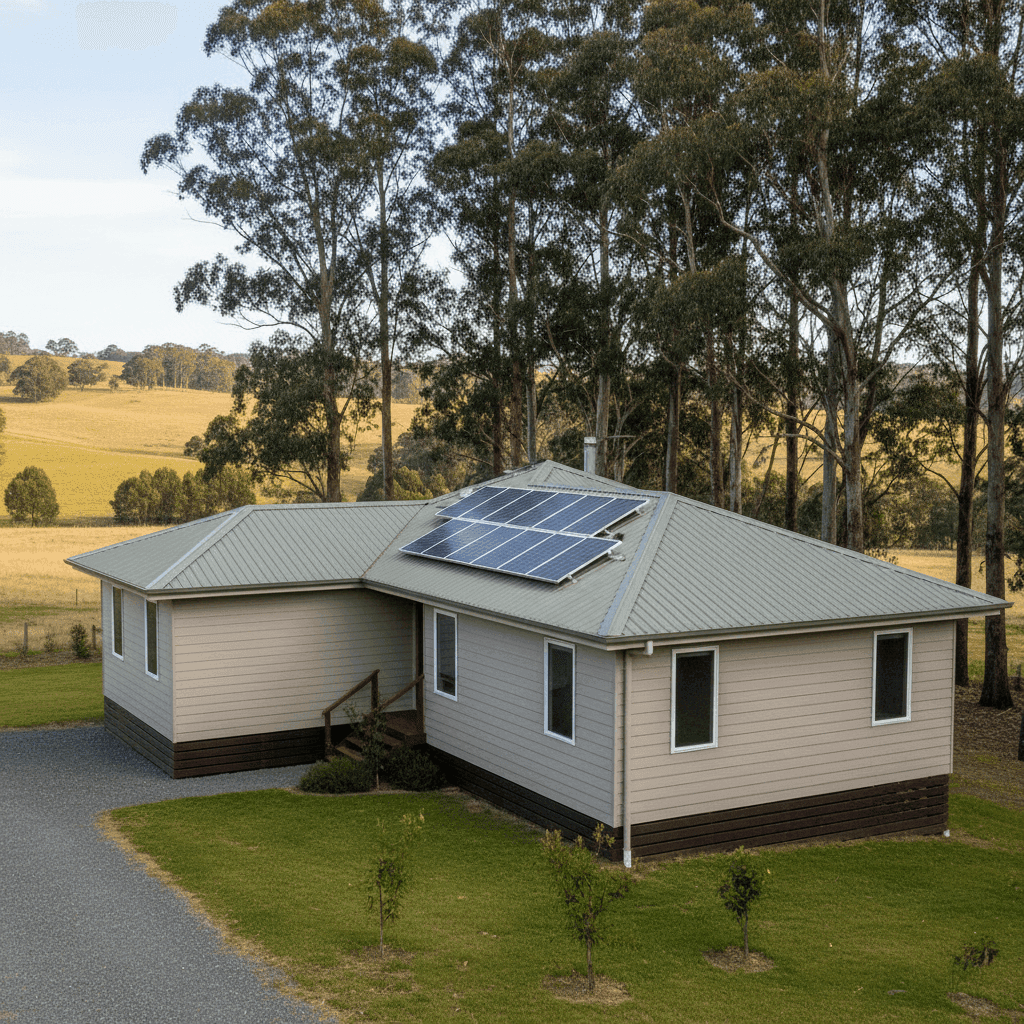
If you own a free standing home in Dumbalk North, VIC 3956, you're likely no stranger to the unique considerations that come with rural and semi-rural property ownership in South Gippsland. From ageing construction to bushfire-adjacent landscapes, the factors that shape your home insurance premium are numerous — and understanding them can make a real difference to what you pay each year.
This article breaks down a real home and contents insurance quote for a four-bedroom, one-bathroom free standing home in Dumbalk North, comparing it against local, state, and national benchmarks to help you understand whether you're getting a fair deal.
---
Is This Quote Fair?
The annual premium for this property comes in at $3,509 per year (or $336 per month), covering a building sum insured of $888,000 and contents valued at $151,000, each with a $1,000 excess.
Our price rating for this quote is Expensive — above average. That assessment is based on how the premium stacks up against comparable policies across Victoria and the broader Australian market.
To be clear, "expensive" doesn't necessarily mean you're being ripped off — it means this quote is sitting above what most homeowners in comparable situations are paying. Given the property's specific characteristics (more on those below), some elevation in price is understandable, but it's still worth exploring whether a better rate is available elsewhere.
---
How Dumbalk North Compares
Unfortunately, there isn't enough suburb-level data to give a precise Dumbalk North average, but we can draw meaningful comparisons from the surrounding area and broader benchmarks. You can explore available local data at the Dumbalk North insurance stats page.
Here's how this quote measures up:
| Benchmark | Premium |
|---|---|
| This Quote | $3,509/yr |
| LGA Average (South Gippsland) | $2,250/yr |
| VIC State Average | $3,000/yr |
| VIC State Median | $2,718/yr |
| National Average | $5,347/yr |
| National Median | $2,764/yr |
A few things stand out here. Against the South Gippsland LGA average of $2,250/yr, this quote is notably higher — roughly 56% above what local homeowners typically pay. It also exceeds both the Victorian state average and median, sitting $509 above the state average and nearly $800 above the state median.
The one silver lining: this quote is comfortably below the national average of $5,347/yr, which is partly driven up by high-risk zones in Queensland and Western Australia. So while this quote isn't cheap by Victorian standards, it's far from the worst-case scenario nationally.
The elevated premium relative to the South Gippsland LGA average is worth investigating. It may reflect the specific risk profile of this property rather than the insurer simply overcharging — but that's exactly why comparing quotes matters.
---
Property Features That Affect Your Premium
Several characteristics of this home are likely contributing to the above-average premium. Here's what insurers are likely factoring in:
Age of Construction (1940)
A home built in 1940 is over 80 years old. Older homes carry higher risk in insurers' eyes — ageing plumbing, wiring, and structural elements can all increase the likelihood of a claim. Replacement costs for period-era construction can also be harder to estimate, which may push up the sum insured.
Hardiplank/Hardiflex External Walls
Hardiplank (also known as Hardiflex) is a fibre cement cladding product that's generally considered a moderate-risk material. It performs reasonably well in fire conditions compared to timber weatherboard, but it's not as resilient as brick veneer or full brick. Some insurers price this material at a slight premium.
Stumped Foundation
Homes on stumps (timber or concrete piers) are common in older Victorian rural properties. While this construction style is well-suited to the terrain, it can be more vulnerable to certain events — such as subsidence, flooding underneath, or pest damage — which insurers factor into their risk models.
Solar Panels
The presence of solar panels adds to the insurable value of the property and introduces specific risks (electrical faults, storm damage, fire risk at the inverter). This is a relatively minor premium driver but worth noting.
Ducted Climate Control
Ducted systems are expensive to repair or replace, and their presence typically increases the contents or building sum insured. This is reflected in the overall premium.
Building Sum Insured ($888,000)
This is a substantial sum insured for a 205 sqm home, equating to roughly $4,332 per square metre. For a property of this age and construction type in regional Victoria, that's on the higher end — though it may reflect the genuine cost of rebuilding with period-appropriate materials and finishes. It's worth periodically reviewing your sum insured to ensure it's accurate and not over-inflated.
---
Tips for Homeowners in Dumbalk North
1. Shop Around — Seriously
The gap between this quote and the South Gippsland LGA average is significant. Even if some of that difference is justified by property-specific risk factors, it's highly likely that competing insurers will price this risk differently. Use a comparison tool like CoverClub to get multiple quotes side by side.
2. Review Your Sum Insured
At $888,000 for a 205 sqm home, it's worth double-checking whether your building sum insured reflects the actual cost to rebuild — not the market value of the land. Over-insuring doesn't pay out more in a claim but does increase your premium. Consider using a building cost calculator or speaking with a quantity surveyor.
3. Consider Raising Your Excess
Both the building and contents excess on this policy sit at $1,000. Opting for a higher excess — say $2,500 or $5,000 — can meaningfully reduce your annual premium. This strategy works well if you have some savings set aside and want to lower your ongoing costs.
4. Maintain the Property Proactively
For older homes on stumps with fibre cement cladding, regular maintenance is both a safety measure and an insurance strategy. Insurers may decline claims related to gradual deterioration or lack of upkeep. Keep gutters clear, check stumps for rot or pest damage, and ensure your electrical system has been inspected in recent years — especially important for a home of this era.
---
Ready to Find a Better Rate?
Whether this quote is the best available or there's a cheaper option out there, the only way to know for certain is to compare. CoverClub makes it easy to see how your premium stacks up and explore alternatives — all in one place. Get a home insurance quote today and see what Dumbalk North homeowners could be saving.