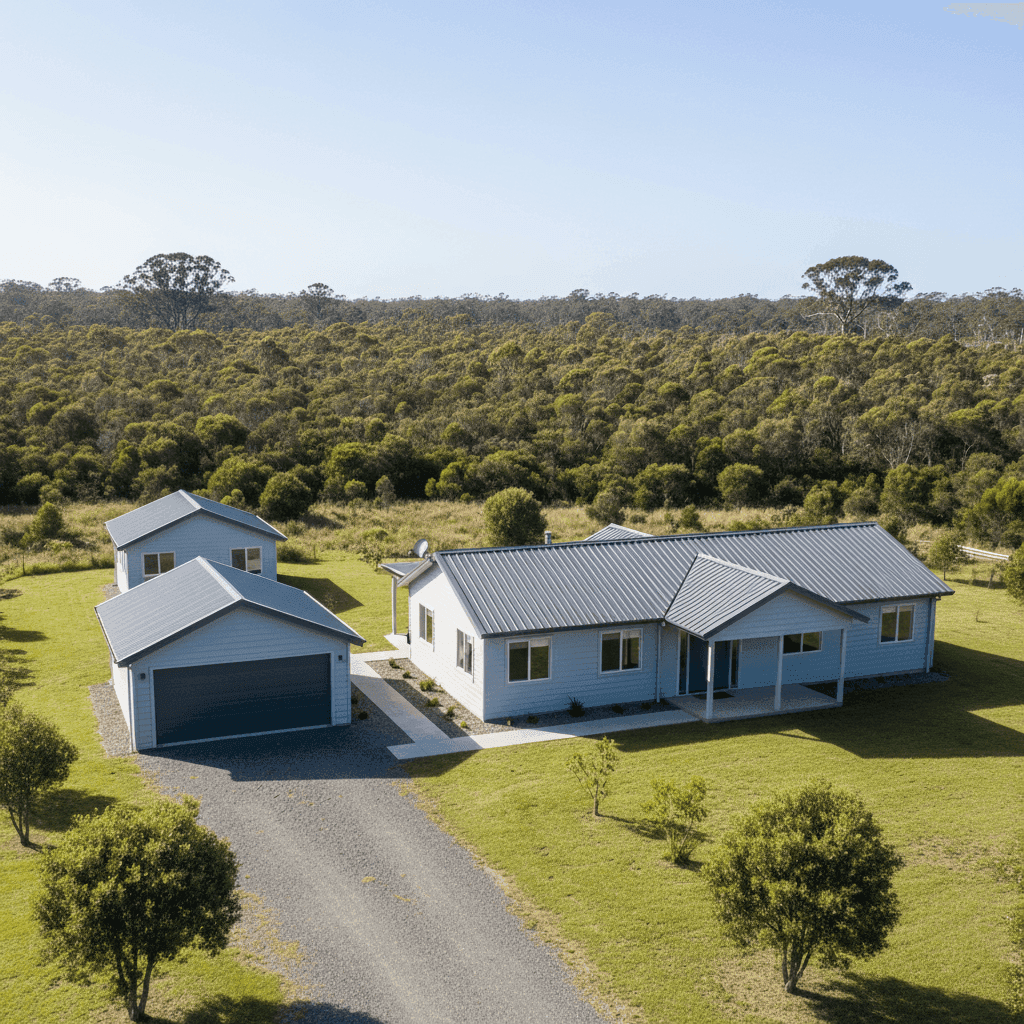
Dunalley is a small coastal township on the Forestier Peninsula in southeastern Tasmania — a place known for its stunning scenery, tight-knit community, and the iconic Dunalley Canal. It's also a suburb that has faced its share of natural challenges, which makes getting the right home insurance not just a smart financial decision, but a genuinely important one. This article breaks down a real home and contents insurance quote for a 3-bedroom free standing home in Dunalley (TAS 7177), rated Fair (Around Average), and puts it in context against local, state, and national benchmarks.
---
Is This Quote Fair?
The annual premium for this quote comes in at $2,221 per year (or $206/month), covering both building (sum insured: $700,000) and contents ($20,000). The building excess is $5,000 and the contents excess is $2,000.
Our price rating for this quote is Fair — Around Average, and the numbers back that up. At $2,221/yr, this quote sits just above the Dunalley suburb average of $2,149/yr and median of $2,110/yr — meaning it's slightly on the higher side of typical local pricing, but well within the normal range. Crucially, it falls comfortably below the suburb's 75th percentile of $2,655/yr, so you're not being overcharged relative to what others in the area are paying.
For a property with a $700,000 building sum insured — which is a substantial coverage amount — a premium of $2,221 represents reasonable value. Higher sums insured naturally attract higher premiums, so context matters here.
---
How Dunalley Compares
To understand whether this quote is genuinely competitive, it helps to zoom out and look at the broader picture.
| Benchmark | Premium |
|---|---|
| This quote | $2,221/yr |
| Dunalley suburb average | $2,149/yr |
| Dunalley suburb median | $2,110/yr |
| Dunalley 25th percentile | $1,420/yr |
| Dunalley 75th percentile | $2,655/yr |
| Tasman LGA average | $2,982/yr |
| TAS state average | $2,814/yr |
| TAS state median | $2,326/yr |
| National average | $5,347/yr |
| National median | $2,764/yr |
A few things stand out here. First, this quote is significantly cheaper than the Tasman LGA average of $2,982/yr — a difference of over $760 annually. That's meaningful savings for a household budget.
Second, when compared to the broader Tasmanian average of $2,814/yr, this quote comes in roughly $600 cheaper — a solid result. Tasmania as a state tends to have elevated premiums relative to many other parts of the country due to factors like bushfire exposure and older housing stock, so landing below the state average is a good outcome.
Third, against the national average of $5,347/yr, this quote looks very competitive indeed. Australia's national average is heavily skewed by high-risk regions in Queensland and Western Australia (cyclone and flood zones), so a direct comparison isn't entirely apples-to-apples — but it does illustrate that Dunalley homeowners are generally paying less than many of their mainland counterparts.
The suburb sample size of 33 quotes gives us a reasonable dataset to draw from, though it's worth noting that Dunalley is a small community, so individual property characteristics can cause premiums to vary more than they might in a larger suburb.
---
Property Features That Affect Your Premium
Several characteristics of this property influence the premium, and it's worth understanding how each one plays a role.
Weatherboard wood external walls are a common construction type in Tasmania, particularly in homes built around the turn of the millennium. While weatherboard homes have a charming aesthetic, insurers typically view timber-clad properties as carrying a slightly higher fire risk than brick or rendered alternatives. This can nudge premiums upward compared to masonry construction.
Steel/Colorbond roofing is generally viewed favourably by insurers. It's durable, resistant to ember attack, and holds up well in high-wind events — all positives from a risk assessment perspective.
Slab foundation is a straightforward and stable foundation type that doesn't introduce the subsidence or moisture concerns sometimes associated with older stumped or suspended floor systems. This works in the homeowner's favour.
Timber and laminate flooring is noted as part of the property's contents and fittings profile. While flooring type has a modest impact on contents valuation, it's worth ensuring your contents sum insured accounts for the replacement cost of quality timber flooring if it's included in your contents rather than the building policy.
Ducted climate control is a feature that adds value to the property and is relevant to both building and contents coverage. Ducted systems can be expensive to repair or replace, so it's important to confirm with your insurer whether the system is covered under the building policy (typically yes, if it's fixed to the structure) and to what limit.
The granny flat is a significant factor. Additional dwellings on a property can affect how insurers assess risk and coverage scope. Homeowners should confirm explicitly with their insurer whether the granny flat structure, and any contents within it, are covered under the primary policy — or whether a separate or extended policy is required.
The property's non-cyclone risk classification is a positive for premium pricing. Dunalley sits outside designated cyclone zones, removing one of the more significant premium loading factors seen in northern Australian markets.
---
Tips for Homeowners in Dunalley
1. Review your granny flat coverage carefully. Not all home insurance policies automatically extend full coverage to secondary dwellings. Contact your insurer directly to confirm what's included for the granny flat — both structurally and for any contents inside it. You may need to increase your sum insured or add an endorsement.
2. Consider bushfire preparedness as a premium lever. Dunalley has a well-documented history with bushfire, most notably the devastating 2013 fires. Insurers assess bushfire risk based on proximity to vegetation and fire danger ratings. Taking active steps to reduce fuel loads around your property, installing ember guards, and maintaining defensible space can sometimes support better premium outcomes at renewal — and more importantly, can protect your home.
3. Revisit your building sum insured annually. With a sum insured of $700,000 on a 130 sqm home, it's worth ensuring this figure reflects current construction costs rather than market value. Building costs in Tasmania have risen considerably in recent years. Tools like the Cordell Sum Sure calculator can help you estimate an appropriate rebuild cost so you're not underinsured.
4. Compare quotes before each renewal. This quote is rated Fair, which means there may be room to find a more competitive price. Insurers reprice risk differently, and the gap between the cheapest and most expensive quotes in Dunalley spans over $1,200 (from the 25th to 75th percentile). Shopping around at renewal is one of the simplest ways to avoid overpaying.
---
Find a Better Deal with CoverClub
Whether you're renewing your current policy or shopping for the first time, comparing quotes is the fastest way to make sure you're getting fair value. CoverClub makes it easy to see how your premium stacks up against others in your suburb and across Tasmania. Get a home insurance quote today and find out if you could be paying less — without sacrificing the cover you need.