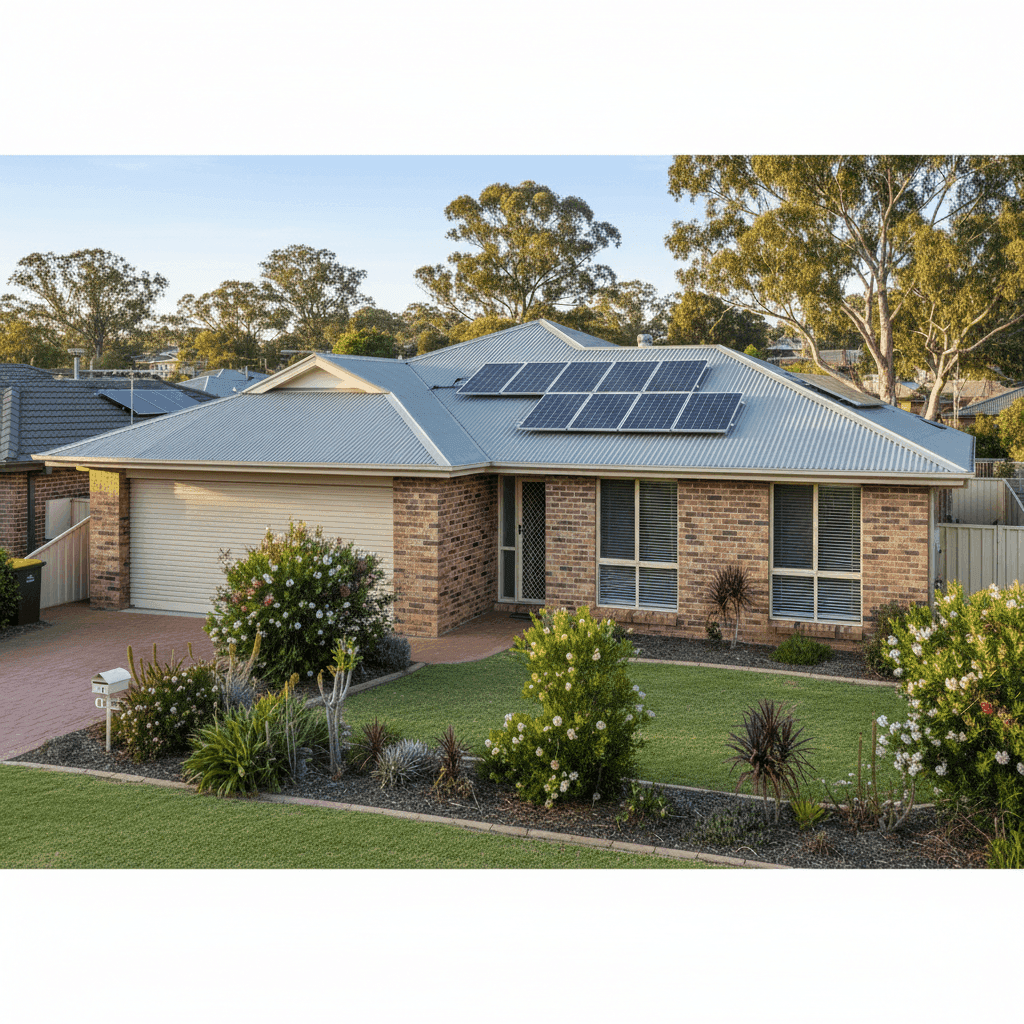
Dunbogan is a quiet coastal village on the mid-north coast of New South Wales, sitting alongside the Camden Haven River near Laurieton. It's a popular spot for families and retirees alike, drawn by the relaxed lifestyle and natural surroundings. For owners of free standing homes in the area, understanding what drives home insurance costs — and whether a given quote represents genuine value — is an important part of protecting one of your most significant assets.
This article breaks down a real home and contents insurance quote for a four-bedroom, three-bathroom free standing home in Dunbogan, comparing it against local, state and national benchmarks so you can make an informed decision.
---
Is This Quote Fair?
The annual premium for this property comes in at $4,544 per year (or $454/month), covering both building and contents. The building is insured for $1,200,000, with $100,000 in contents cover — a combination that reflects a well-appointed, above-average home.
Our pricing analysis rates this quote as Fair (Around Average) — which, in context, is actually a reasonably positive outcome for a property in this part of coastal NSW.
To understand why, it helps to look at the spread of quotes across Dunbogan. The suburb's median premium sits at $4,206/year, meaning this quote is only modestly above the midpoint. The 75th percentile reaches $5,723/year, so a significant portion of homeowners in the area are paying considerably more. At the same time, the 25th percentile sits at $2,995/year — so cheaper options do exist, though they may reflect lower sums insured or different coverage structures.
The suburb average of $10,169/year is notably high, likely skewed by a small number of very high-value or high-risk properties in the sample (the dataset includes 18 quotes). When averages diverge significantly from medians like this, it's usually a sign of outliers pulling the figure upward — the median is generally the more reliable reference point for typical homeowners.
---
How Dunbogan Compares
Zooming out to a broader view paints an interesting picture. You can explore the full data on the Dunbogan suburb stats page.
| Benchmark | Average Premium | Median Premium |
|---|---|---|
| Dunbogan (suburb) | $10,169/yr | $4,206/yr |
| Mid-Coast LGA | $4,463/yr | — |
| NSW (state) | $3,801/yr | $3,410/yr |
| National | $2,965/yr | $2,716/yr |
At $4,544/year, this quote sits above the NSW state average of $3,801 and well above the national average of $2,965. However, it's broadly in line with the Mid-Coast LGA average of $4,463 — suggesting that elevated premiums are a regional norm rather than something specific to this property or insurer.
Compared to national benchmarks, coastal NSW properties consistently attract higher premiums. This reflects a combination of factors including proximity to waterways, exposure to severe weather events, and higher rebuilding costs in regional areas where trades and materials can be harder to source.
For a property of this size and quality — 214 sqm, above-average fittings, insured for $1.2 million — the quote is defensible and sits comfortably within the expected range for the region.
---
Property Features That Affect Your Premium
Several characteristics of this home have a meaningful influence on the premium calculation.
Brick veneer construction is generally viewed favourably by insurers. While not as robust as full brick, brick veneer offers solid weather resistance and is less susceptible to fire than timber-framed homes with cladding. This typically translates to lower premiums compared to less durable wall types.
Steel/Colorbond roofing is another positive factor. Colorbond is durable, low-maintenance, and performs well in high-wind events — a relevant consideration for coastal properties. Insurers tend to price this more competitively than older tile or fibrous cement roofing.
Slab foundation is standard for homes of this era and construction type, and doesn't typically attract loading from insurers. It's considered a stable, low-risk foundation type.
Solar panels, however, do add a layer of complexity. Panels increase the replacement value of the roof structure and introduce additional electrical components that can be damaged in storms or hail events. Some insurers include solar panels under building cover automatically; others require specific endorsement. It's worth confirming exactly what your policy covers in this regard.
Above-average fittings — think quality kitchen appliances, stone benchtops, premium bathroom fixtures — directly influence the building sum insured and contents value. A higher sum insured means a higher premium, but it also means you're protected for the true cost of reinstatement rather than a shortfall that could leave you out of pocket after a claim.
The 1990 construction year is worth noting. Homes built around this period may have aging electrical wiring, plumbing or roofing materials that some insurers factor into their risk assessment. A well-maintained home of this age shouldn't attract significant loading, but it's a good reason to keep records of any renovations or upgrades.
---
Tips for Homeowners in Dunbogan
1. Review your sum insured regularly. Building costs have risen sharply in recent years, particularly in regional NSW where labour and materials can be scarce after major weather events. The $1,200,000 sum insured here is substantial, but it's worth cross-checking against a current building cost calculator to ensure it reflects today's rebuild costs — not what it would have cost five years ago.
2. Clarify solar panel coverage. Ask your insurer specifically whether your solar panels are covered under the building policy, what events are included (storm, hail, fire), and whether there's a separate sub-limit. Don't assume they're automatically included.
3. Don't overlook contents underinsurance. A $100,000 contents sum may be appropriate, but it's easy to underestimate the cumulative value of furniture, electronics, clothing, appliances and personal items. Walk through each room and tally up replacement costs — you might be surprised.
4. Compare quotes before renewing. Insurers adjust their pricing models regularly, and loyalty doesn't always translate to better rates. Even if your current premium feels reasonable, it's worth running a comparison at renewal time. Get a fresh quote at CoverClub to see how your current insurer stacks up against the broader market.
---
Ready to Compare?
Whether you're a first-time buyer or a long-term Dunbogan resident, comparing home insurance quotes is one of the simplest ways to ensure you're getting the right cover at a fair price. CoverClub makes it easy to see real quotes side by side, with transparent data on suburb and state averages to help you benchmark your options. Start your comparison today and take the guesswork out of home insurance.