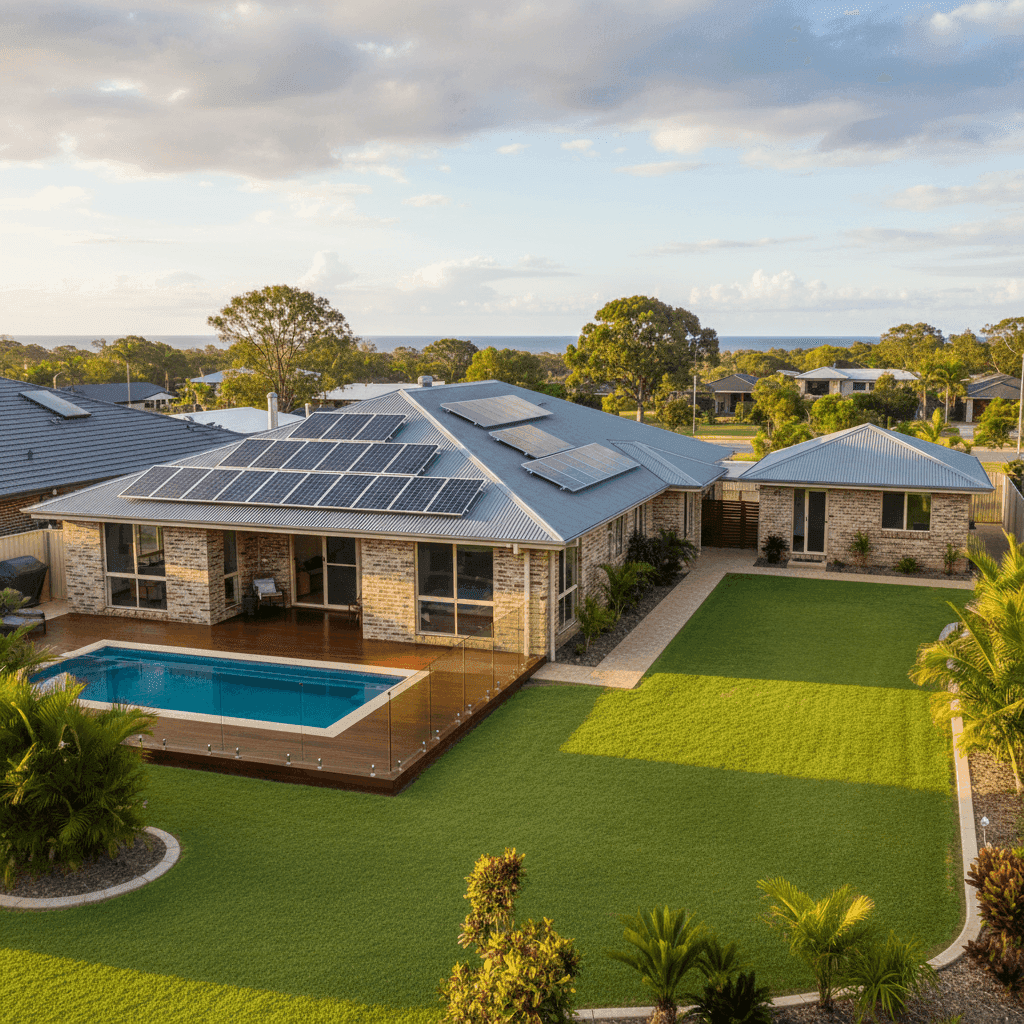
If you own a free standing home in Dundowran Beach, QLD 4655, you'll know that finding the right home insurance at a fair price isn't always straightforward. Coastal lifestyle communities like Dundowran Beach — nestled along the Fraser Coast — come with their own unique mix of risk factors and property characteristics that insurers weigh carefully when calculating premiums. In this article, we break down a real home and contents insurance quote for a four-bedroom, two-bathroom brick veneer home in the area, and put it in context against local, state, and national benchmarks.
---
Is This Quote Fair?
The quote in question comes in at $3,095 per year (or $290 per month), covering both building and contents for a home insured at $976,000 in building value and $50,000 in contents. The building and contents excess is each set at $1,000.
Our price rating for this quote is CHEAP — below average for the suburb. That's genuinely good news for the homeowner. Based on data from 29 quotes collected in the Dundowran Beach area, the suburb average sits at $4,694 per year, meaning this policy is coming in roughly 34% below what most locals are paying. Even compared to the suburb's 25th percentile (the cheapest quarter of quotes) at $3,561 per year, this quote still undercuts it — placing it firmly in the most competitive tier of pricing available in the area.
For a property of this size and specification — 244 sqm, with a pool, solar panels, and a granny flat — achieving a sub-$3,100 annual premium is a solid outcome.
---
How Dundowran Beach Compares
To put this quote in broader perspective, here's how Dundowran Beach insurance costs sit relative to the rest of Queensland and Australia:
| Benchmark | Average Premium | Median Premium |
|---|---|---|
| Dundowran Beach (suburb) | $4,694/yr | $4,126/yr |
| Queensland (state) | $9,129/yr | $3,903/yr |
| National | $5,347/yr | $2,764/yr |
A few things stand out here. Queensland's average premium of $9,129 is strikingly high — driven largely by cyclone-prone regions in Far North Queensland, where premiums can be eye-watering. However, the state median of $3,903 tells a more grounded story: half of Queensland homeowners are paying under $3,903, which means the distribution is heavily skewed by high-risk postcodes pulling the average up.
Dundowran Beach's suburb average of $4,694 sits above the state median, which reflects the coastal nature of the area and the associated risks insurers factor in — even though this particular property falls outside a designated cyclone risk zone.
Nationally, the average of $5,347 is also pulled upward by expensive markets, while the median of $2,764 reflects that many Australian homeowners in lower-risk areas pay considerably less.
For detailed local data, visit our Dundowran Beach insurance stats page, or explore Queensland-wide insurance trends and national benchmarks.
---
Property Features That Affect Your Premium
Several characteristics of this property have a direct bearing on how insurers price the risk. Here's what's worth knowing:
Brick Veneer Walls & Colorbond Roof
Brick veneer construction is generally viewed favourably by insurers — it's durable, fire-resistant, and holds up well in storms. Paired with a steel Colorbond roof, which is lightweight, corrosion-resistant, and performs well in high-wind events, this combination typically attracts more competitive premiums than, say, timber weatherboard or older tile roofing.
Slab Foundation & Tile Flooring
A concrete slab foundation is considered low-risk for subsidence and flooding ingress compared to raised or suspended floors. Tile flooring throughout is similarly practical — it's less susceptible to water damage than carpet or timber, which can reduce the likelihood and cost of contents or building claims.
Swimming Pool
A pool adds to the insured value of the property and can increase the building sum insured required to cover it adequately. It may also introduce a small amount of liability risk depending on the policy, so it's worth confirming your policy covers pool-related structures and any associated fencing requirements.
Solar Panels
Solar panels are increasingly common in Queensland, and most modern home insurance policies include them as part of the building cover — but it pays to check. Some policies cap the value covered or exclude damage caused by specific events. Given the investment involved, ensuring your sum insured accounts for the replacement cost of your solar system is important.
Granny Flat
The presence of a granny flat adds both value and complexity to a home insurance policy. Depending on whether it's used for family, rented out, or sits vacant, different coverage considerations apply. If the flat is tenanted, a standard home insurance policy may not cover all scenarios — landlord insurance or a specific endorsement may be worth exploring.
Construction Year (2010)
A home built in 2010 benefits from relatively modern building codes, including improved cyclone tie-down standards and energy efficiency requirements introduced in the mid-2000s. This can work in your favour when insurers assess structural risk.
---
Tips for Homeowners in Dundowran Beach
1. Review Your Building Sum Insured Regularly
With a building sum insured of $976,000 for a 244 sqm home, the per-square-metre rebuild cost works out to approximately $4,000/sqm — which is in a reasonable range for a well-appointed Queensland home. However, construction costs have risen significantly in recent years. It's worth using a building cost calculator annually to make sure you're not underinsured.
2. Confirm Solar Panel and Pool Coverage
Before renewal, contact your insurer and ask specifically how your policy handles solar panel damage (including inverters) and pool structures. These are easy to overlook but can represent tens of thousands of dollars in replacement costs.
3. Clarify Granny Flat Usage in Your Policy
If your granny flat is rented out — even casually — let your insurer know. Failing to disclose a tenancy arrangement can affect the validity of a claim. Some insurers offer combined home and landlord policies, which may suit your situation.
4. Compare at Renewal, Not Just When You First Buy
Even with a competitive quote like this one, the insurance market shifts constantly. Insurers reprice risk based on claims data, reinsurance costs, and regional events. Comparing quotes at each renewal — rather than auto-renewing — is one of the simplest ways to stay ahead of unnecessary premium increases.
---
Ready to Compare Home Insurance in Dundowran Beach?
Whether you're a long-time local or new to the area, comparing home insurance quotes is one of the smartest financial habits you can build. CoverClub makes it easy to see what's available for your specific property — no obligation, no jargon.
Get a home insurance quote for your Dundowran Beach property →