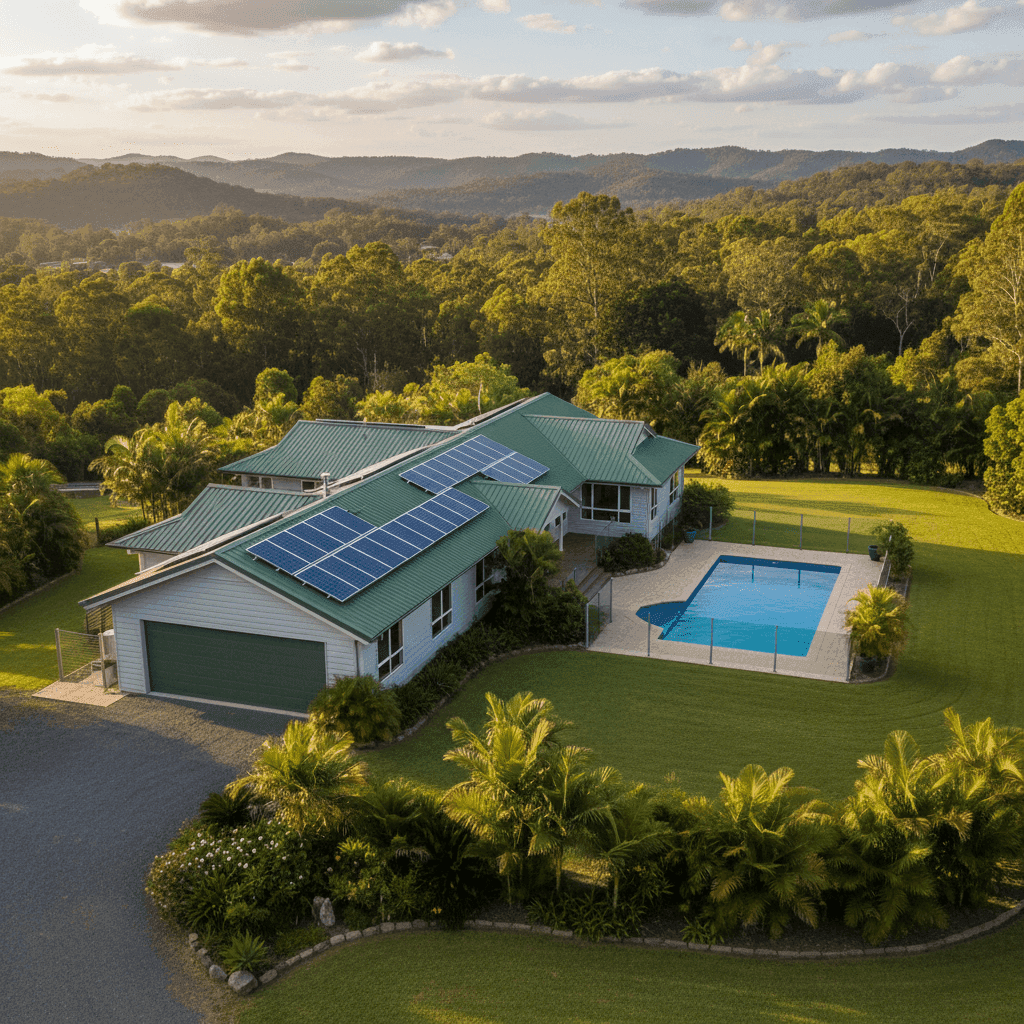
Nestled in the lush hinterland of northern New South Wales, Dungay (NSW 2484) is a small rural locality near the Queensland border, sitting within the Kyogle Local Government Area. It's the kind of place where properties tend to be generous in size and character — and this five-bedroom, free-standing home on a slab foundation is a perfect example. At 325 sqm with a Hardiplank Hardiflex exterior, Colorbond steel roof, tiled flooring, a swimming pool, and solar panels, it's a substantial residence that warrants equally substantial insurance coverage. This article breaks down a recent building-only insurance quote for this property, rated Fair (Around Average), and puts the numbers in context so homeowners in the area can make informed decisions.
---
Is This Quote Fair?
The annual premium for this property came in at $8,903 per year (or $853 per month), with a building sum insured of $1,452,000 and a building excess of $500. The quote has been rated Fair — Around Average, which is a reasonable assessment when you look at the broader data.
Compared to the NSW state average premium of $9,528 per year, this quote sits about 7% below what NSW homeowners typically pay — a modest but meaningful saving. Against the national average of $5,347 per year, however, the premium is considerably higher, which reflects the elevated risk profile and higher replacement costs associated with large rural properties in regional NSW.
It's worth noting that averages can be skewed by outliers, so medians often tell a more honest story. The NSW median sits at $3,770 per year and the national median at $2,764 per year — both significantly lower than this quote. That gap is largely explained by the size of the home (325 sqm, five bedrooms), the high sum insured ($1,452,000), and the specific characteristics of the Dungay area rather than any inefficiency in the pricing.
In short: for a property of this scale in this region, $8,903 per year is a defensible figure — not a bargain, but not an overcharge either.
---
How Dungay Compares
While suburb-level comparison data isn't available for Dungay specifically, the Kyogle LGA average premium of $9,180 per year provides a useful local benchmark. This quote of $8,903 comes in just below the LGA average, which suggests it's competitive within the local market.
You can explore Dungay-specific insurance statistics on CoverClub as more data becomes available for the postcode. For a broader picture of what NSW homeowners are paying, the NSW insurance stats page is regularly updated with the latest premium trends across the state.
| Benchmark | Annual Premium |
|---|---|
| This Quote | $8,903 |
| Kyogle LGA Average | $9,180 |
| NSW State Average | $9,528 |
| NSW State Median | $3,770 |
| National Average | $5,347 |
| National Median | $2,764 |
The gap between this property's premium and the national median is wide, but not surprising. Rural properties in northern NSW tend to attract higher premiums due to factors including distance from emergency services, exposure to severe weather events, and the higher cost of sourcing materials and labour for repairs in regional areas.
---
Property Features That Affect Your Premium
Several characteristics of this home have a direct bearing on the insurance premium. Understanding them helps explain why the quote lands where it does.
Size and sum insured: At 325 sqm with five bedrooms and two bathrooms, this is a large home. The building sum insured of $1,452,000 reflects the full cost of rebuilding a property of this size and quality in a regional area — and a higher sum insured naturally means a higher premium.
Hardiplank Hardiflex cladding: This fibre cement product is a popular choice in Australian construction and is generally viewed favourably by insurers. It's durable, low-maintenance, and has good resistance to fire, rot, and termites — all of which can positively influence risk assessments.
Colorbond steel roof: Steel roofing is another tick in the insurer's favour. Colorbond is robust, long-lasting, and performs well in high-wind conditions, which is particularly relevant in northern NSW where storms and strong winds are not uncommon.
Slab foundation: A concrete slab is one of the more stable and insurer-friendly foundation types, reducing the risk of subsidence and structural movement compared to older stumped or pier-and-beam foundations.
Swimming pool: Pools add to the insurable value of a property and can introduce liability considerations, both of which contribute to a higher premium. Insurers also factor in the cost of pool repairs or replacement following an insured event.
Solar panels: Solar systems add replacement value to a home and can be a source of claims if damaged by storms or hail. Homeowners should confirm whether their solar panels are covered under their building policy or require a separate endorsement.
Construction year (1980): A home built in 1980 is over four decades old. While well-maintained older homes can be perfectly insurable, ageing electrical systems, plumbing, and roofing materials may attract slightly higher risk assessments. Regular maintenance and documented upgrades can help manage this.
---
Tips for Homeowners in Dungay
1. Review your sum insured annually Building costs in regional NSW have risen significantly in recent years due to supply chain pressures and labour shortages. A sum insured set even two or three years ago may no longer reflect the true cost of rebuilding your home. Use a quantity surveyor or your insurer's building cost calculator to check your figure is still accurate.
2. Confirm solar panel coverage Not all building policies automatically cover solar panels as a fixed structure. Before renewing, ask your insurer specifically whether your solar system is included in the building sum insured and what the claims process looks like for storm or hail damage.
3. Keep maintenance records For a home built in 1980, documented evidence of maintenance — roof inspections, electrical upgrades, plumbing work — can support your case with an insurer and may help avoid disputes at claim time. Some insurers also reward proactive maintenance with more favourable terms.
4. Compare quotes before renewing Insurance loyalty doesn't always pay off. Premiums in the Kyogle LGA and across NSW vary considerably between providers, and the best way to know whether you're getting a competitive rate is to compare. Even if your current quote is rated Fair, another provider may offer equivalent cover at a lower price.
---
Ready to Compare Home Insurance in Dungay?
Whether you're reviewing an existing policy or shopping for cover for the first time, CoverClub makes it easy to see what's available for your property. Get a home insurance quote today and find out how your premium stacks up against others in Dungay and across NSW. With transparent data and real comparisons, you'll be better placed to make a decision that protects your home without overpaying.