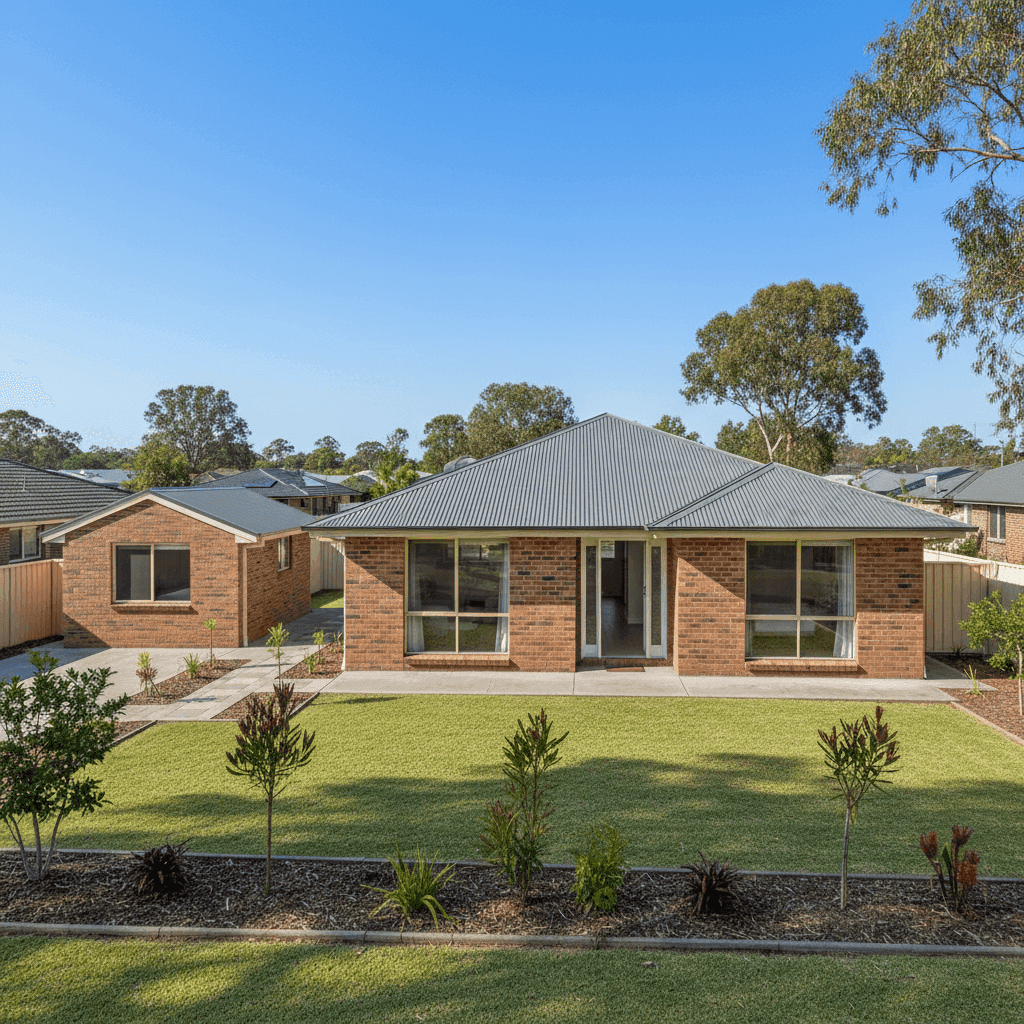
If you own a free standing home in Dunmora, QLD 4650, you're probably curious whether the premium sitting in your inbox is genuinely competitive — or whether you're paying more than you should. Located in the Gympie region of Queensland, Dunmora is a quiet rural-residential locality where property types, construction materials, and proximity to flood-prone areas can all influence what insurers charge. This article breaks down a recent home and contents insurance quote for a three-bedroom, two-bathroom brick veneer home in the suburb, and puts the numbers into context against local, state, and national benchmarks.
---
Is This Quote Fair?
The quote in question comes in at $2,867 per year (or $268/month) for combined home and contents cover, with a building sum insured of $500,000 and contents valued at $65,000. The building excess is set at $2,000, and the contents excess at $1,000.
Our pricing analysis rates this quote as Expensive — above average for the area.
To understand why, it helps to look at what other homeowners in Dunmora are paying. The suburb average sits at $1,725/year, with a median of $1,838/year. The 75th percentile — meaning only 25% of quotes are higher — is $1,899/year. At $2,867, this quote lands well above that upper band, which means the vast majority of comparable quotes in the suburb are cheaper.
That said, context matters. The sum insured here is $500,000 for the building alone, which is on the higher end for a 139 sqm home and could be pushing the premium up. It's worth reviewing whether that figure accurately reflects the cost to rebuild — not the market value — of the property.
---
How Dunmora Compares
Understanding where Dunmora sits within the broader insurance landscape is useful for benchmarking your own premium.
| Benchmark | Average Premium |
|---|---|
| Dunmora (suburb average) | $1,725/yr |
| Dunmora (suburb median) | $1,838/yr |
| Gympie LGA average | $5,581/yr |
| Queensland average | $9,129/yr |
| Queensland median | $3,903/yr |
| National average | $5,347/yr |
| National median | $2,764/yr |
A few things stand out here. First, Dunmora's suburb averages are notably lower than both the Queensland state average and the national average. Queensland as a whole carries some of the highest home insurance premiums in the country, largely driven by the state's exposure to cyclones, flooding, and severe storms — particularly in northern and coastal regions. Dunmora, sitting inland in the Gympie area, benefits from not being classified as a cyclone risk zone, which helps keep premiums more manageable compared to coastal Queensland counterparts.
The Gympie LGA average of $5,581/year is considerably higher than Dunmora's suburb figures, suggesting that other parts of the LGA — potentially those with greater flood exposure — are pulling that average up significantly.
At $2,764, the national median is actually close to this quote's $2,867 price point, which means that while the quote is expensive for Dunmora, it's not wildly out of step with what Australians pay on average nationally. Still, if you're living in Dunmora specifically, there's a reasonable argument that you should be paying closer to local rates.
---
Property Features That Affect Your Premium
Several characteristics of this property will be factored into the premium calculation by insurers. Here's how the key features play out:
Brick Veneer Walls Brick veneer is generally viewed favourably by insurers. It offers solid resistance to fire and wind, and is a common construction type across Queensland. It typically attracts lower premiums compared to timber-framed or clad homes.
Steel/Colorbond Roof Colorbond roofing is durable, lightweight, and performs well in Australian weather conditions. Insurers tend to rate it positively, as it's resistant to rot and performs reasonably well in high-wind events.
Slab Foundation A concrete slab foundation is considered low-risk by most insurers. Unlike homes on stumps or piers, slab homes have less exposure to subsidence, pest ingress, and underfloor moisture issues.
Tile Flooring Tiles are a practical and durable flooring choice that reduces the risk of water damage claims compared to timber or carpet, which can be costly to replace after flooding or leaks.
Granny Flat The presence of a granny flat is a meaningful factor. Insurers will need to account for the additional structure when calculating the building sum insured. If the granny flat isn't adequately reflected in the $500,000 sum insured, you could be underinsured — but if it's been fully factored in, it will naturally push the premium higher than a comparable home without one.
Construction Year: 1995 A home built in 1995 is relatively well-established. It's past the era of older wiring and plumbing concerns, but old enough that some components may be nearing end-of-life. Insurers may price this neutrally to slightly higher than a newer build.
No Pool, Solar, or Ducted Climate Control The absence of these features simplifies the risk profile. Pools and solar panels can add complexity to claims (and premiums), so not having them is a minor positive from an insurance pricing perspective.
---
Tips for Homeowners in Dunmora
1. Review your building sum insured The $500,000 building sum insured should reflect the full cost to rebuild your home — including the granny flat — from the ground up, not its market value. If this figure has been set too high, you may be over-insuring and paying an unnecessarily large premium. Use a building cost calculator or speak with a quantity surveyor to get an accurate estimate.
2. Compare multiple quotes before renewing With only eight quotes in our Dunmora sample, the local market is relatively thin — but that makes comparison even more important. Different insurers assess risk differently, and a quote that's expensive with one provider may be quite competitive with another. Get a fresh quote at CoverClub to see what's available for your specific property.
3. Consider adjusting your excess The building excess on this quote is $2,000. Opting for a higher excess (if you can comfortably cover it out of pocket in a claim) can meaningfully reduce your annual premium. It's a lever worth exploring if cash flow is a consideration.
4. Check what's included in your contents cover At $65,000, the contents value should be reviewed annually. Many homeowners underestimate the replacement cost of their belongings — but others overestimate it and pay more than necessary. A room-by-room audit of your possessions can help you land on a more accurate figure.
---
Compare Your Options with CoverClub
Whether you're renewing your policy or shopping around for the first time, it pays to see the full picture. CoverClub makes it easy to compare home and contents insurance quotes tailored to your property and location. Start your comparison today at CoverClub and find out whether you could be paying less for the same level of cover. You can also explore Dunmora suburb insurance stats to see how your premium stacks up against your neighbours.