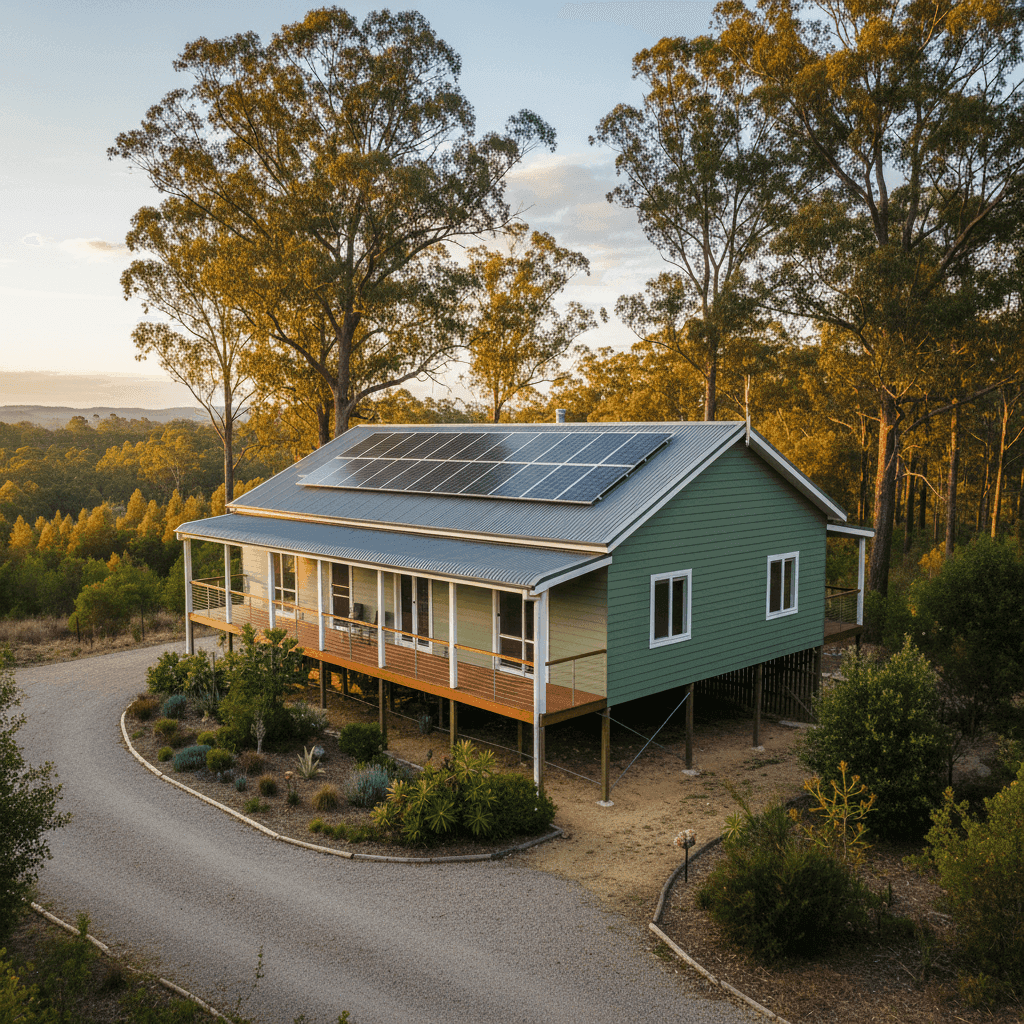
Dwellingup is a quiet timber town nestled in the Perth Hills, about 100 km south-east of the CBD. Known for its tall jarrah forests, the Murray River, and a strong sense of community, it's the kind of place where a free-standing home on poles feels right at home — literally. But living among the trees comes with its own set of insurance considerations, and if you've recently received a quote for home and contents cover in this postcode, you might be wondering whether you're getting a fair deal.
This article breaks down a real quote for a 4-bedroom, 2-bathroom free-standing home in Dwellingup (postcode 6213), compares it against local, state, and national benchmarks, and offers practical tips to help you manage your premium.
---
Is This Quote Fair?
The quote in question comes in at $3,089 per year (or $312/month) for combined home and contents insurance, covering a building sum insured of $371,000 and contents valued at $50,000. The building excess is $3,000 and the contents excess is $1,000.
Our price rating for this quote is Expensive — above average for the Dwellingup area.
To put that in context: the suburb average premium sits at $1,973/yr and the median at $2,294/yr. This quote is roughly 57% above the suburb average and about 35% above the median. Even compared to the suburb's 75th percentile of $2,827/yr, this quote still comes in higher — meaning it's pricier than at least three-quarters of the quotes we've seen for this postcode.
That said, it's worth noting that the sample size for Dwellingup is relatively small (16 quotes), so there's natural variability in the data. A few outlier properties or insurers can shift the averages noticeably in a suburb this size.
---
How Dwellingup Compares
Here's how this quote stacks up across different geographic benchmarks:
| Benchmark | Premium |
|---|---|
| This quote | $3,089/yr |
| Dwellingup suburb average | $1,973/yr |
| Dwellingup suburb median | $2,294/yr |
| WA state average | $2,811/yr |
| WA state median | $2,127/yr |
| National average | $5,347/yr |
| National median | $2,764/yr |
| Boddington LGA average | $4,497/yr |
Interestingly, while this quote is expensive relative to the Dwellingup suburb figures, it actually sits below the Boddington LGA average of $4,497/yr — suggesting that some properties in this local government area attract significantly higher premiums. It also comes in well below the national average of $5,347/yr, which is heavily influenced by high-risk regions like Far North Queensland and parts of Northern Australia.
Compared to the WA state average of $2,811/yr, this quote is about 10% higher. When you look at national statistics, this quote is actually quite moderate — but locally in Dwellingup, it's on the steeper end of the scale.
---
Property Features That Affect Your Premium
Several characteristics of this particular property are likely contributing to a higher-than-average premium. Understanding these can help you have more informed conversations with insurers.
Weatherboard Timber Construction
Weatherboard wood external walls are one of the most significant premium drivers for this property. Timber-framed homes are considered higher risk by insurers — particularly in bushfire-prone regions like Dwellingup, which sits in a designated bushfire-risk zone. Timber walls are more susceptible to fire damage than brick veneer or double brick construction, and this is reflected in the cost of cover.
Pole Foundation
A home built on poles (also known as stumps or piers) is elevated off the ground, which can be both an advantage and a disadvantage from an insurance perspective. On the positive side, it reduces flood and moisture risk to the subfloor. However, pole homes can be more expensive to repair after storm or structural damage, and some insurers price this in accordingly.
Steel / Colorbond Roof
A Colorbond steel roof is generally viewed favourably by insurers — it's durable, fire-resistant, and low-maintenance compared to tile or older iron roofing. This is one feature likely working in the homeowner's favour when it comes to the premium.
Solar Panels
The presence of solar panels adds replacement value to the property and can slightly increase the sum insured required. Most standard home insurance policies cover rooftop solar panels as part of the building, but it's always worth confirming this with your insurer — particularly for damage caused by storms or hail.
Construction Year (1997)
At nearly 30 years old, this home falls into a mid-age bracket. It's not new enough to benefit from modern building standards, but not old enough to be classified as heritage or particularly high-risk due to age alone. Wiring, plumbing, and roofing condition in homes of this era can vary significantly, which may influence insurer risk assessments.
Building Size and Sum Insured
At 130 sqm and a building sum insured of $371,000, the per-square-metre rebuild cost works out to approximately $2,854/sqm. This is a reasonable estimate for a weatherboard pole home in regional WA, though it's worth periodically reviewing whether your sum insured reflects current building costs, which have risen sharply in recent years.
---
Tips for Homeowners in Dwellingup
Living in a bushfire-prone, forested area means your insurance needs some extra thought. Here are four practical steps to help manage your premium without cutting corners on cover.
1. Invest in Bushfire Preparedness
Insurers increasingly reward proactive bushfire mitigation. Maintaining a defendable space around your home — clearing gutters, trimming overhanging branches, and using ember-resistant vents — can reduce your risk profile and may be factored into your premium with some insurers. It also keeps you safer, which is the whole point.
2. Shop Around and Compare Quotes
With a premium rated as expensive relative to the suburb, this is a clear signal to get competing quotes. Different insurers assess risk differently, and a timber pole home in Dwellingup might be priced very differently across providers. Use CoverClub's free quote comparison tool to see what else is available for your property.
3. Review Your Sum Insured Carefully
Underinsurance is a serious risk in Australia — especially after bushfire events where entire homes need to be rebuilt from scratch. Make sure your $371,000 building sum insured accurately reflects today's rebuild costs, not the market value of the land. A quantity surveyor or online rebuild calculator can help you verify this figure.
4. Consider Your Excess Strategy
This quote carries a $3,000 building excess, which is on the higher side. A higher excess typically reduces your annual premium, but it means more out-of-pocket costs if you need to make a claim. Think about what you could comfortably afford to pay in a worst-case scenario and adjust your excess accordingly when comparing policies.
---
Compare Your Options with CoverClub
Whether you're renewing your policy or shopping for the first time, it pays to compare. CoverClub makes it easy to see how your quote stacks up against real data from your suburb, your state, and across Australia. Get a quote today and find out if you could be paying less — or whether your current cover is right on the money.
For more local insights, explore the Dwellingup insurance stats page or browse WA home insurance data to see how your postcode fits into the bigger picture.