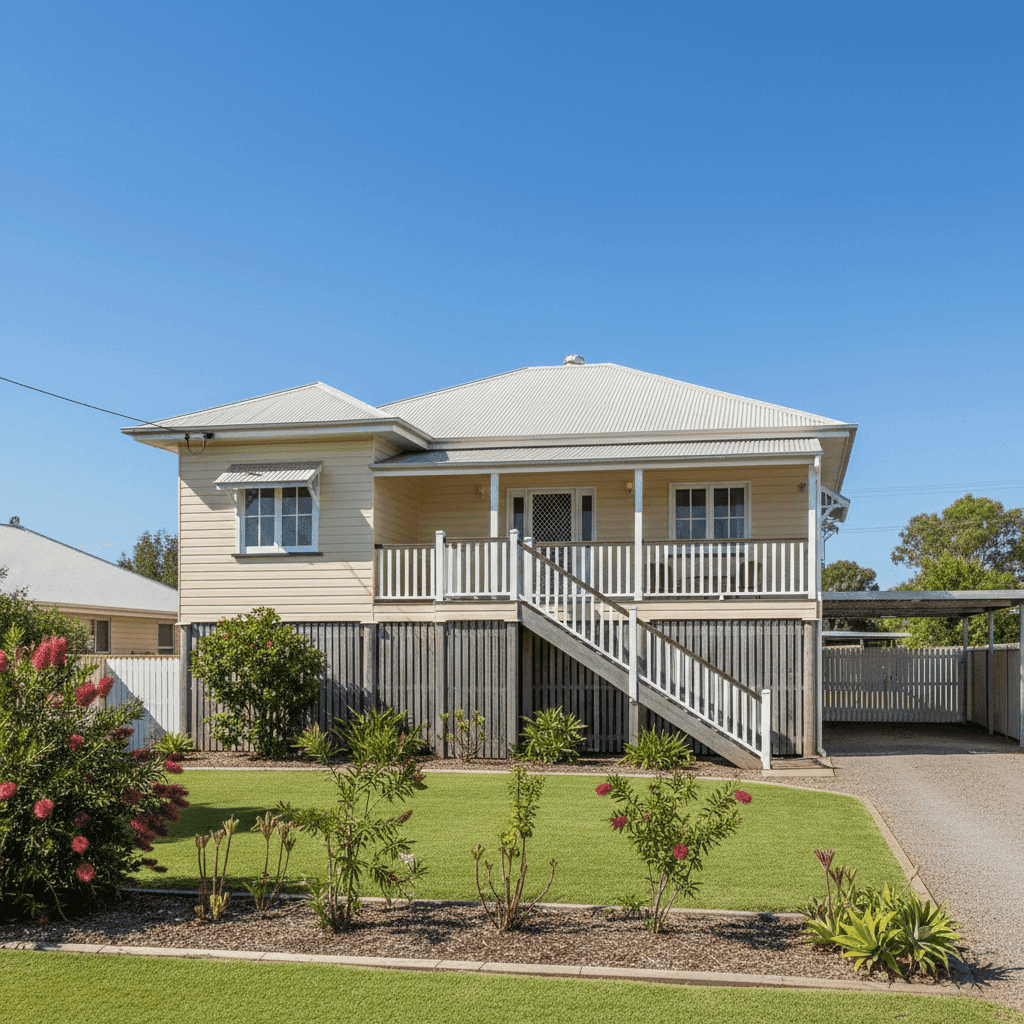
If you own a free standing home in Dysart, QLD 4745, you already know that insurance isn't something you can afford to overlook. Sitting in the heart of the Bowen Basin in Central Queensland, Dysart is a mining community exposed to some of the weather extremes that make home insurance both essential and, at times, expensive. This article breaks down a real home and contents insurance quote for a 3-bedroom weatherboard home in the suburb — and puts the numbers into context so you can judge whether you're getting a fair deal.
---
Is This Quote Fair?
The quote in question comes in at $2,040 per year (or $189/month) for combined home and contents cover, with a building sum insured of $564,000 and contents valued at $50,000. Both the building and contents excess are set at $1,000.
Our price rating for this quote? Cheap — Below Average. That's genuinely good news for the homeowner.
To understand why, consider the local landscape. The suburb average premium in Dysart sits at $3,149 per year, with a median of $2,820/yr across 42 quotes sampled. This quote undercuts both figures meaningfully — coming in 35% below the suburb average and 28% below the suburb median. It also sits well beneath the 25th percentile of $2,271/yr when you factor in the level of cover provided.
For a property in a cyclone risk area with the building characteristics described, landing a sub-$2,100 annual premium represents solid value. The elevated foundation and steel Colorbond roof are likely doing some heavy lifting here in keeping the price competitive — more on that below.
---
How Dysart Compares
Dysart's insurance pricing tells an interesting story when you zoom out to the state and national level.
| Benchmark | Average Premium | Median Premium |
|---|---|---|
| Dysart (suburb) | $3,149/yr | $2,820/yr |
| Isaac LGA | $3,567/yr | — |
| Queensland (state) | $9,129/yr | $3,903/yr |
| National | $5,347/yr | $2,764/yr |
The Queensland state average of $9,129/yr is a striking figure — heavily influenced by high-risk coastal and far-north Queensland postcodes where cyclone exposure is severe. Dysart's suburb average of $3,149/yr is substantially lower, suggesting that while the area carries cyclone risk, it doesn't attract the same extreme premiums as coastal towns like Cairns or Townsville.
Compared to the national average of $5,347/yr, Dysart homeowners are generally faring better — though the national median of $2,764/yr is actually slightly below Dysart's median, reflecting how many lower-risk metropolitan properties drag that national median down. The Isaac LGA average of $3,567/yr is also worth noting — Dysart homes are typically priced more favourably than the broader council area, which encompasses a range of property types and risk profiles.
---
Property Features That Affect Your Premium
Several characteristics of this particular home play a direct role in shaping the premium — for better and for worse.
Elevated Foundation (Stumps)
This home is elevated by at least 1 metre on stumps — a classic Queensland construction style. Elevation is a significant flood-mitigation factor. Insurers generally view raised homes more favourably in flood-prone or low-lying areas, as floodwaters are less likely to inundate the living space. This feature alone can meaningfully reduce premiums compared to a slab-on-ground home in the same postcode.
Steel / Colorbond Roof
A Colorbond steel roof is widely regarded as one of the more resilient roofing options in cyclone-prone regions. It performs well under high wind loads and is resistant to the kind of damage that can devastate tiled roofs in severe weather events. Insurers tend to price Colorbond-roofed homes more competitively in cyclone risk zones.
Weatherboard Timber Walls
Weatherboard construction is common in older Queensland homes, and this property — built in 1988 — is no exception. Timber weatherboard can be more susceptible to fire and moisture damage compared to brick veneer, which may apply slight upward pressure on premiums. However, when paired with a resilient roof and elevated foundation, the overall risk profile remains manageable.
Timber / Laminate Flooring
Timber and laminate floors can be costly to repair or replace following a water event, which is factored into contents and building cover pricing. That said, the elevated foundation reduces the likelihood of ground-level water ingress, partially offsetting this concern.
Cyclone Risk Area
Dysart is classified as a cyclone risk area. This is one of the most significant premium drivers in Central and North Queensland. Even properties well inland carry this classification, and it's reflected across the suburb's pricing benchmarks. The fact that this quote still comes in below the suburb average despite cyclone risk designation is a testament to the other favourable property features.
No Pool, No Solar, No Ducted Climate Control
The absence of a pool, solar panel system, and ducted air conditioning simplifies the risk profile and reduces the sum of assets that need to be covered. Each of these additions typically increases both the insured value and the premium, so their absence contributes to a leaner quote.
---
Tips for Homeowners in Dysart
Whether you're reviewing an existing policy or shopping for new cover, here are four practical steps worth taking.
1. Review your building sum insured annually. Construction costs in regional Queensland have risen sharply in recent years. A sum insured of $564,000 for a 143 sqm weatherboard home should be validated against current rebuild cost estimates — not just the original purchase price. Underinsurance is one of the most common and costly mistakes homeowners make.
2. Consider your excess carefully. Both excesses on this policy are set at $1,000. Opting for a higher excess (say, $2,500 or $5,000) can reduce your annual premium, but only makes sense if you have the liquidity to cover that amount in the event of a claim. For cyclone-related claims in particular, where damage can be extensive, a lower excess may be worth the slightly higher premium.
3. Cyclone-proof where you can. Insurers and government resilience programs often reward proactive storm-mitigation measures. Ensuring your roof fixings meet current standards, securing external structures, and maintaining gutters and downpipes can all help reduce storm damage risk — and may support a case for lower premiums at renewal.
4. Compare quotes at least once a year. Loyalty doesn't always pay in insurance. Premiums can shift significantly between insurers, and the gap between the cheapest and most expensive quotes in Dysart spans from around $2,271/yr (25th percentile) to $3,558/yr (75th percentile). Shopping the market at renewal could save you hundreds of dollars without sacrificing cover quality.
---
Ready to Compare?
Whether this quote is your current policy or one you're evaluating, the best way to know you're getting fair value is to compare. CoverClub makes it easy to benchmark your premium against real quotes from across your suburb and state. Get a home insurance quote today and see how your cover stacks up — you might be surprised at what's available.