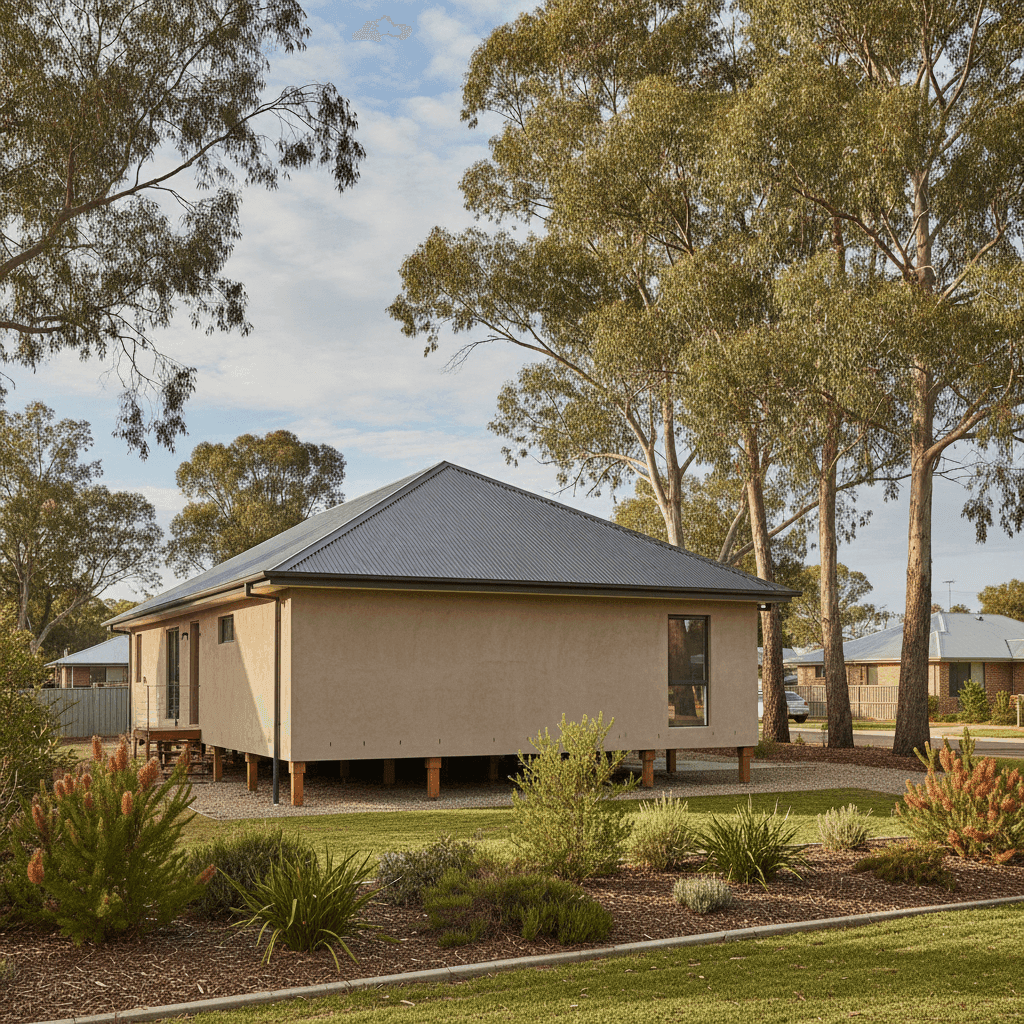
If you own a free standing home in Eagle Point, VIC 3878, you've probably wondered whether you're paying a fair price for home insurance — or quietly overpaying year after year. Eagle Point is a relaxed lakeside community nestled along the shores of Lake King in East Gippsland, and like many regional Victorian towns, its insurance landscape has its own distinct characteristics. In this article, we analyse a real building-only insurance quote for a 3-bedroom, 1-bathroom free standing home in the suburb, and put the numbers into context so you can make a more informed decision.
---
Is This Quote Fair?
The quote in question comes in at $1,603 per year (or roughly $154 per month) for building-only cover, with a $1,000 building excess and a sum insured of $425,000. Our price rating for this quote is FAIR — Around Average.
That verdict holds up well under scrutiny. Based on 39 quotes collected for Eagle Point (3878), the suburb average sits at $1,776/yr and the median at $1,726/yr. This quote lands noticeably below both figures, which is a positive sign. It also falls comfortably within the interquartile range — between the 25th percentile of $1,475/yr and the 75th percentile of $2,081/yr — meaning it's neither suspiciously cheap nor worryingly expensive.
In short, this is a quote that reflects reasonable market pricing for the area. It's not the lowest you could theoretically find, but it's well clear of the upper end of the local range, and it's backed by a credible sum insured for a property of this size and age.
---
How Eagle Point Compares
One of the more striking takeaways from this data is just how favourably Eagle Point stacks up against broader benchmarks.
| Benchmark | Average Premium |
|---|---|
| Eagle Point (suburb avg) | $1,776/yr |
| Victoria (state avg) | $3,000/yr |
| East Gippsland LGA (avg) | $3,003/yr |
| National (avg) | $5,347/yr |
The Victorian state average of $3,000/yr is nearly double the suburb average for Eagle Point, and the national average of $5,347/yr is more than three times higher. Even the East Gippsland LGA average of $3,003/yr sits well above what Eagle Point homeowners are typically paying.
It's worth noting that national averages are heavily skewed by high-risk regions — particularly cyclone-prone areas in Queensland and Western Australia, and bushfire-exposed zones elsewhere — so the median figures are often more instructive. The national median of $2,764/yr and the Victorian median of $2,718/yr both still sit comfortably above Eagle Point's median of $1,726/yr, reinforcing that this is a relatively affordable suburb in insurance terms.
For homeowners in Eagle Point, this is genuinely good news. The combination of a non-cyclone zone designation and the area's risk profile appears to keep premiums at manageable levels compared to much of the country.
---
Property Features That Affect Your Premium
Every home is unique, and insurers weigh up a range of property characteristics when calculating your premium. Here's how the key features of this particular home are likely influencing the quote:
- Concrete external walls: Concrete is generally viewed favourably by insurers. It's durable, fire-resistant, and less susceptible to termite damage than timber-framed alternatives. This likely contributes to a more competitive premium.
- Steel/Colorbond roof: Colorbond roofing is popular across regional Australia for good reason — it's tough, low-maintenance, and performs well in a variety of weather conditions. Insurers typically regard it as a lower-risk roofing material compared to older options like terracotta tiles or asbestos sheeting.
- Stump foundation: Homes on stumps are common in regional Victoria, particularly older builds. While stumps can be associated with maintenance considerations (e.g., subfloor access, moisture), they don't typically attract a significant premium penalty on their own.
- Timber/laminate flooring: Flooring type has a modest influence on the sum insured calculation rather than the risk profile itself. Timber floors can add to rebuild costs, which is worth keeping in mind when setting your sum insured.
- Construction year (1956): Older homes can attract higher premiums due to the cost of restoring period features and the potential for outdated wiring or plumbing. At 69 years old, this home is well into that category — yet the quote remains competitive, suggesting the concrete construction and Colorbond roof are doing some heavy lifting.
- Ducted climate control: The presence of ducted climate control adds to the replacement value of the home and may slightly increase the sum insured required, but it's unlikely to dramatically shift the risk profile.
- No pool, no solar panels: Both of these omissions simplify the risk picture. Pools introduce liability considerations, and solar panels can complicate roof claims. Their absence keeps things straightforward.
---
Tips for Homeowners in Eagle Point
Whether you're reviewing your current policy or shopping around for the first time, here are four practical tips tailored to homeowners in this part of East Gippsland:
- Review your sum insured regularly. Building costs have risen significantly in recent years across regional Victoria. A sum insured of $425,000 for a 139 sqm home may be appropriate today, but it's worth reassessing annually — ideally using a quantity surveyor estimate or an online rebuild cost calculator — to ensure you're not underinsured.
- Understand what "building only" cover means. This policy covers the structure of your home but not your contents. If you have furniture, appliances, and personal belongings worth protecting, a separate contents policy (or a combined building and contents policy) is worth considering.
- Check for flood and storm surge exclusions. Eagle Point's proximity to Lake King and the Gippsland Lakes system means flooding is a relevant consideration for some properties in the area. Read your Product Disclosure Statement (PDS) carefully to understand what's covered — and what isn't — when it comes to water damage.
- Don't auto-renew without comparing. The gap between the cheapest and most expensive quotes in Eagle Point spans from around $1,475/yr to over $2,081/yr. That's a potential saving of $600 or more annually just by shopping around. Loyalty doesn't always pay when it comes to insurance.
---
Find a Better Deal with CoverClub
Whether this quote reflects your situation or you're simply curious about what else is out there, CoverClub makes it easy to compare home insurance options across Australia. Get a quote today and see how your premium stacks up — you might be surprised by what you find. You can also explore suburb-level insurance data for Eagle Point to better understand the local pricing landscape before you commit to any policy.