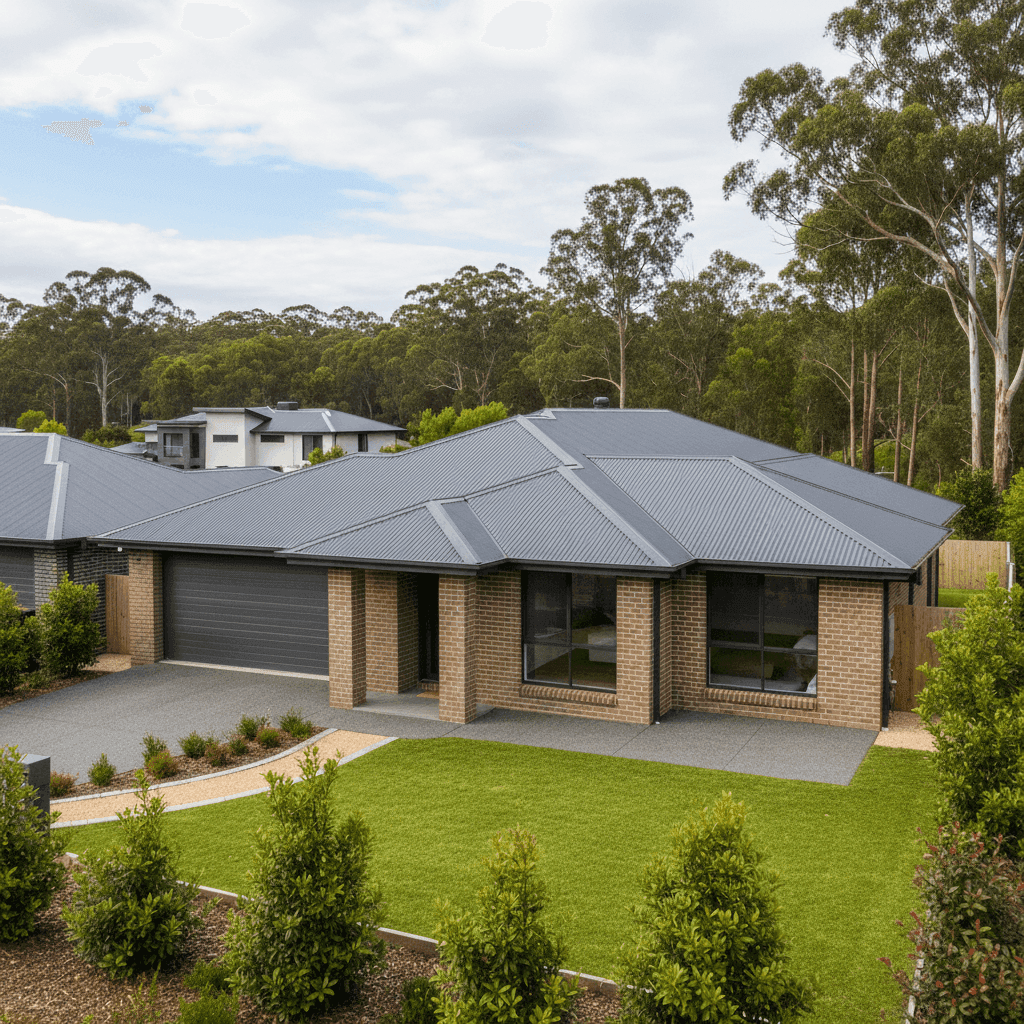
Eagle Point is a peaceful lakeside locality tucked along the shores of Lake King in Victoria's East Gippsland region. It's the kind of place where newer homes sit comfortably in the landscape — and for owners of a free standing home here, understanding what you should be paying for home and contents insurance is just as important as the view. This article breaks down a recent quote for a four-bedroom, two-bathroom home in Eagle Point, compares it against Victorian and national benchmarks, and offers practical advice for homeowners in the area.
---
Is This Quote Fair?
The short answer: yes — and then some. This quote came in at $1,066 per year (or roughly $107 per month) for combined home and contents cover, with a building sum insured of $550,000 and contents valued at $50,000. CoverClub's pricing engine rates this as CHEAP — below average compared to similar properties.
To put that in perspective, the Victorian state average for home insurance sits at $2,921 per year, with a median of $2,694. Nationally, the average is $2,965 and the median $2,716. This quote is less than 40% of the Victorian average — a genuinely strong result for a property of this size and specification.
Even more striking is the local context. The East Gippsland LGA carries an average premium of $3,076 per year — higher than both the state and national averages, reflecting the region's exposure to bushfire risk, flooding, and other climate-related hazards. Against that backdrop, landing a quote under $1,100 for a well-specified four-bedroom home is a standout outcome.
For homeowners curious about how their own suburb tracks, you can explore Eagle Point insurance statistics on CoverClub for a deeper look at local pricing trends.
---
How Eagle Point Compares
Without suburb-level aggregated data available yet for Eagle Point specifically, we can draw meaningful comparisons using broader datasets. Here's how this quote stacks up:
| Benchmark | Annual Premium |
|---|---|
| This Quote | $1,066 |
| VIC State Average | $2,921 |
| VIC State Median | $2,694 |
| National Average | $2,965 |
| National Median | $2,716 |
| East Gippsland LGA Average | $3,076 |
The gap between this quote and the East Gippsland LGA average is particularly noteworthy — a difference of over $2,000 per year. That's money that could go toward a home maintenance fund, additional cover upgrades, or simply back into your pocket.
It's worth noting that East Gippsland is one of Victoria's more challenging regions for insurers to price. The area has experienced significant bushfire events, and parts of the region are prone to flooding. Premiums across the LGA reflect this elevated risk profile. You can compare Victoria-wide trends at the VIC insurance statistics page or check out the national overview for a broader picture.
---
Property Features That Affect Your Premium
Several characteristics of this particular property likely contribute to its competitive premium. Understanding these factors helps you appreciate why insurers price the way they do — and what you can do to maintain or improve your position at renewal.
Construction year (2021): This is a relatively new home, built to modern Australian Standards. Newer builds generally attract lower premiums because they incorporate up-to-date construction techniques, materials, and safety features. Older homes can carry higher risk due to ageing wiring, plumbing, and structural wear.
Brick veneer external walls: Brick veneer is one of the more insurer-friendly wall materials in Australia. It offers solid fire resistance and structural durability, which can translate to lower premiums compared to timber-framed or weatherboard homes — particularly relevant in a bushfire-adjacent region like East Gippsland.
Steel/Colorbond roof: Colorbond roofing is well-regarded by insurers for its durability, resistance to ember attack, and low maintenance requirements. In areas where hail and storm events are a factor, a steel roof can outperform alternatives like terracotta or concrete tiles.
Slab foundation: A concrete slab foundation is generally considered low-risk from an insurance perspective. It reduces exposure to issues like subfloor pest damage or moisture ingress that can affect raised or stump-based homes.
Slightly elevated (less than 1m): The property sits slightly above ground level, which can offer modest protection against minor surface water events. This is a relatively neutral factor for insurers but worth noting in a region where localised flooding can occur.
Ducted climate control: The presence of ducted heating and cooling adds to the overall contents and building value, and insurers do factor in the cost of replacing or repairing these systems. It's worth confirming your sum insured adequately covers this infrastructure.
No pool, no solar panels: Both of these features can add complexity (and cost) to a policy. Their absence keeps the risk profile straightforward.
---
Tips for Homeowners in Eagle Point
1. Review your building sum insured regularly. Construction costs have risen sharply across Australia in recent years. A sum insured of $550,000 may be appropriate today, but it's worth reviewing annually — ideally with a quantity surveyor's assessment — to ensure you're not underinsured. Rebuilding costs in regional Victoria can be higher than metropolitan areas due to labour and material logistics.
2. Understand your excess structure. This policy carries a $3,000 building excess and a $1,000 contents excess. A higher excess is one reason this premium is so competitive. Make sure you're comfortable covering that gap out of pocket in the event of a claim, and consider whether a lower excess option might be worth the additional premium cost.
3. Keep your home's bushfire-readiness up to date. East Gippsland has a well-documented bushfire history. Even if your immediate surroundings feel low-risk, maintaining ember guards on vents, clearing gutters, and managing vegetation around the property are practical steps that can also support your insurability over time.
4. Compare at renewal — don't auto-renew. Insurance loyalty rarely pays. The market shifts, and your circumstances change. Getting a fresh quote each year through a comparison service like CoverClub takes minutes and could save you hundreds — or in this region, potentially thousands — of dollars annually.
---
Ready to Compare Your Own Quote?
Whether you're a first-time buyer in Eagle Point or a long-term homeowner wondering if you're overpaying, CoverClub makes it easy to see what competitive cover actually looks like for your property. Get a home insurance quote today and find out where your premium sits relative to the market — in seconds, with no obligation.