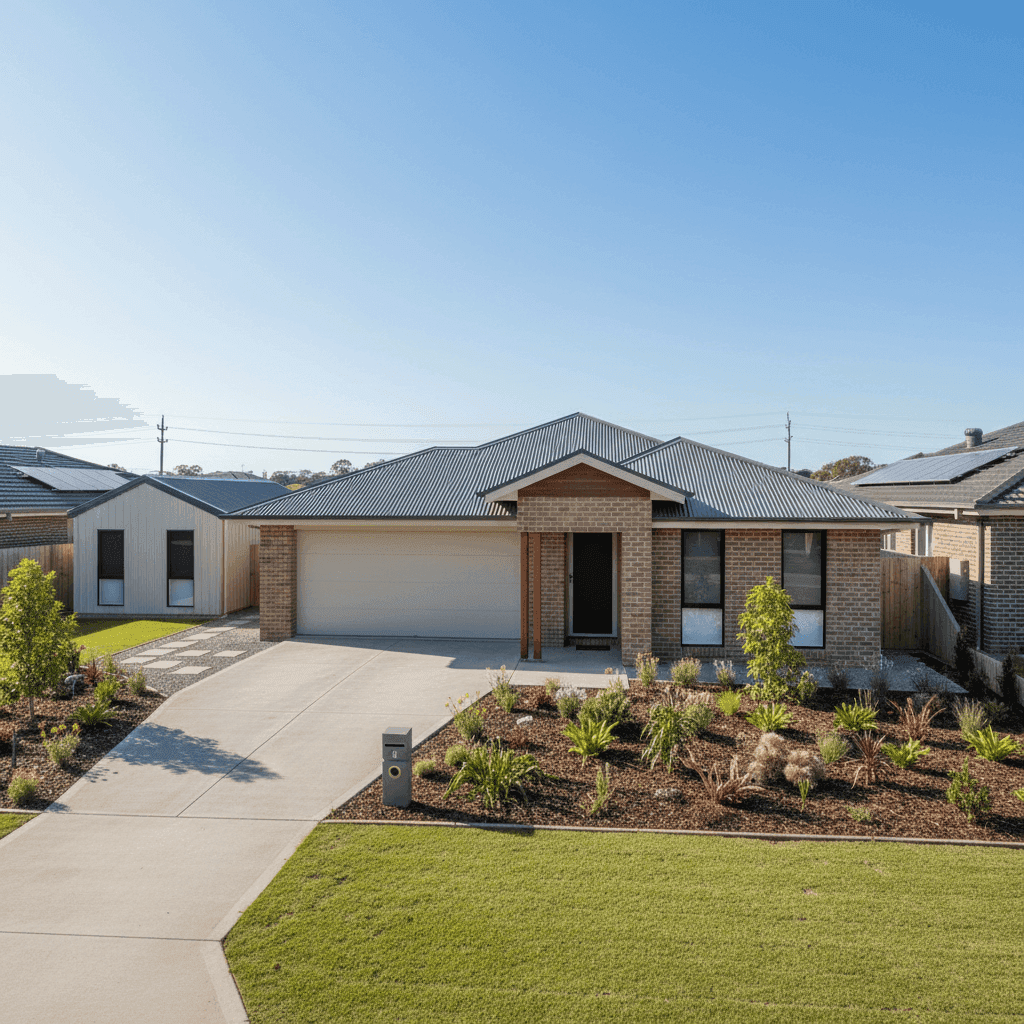
Eagleby is a well-established suburb in the City of Gold Coast, sitting just south of Logan and offering a mix of family homes at relatively accessible price points compared to the broader Gold Coast corridor. For owners of a freestanding home in this area, understanding what you should be paying for home and contents insurance — and why — can make a real difference to your back pocket.
This article breaks down a real home insurance quote for a four-bedroom, three-bathroom freestanding home in Eagleby (postcode 4207), built in 2018 with brick veneer walls, a Colorbond steel roof, and a slab foundation. The property spans 214 sqm, includes a granny flat, and has ducted climate control installed. The quote covers both building (sum insured: $550,000) and contents ($20,000), with an annual premium of $2,871 (or $275/month).
---
Is This Quote Fair?
The short answer: yes, broadly speaking. This quote has been rated Fair (Around Average), and when you dig into the numbers, that assessment holds up.
Based on data from 41 quotes collected for Eagleby (4207), the suburb median premium sits at $2,804 per year, meaning this quote comes in just $67 above the midpoint — essentially on par with what most Eagleby homeowners are paying. The suburb average is notably higher at $3,780/yr, which suggests a handful of higher-risk or higher-value properties are pulling that figure upward.
To put it in percentile terms: this quote falls comfortably between the 25th percentile ($2,131/yr) and the 75th percentile ($3,626/yr), placing it squarely in the middle of the market for this suburb. That's a reasonable outcome for a modern, well-constructed home with standard fittings.
It's worth noting that "fair" doesn't necessarily mean "the best available." There may be room to sharpen this premium further by adjusting excess levels, reviewing the contents sum insured, or simply shopping around — more on that below.
---
How Eagleby Compares to the Rest of Queensland and Australia
One of the more striking insights from this data is just how much cheaper Eagleby is compared to the broader Queensland and national markets.
| Benchmark | Average Premium | Median Premium |
|---|---|---|
| Eagleby (4207) | $3,780/yr | $2,804/yr |
| Gold Coast LGA | $8,161/yr | — |
| Queensland | $9,129/yr | $3,903/yr |
| National | $5,347/yr | $2,764/yr |
The Queensland state average of $9,129/yr is more than three times the quote under review — a stark reminder of just how heavily cyclone-prone and flood-affected regions drag the state average upward. Coastal and far-north Queensland communities face dramatically elevated premiums, which skews the QLD figures considerably.
Even the national average of $5,347/yr sits well above what Eagleby homeowners typically pay, reinforcing that this suburb offers a relatively favourable insurance environment. The Gold Coast LGA average of $8,161/yr is also significantly higher, likely reflecting the influence of beachside and canal properties with elevated flood, storm surge, and coastal erosion risks.
Eagleby's position — inland, not cyclone-designated, and largely comprising newer residential stock — keeps premiums more grounded than many of its Gold Coast neighbours.
---
Property Features That Affect Your Premium
Several characteristics of this property work in the homeowner's favour when it comes to pricing:
Construction year (2018): Newer homes are generally cheaper to insure. A property built in 2018 benefits from modern building codes, which mandate improved structural integrity, better fire resistance, and more resilient materials. Insurers view this as lower risk compared to homes built in the 1970s or 1980s.
Brick veneer walls and Colorbond roof: Brick veneer is a widely accepted, durable wall construction that performs well in fire and storm scenarios. Colorbond steel roofing is similarly regarded — it's lightweight, corrosion-resistant, and handles Queensland's summer storm season better than many alternatives. This combination is considered low-to-moderate risk by most insurers.
Slab foundation: Concrete slab foundations are standard for modern Queensland homes and are generally viewed favourably by insurers. They offer good resistance to movement and are less susceptible to pest damage than older suspended timber floors.
Tile flooring: Tiles are durable and water-resistant, which can reduce the potential severity of water damage claims — a positive signal for insurers assessing contents and building risk.
Ducted climate control: While this adds to the replacement value of the home (and is reflected in the building sum insured), it's a standard inclusion in many modern Queensland homes and doesn't typically attract a significant loading.
Granny flat: The presence of a granny flat is worth flagging. A secondary dwelling on the property increases the overall replacement cost and can affect the scope of cover. It's important to ensure the building sum insured of $550,000 adequately accounts for both the main dwelling and the granny flat — underinsurance is a common and costly mistake.
No pool, no solar panels: The absence of a pool removes a common source of liability and maintenance-related claims. No solar panels means no additional risk of electrical faults or storm damage to rooftop systems — both of which can add to premiums.
Not in a cyclone risk area: This is a significant factor. Cyclone-designated areas in Queensland can attract substantial premium loadings. Eagleby's classification outside these zones is a meaningful cost advantage.
---
Tips for Homeowners in Eagleby
1. Double-check your building sum insured covers the granny flat With a secondary dwelling on the property, it's critical that your $550,000 building sum insured reflects the full cost of rebuilding both structures — including demolition, site clearance, and professional fees. Use an independent building cost calculator or speak with a quantity surveyor if you're unsure.
2. Consider increasing your excess to reduce your premium The current building excess is $1,000 and the contents excess is $500. If you have a solid emergency fund and are unlikely to make small claims, opting for a higher excess (say, $2,000 on building) can meaningfully reduce your annual premium. Just make sure the savings justify the out-of-pocket risk.
3. Review your contents sum insured $20,000 in contents cover is on the lower end for a four-bedroom, three-bathroom home — especially one with ducted air conditioning and presumably a full suite of furniture and appliances across multiple rooms. Conduct a room-by-room inventory to ensure you're not underinsured.
4. Shop around at renewal time Insurance loyalty rarely pays. Insurers frequently offer sharper pricing to new customers, and with this quote sitting around the suburb median, there's a reasonable chance a competitor could come in under $2,500/yr for comparable cover. Use a comparison tool at renewal to benchmark your options.
---
Compare Your Own Quote
Whether you're buying, refinancing, or simply due for a renewal, it pays to know where your premium sits relative to the market. Get a home insurance quote through CoverClub and see how your property stacks up against real data from your suburb and beyond.