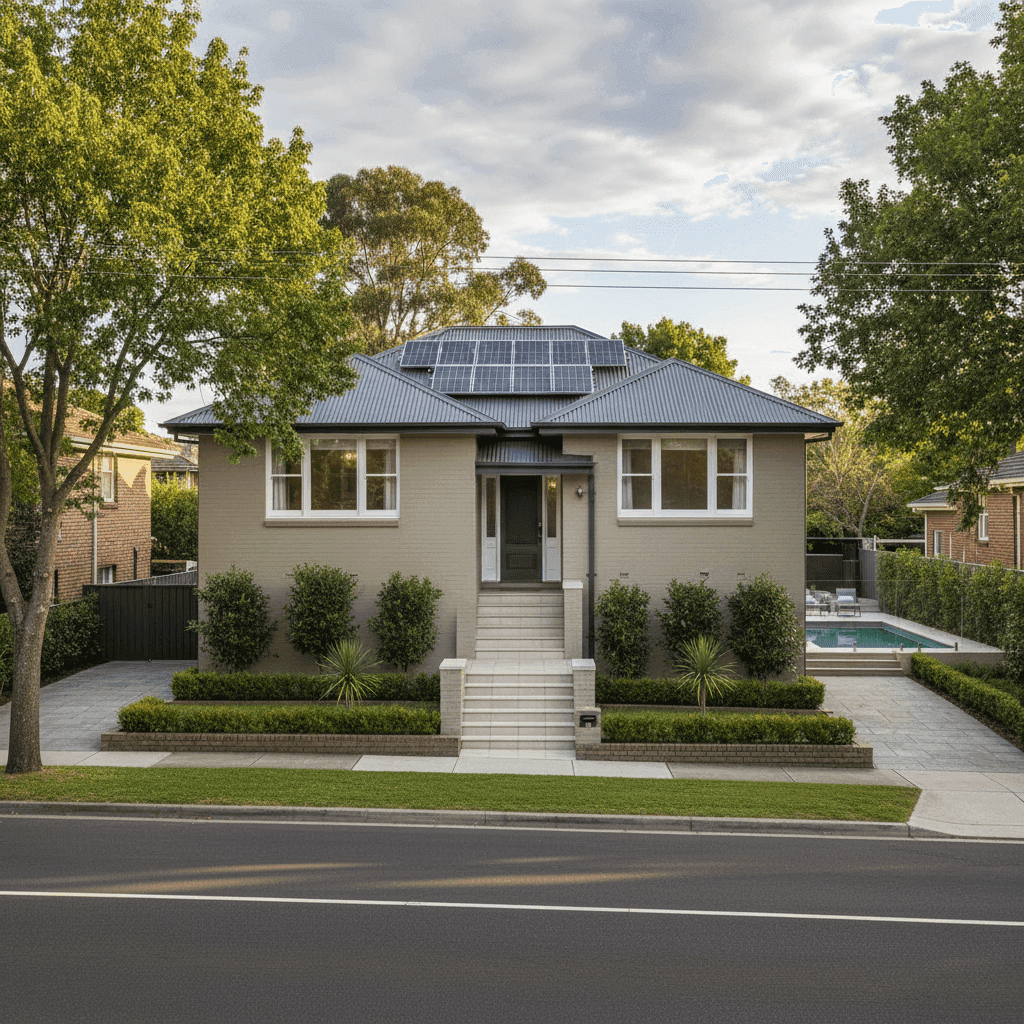
Earlwood is a well-established inner-west suburb of Sydney, known for its leafy streets, solid brick homes, and strong community feel. For owners of a free standing home in this area, understanding what drives your home insurance premium — and whether you're paying a fair price — can make a real difference to your household budget. This article breaks down a recent home and contents insurance quote for a five-bedroom property in Earlwood, NSW 2206, examining how it stacks up against local, state, and national benchmarks.
---
Is This Quote Fair?
The quote in question sits at $2,465 per year (or $245/month) for combined home and contents cover, with a building sum insured of $1,743,000 and contents valued at $150,000. CoverClub's pricing analysis rates this quote as Fair — around average for the area.
So what does "fair" actually mean in practice? It means the premium is neither a standout bargain nor an overpriced outlier — it falls comfortably within the middle range of what Earlwood homeowners are currently paying. Given the property's size (367 sqm), above-average fittings quality, and a generous building sum insured of nearly $1.75 million, landing close to the suburb average is a reasonable outcome.
The building excess of $3,000 is on the higher end, which typically works to reduce the annual premium. The contents excess of $500 is more standard. Homeowners should weigh whether the savings from a higher building excess are worth the out-of-pocket cost in the event of a claim.
---
How Earlwood Compares
Putting this quote into context with real market data reveals some interesting insights:
| Benchmark | Premium |
|---|---|
| This quote | $2,465/yr |
| Earlwood suburb average | $2,956/yr |
| Earlwood suburb median | $2,322/yr |
| Earlwood 25th percentile | $1,420/yr |
| Earlwood 75th percentile | $3,650/yr |
| NSW state average | $9,528/yr |
| NSW state median | $3,770/yr |
| National average | $5,347/yr |
| National median | $2,764/yr |
| Canterbury-Bankstown LGA average | $9,344/yr |
(Based on 36 quotes sampled in the Earlwood area. View full [Earlwood suburb stats](https://coverclub.com.au/stats/NSW/2206/earlwood).)
A few things stand out here. First, this quote comes in $491 below the Earlwood suburb average, which is a meaningful saving. It sits just above the suburb median of $2,322, placing it squarely in the middle of the local market.
Second, the contrast with NSW state-wide figures is striking. The NSW average of $9,528 is dramatically higher than what Earlwood homeowners typically pay — a reflection of the fact that many NSW postcodes, particularly in flood-prone regional areas and coastal zones, carry significantly elevated risk. Earlwood's relatively benign risk profile keeps premiums far more manageable.
Similarly, when viewed against national benchmarks, this quote compares very favourably. The national average of $5,347 is more than double this premium, again driven upward by high-risk areas across Queensland, northern NSW, and parts of Western Australia.
The Canterbury-Bankstown LGA average of $9,344 may seem surprising given Earlwood's moderate premiums, but LGA-level averages can be skewed by higher-risk pockets within the broader council area.
---
Property Features That Affect Your Premium
Several characteristics of this property influence where the premium lands — both positively and negatively.
Double brick construction is generally viewed favourably by insurers. It offers strong resistance to fire and impact damage, and tends to hold up well in storms. Compared to timber-framed homes, double brick properties often attract lower premiums or at least fewer loading penalties.
Steel/Colorbond roofing is another tick in the right column. Colorbond is durable, lightweight, and performs well in high-wind events. It's less susceptible to storm damage than older terracotta or concrete tiles, and insurers typically regard it as a lower-risk roofing material.
Slab foundation is standard for a home built in 2012 and presents no particular risk concerns. However, the property being elevated by at least one metre is worth noting — this can provide some protection against minor flooding or stormwater ingress, which may positively influence the premium.
Above-average fittings quality will push the building sum insured higher, and at $1,743,000 this is reflected in the coverage level. High-end kitchens, bathrooms, and finishes cost more to rebuild, so it's important the sum insured accurately reflects replacement cost rather than market value.
The swimming pool, solar panels, and ducted climate control all add to the property's replacement value and can influence premiums modestly. Solar panels in particular may attract specific policy conditions, so it's worth confirming your insurer covers them — both the panels themselves and any damage they might cause to the roof in a storm event.
With five bedrooms and three bathrooms across 367 sqm, this is a substantial home. Larger homes naturally carry higher rebuild costs, and the sum insured here appears appropriately calibrated to the property's size and quality.
---
Tips for Homeowners in Earlwood
1. Review your sum insured annually Building costs in Sydney have risen significantly over recent years. A sum insured set even two or three years ago may no longer reflect true rebuild costs. Use a building cost calculator or speak with a quantity surveyor to ensure you're not underinsured — especially with above-average fittings that are expensive to replace.
2. Confirm solar panel coverage Not all home insurance policies automatically cover solar panel systems, or they may only cover them under specific conditions. Check your Product Disclosure Statement (PDS) carefully and ask your insurer whether panels are covered for storm damage, fire, and accidental breakage.
3. Consider your excess strategy The $3,000 building excess on this policy is relatively high. While this reduces the annual premium, it means paying more out of pocket for smaller claims. Think about your financial buffer — if a $3,000 upfront cost would be a strain, it may be worth adjusting the excess and accepting a slightly higher premium.
4. Compare quotes before renewal Insurance loyalty rarely pays off. Insurers frequently offer better rates to new customers than to existing ones. Even if your current premium seems reasonable, running a comparison at renewal time could uncover meaningfully cheaper options for equivalent cover. Get a quote through CoverClub to see how your current policy stacks up.
---
Ready to Compare?
Whether you're reviewing your existing policy or shopping for cover on a new property, CoverClub makes it easy to see how your premium compares to real market data. Start your comparison at CoverClub and find out if you're getting a fair deal — or if there's a better option waiting for you.