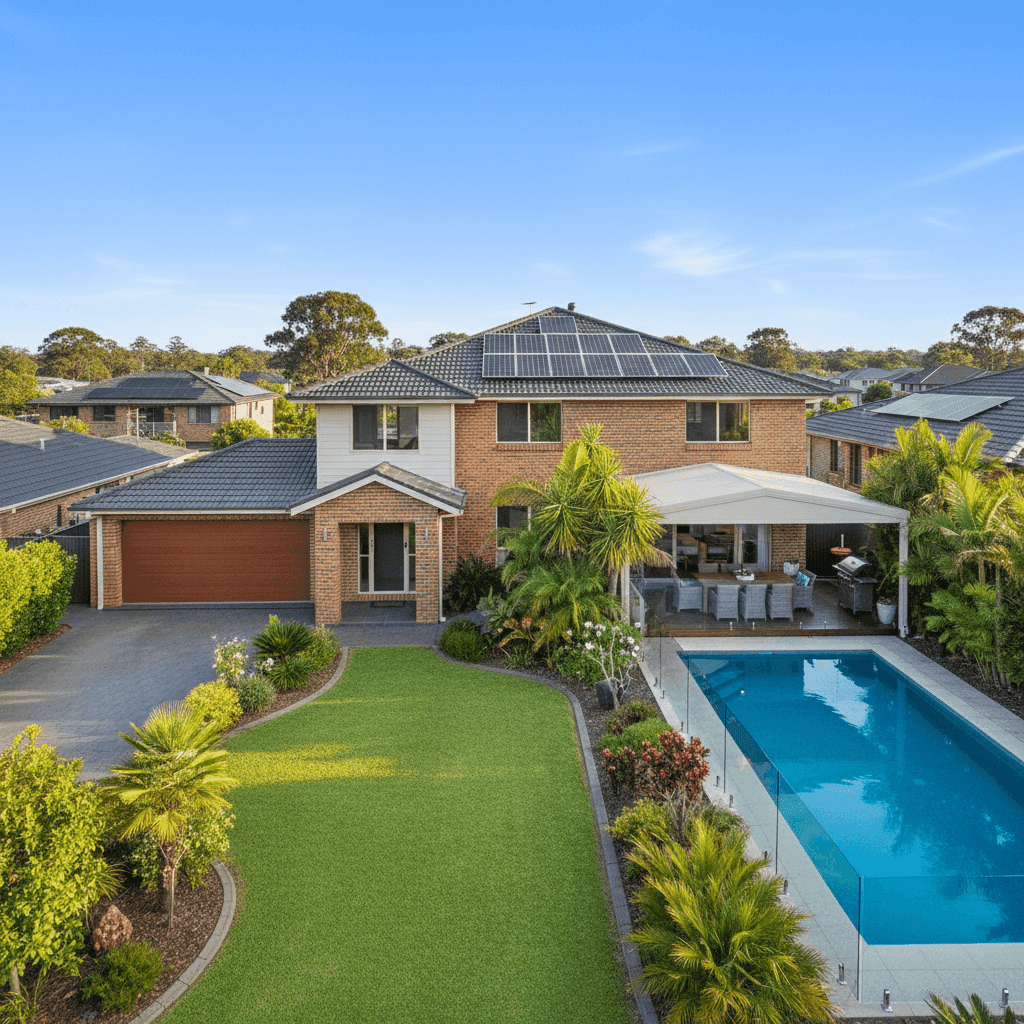
East Ballina is a coastal suburb in the Northern Rivers region of New South Wales — a sought-after area known for its relaxed lifestyle, proximity to the ocean, and the ever-present realities of living in a flood-prone part of Australia. For owners of a free standing home in this postcode, understanding what drives your insurance premium is just as important as choosing the right policy. This article breaks down a recent home and contents insurance quote for a four-bedroom property in East Ballina (NSW 2478), rated Expensive (Above Average), and puts it in context with local, state, and national benchmarks.
---
Is This Quote Fair?
The quote in question sits at $8,204 per year (or $786/month) for combined home and contents cover, with a building sum insured of $687,000 and contents valued at $20,000. Both the building and contents excess are set at $2,000.
Our price rating for this quote is Expensive — Above Average, and the numbers bear that out. The suburb average for East Ballina is $4,526/yr, meaning this quote is running roughly 81% above what most comparable properties in the area are paying. Even against the suburb's 75th percentile — the upper end of the typical range — of $5,525/yr, this quote still comes in nearly $2,700 higher.
That said, context matters. A high building sum insured ($687,000 is substantial), a pool, solar panels, and ducted climate control all push premiums upward. The property is also a 1992-era brick veneer home on a slab foundation, which carries its own risk profile in a region with known flood and storm exposure. None of these factors make the premium unreasonable in isolation, but together they help explain why this quote lands where it does.
The key takeaway: this quote is on the expensive side for East Ballina, but it's not entirely out of left field given the property's features and sum insured level. Comparing multiple insurers remains the smartest move.
---
How East Ballina Compares
To put this quote in perspective, here's how the $8,204/yr premium stacks up across different benchmarks:
| Benchmark | Average Premium | Median Premium |
|---|---|---|
| East Ballina (NSW 2478) | $4,526/yr | $4,284/yr |
| Ballina LGA | $23,241/yr | — |
| NSW State | $9,528/yr | $3,770/yr |
| National | $5,347/yr | $2,764/yr |
A few things stand out here. First, the Ballina LGA average of $23,241/yr is extraordinarily high — a figure almost certainly driven by flood-affected properties across the broader local government area, particularly following the devastating 2022 Northern Rivers floods. East Ballina's own suburb average of $4,526/yr is far more moderate, suggesting that properties within the suburb itself sit in a comparatively lower-risk zone within the LGA.
Second, the NSW state average of $9,528/yr is actually higher than this quote — though the state median of $3,770/yr tells a different story, indicating that a small number of very high-risk properties are pulling the average up significantly. This quote, at $8,204/yr, sits below the NSW average but well above the NSW median.
Nationally, the average is $5,347/yr and the median is $2,764/yr, reflecting the enormous variation in risk profiles across Australia.
You can explore more data for this area on the East Ballina suburb stats page, compare it against the NSW state overview, or see where it sits in the national picture.
---
Property Features That Affect Your Premium
Several characteristics of this property have a direct bearing on what insurers charge. Here's what's most relevant:
Brick veneer walls and tiled roof Brick veneer construction is generally viewed favourably by insurers — it's more fire-resistant than timber weatherboard and holds up reasonably well in storms. A tiled roof is similarly solid, though tiles can be vulnerable to hail and high winds. Together, these materials typically attract mid-range premiums rather than the higher rates associated with timber or Colorbond roofing.
Slab foundation A concrete slab is a double-edged sword in flood-prone areas. While it can be more resilient than suspended timber floors in some respects, slabs are harder and more expensive to repair if floodwater penetrates the structure. In a region like the Northern Rivers, this is a genuine consideration for insurers.
Swimming pool A pool adds to the insured value of the property and introduces additional liability considerations. Insurers factor this in when calculating your building sum insured and overall risk exposure.
Solar panels Solar systems — particularly larger rooftop installations — increase the replacement cost of the home and can be a target in storm or hail events. They also add complexity to any roof-related claim.
Ducted climate control Ducted HVAC systems are expensive to repair or replace, and their presence contributes to a higher building sum insured. This is reflected in the premium.
214 sqm floor area, built in 1992 A home of this size, built in the early 1990s, may have some ageing infrastructure (plumbing, electrical) that insurers price accordingly. The 214 sqm footprint is above average for the region, which also pushes the rebuild cost — and therefore the sum insured — higher.
---
Tips for Homeowners in East Ballina
1. Review your sum insured carefully At $687,000, the building sum insured is significant. Make sure this figure reflects the actual cost to rebuild — not the market value of the property. Overcovering can unnecessarily inflate your premium, while undercovering leaves you exposed. Tools like the Cordell Sum Sure calculator can help you arrive at an accurate figure.
2. Understand your flood risk East Ballina sits within the broader Northern Rivers region, which experienced catastrophic flooding in 2022. Even if your specific property is not in a high-risk flood zone, it's worth checking the NSW Flood Check Property Tool and confirming exactly what flood cover your policy includes — and excludes.
3. Shop around — seriously With a quote this far above the suburb average, comparing policies from multiple insurers is essential. Premiums for the same property can vary by thousands of dollars depending on how each insurer models risk for your specific address and features. Use CoverClub's free quote comparison tool to see what other insurers are offering.
4. Consider your excess settings Both the building and contents excess on this quote are set at $2,000. Increasing your excess can meaningfully reduce your annual premium — just make sure you're comfortable covering that amount out of pocket in the event of a claim. For lower-risk items like contents, a higher excess is often a sensible trade-off.
---
Compare Home Insurance Quotes in East Ballina
Whether you're a first-time buyer or a long-time resident reassessing your cover, it always pays to compare. CoverClub makes it easy to see how your current premium stacks up and find a policy that suits your property and budget. Get a free home insurance quote today and see what East Ballina homeowners are actually paying.