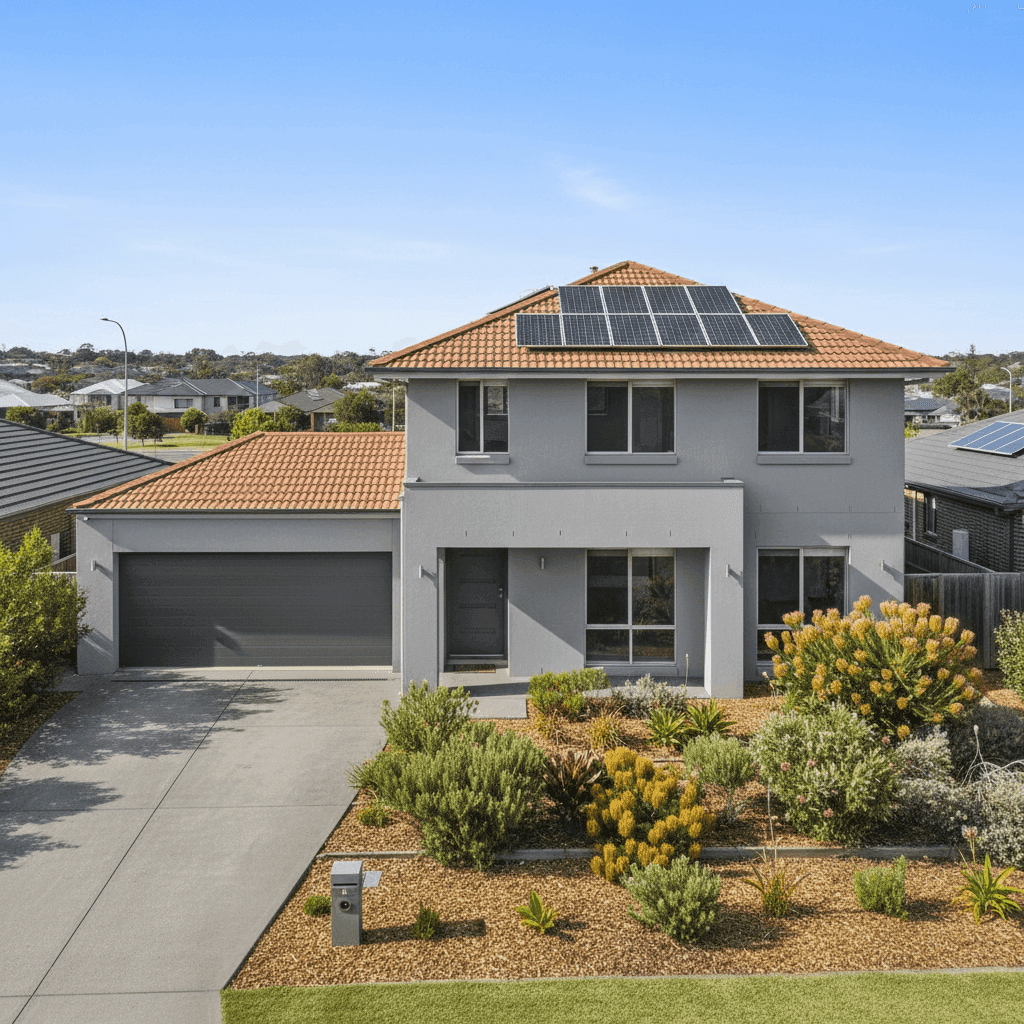
If you own a free standing home in East Ballina, NSW 2478, you already know the area has a lot going for it — coastal lifestyle, strong community, and easy access to the Northern Rivers. What you might not know is how much you should be paying to insure it. This article breaks down a real home and contents insurance quote for a four-bedroom property in the suburb, benchmarks it against local, state, and national data, and offers practical tips to help you get the best value cover.
---
Is This Quote Fair?
The quote in question sits at $3,259 per year (or about $312 per month) for combined home and contents cover — $705,000 building sum insured and $150,000 for contents, each carrying a $5,000 excess.
Our pricing model rates this quote as CHEAP — Below Average, meaning it comes in well under what most East Ballina homeowners are paying for comparable cover. For a property of this size and specification, that's a genuinely strong result.
To put it in context: the suburb average for East Ballina sits at $4,526 per year, and the median is $4,284. This quote beats both figures by a meaningful margin, landing below even the 25th percentile threshold of $3,671 — meaning it's cheaper than at least 75% of quotes we've seen in the area. That's not something to take for granted, especially in a coastal NSW market where premiums can escalate quickly.
---
How East Ballina Compares
Understanding where East Ballina sits in the broader insurance landscape helps frame just how competitive — or exposed — local homeowners can be. Here's a snapshot:
| Benchmark | Annual Premium |
|---|---|
| This Quote | $3,259 |
| East Ballina Suburb Average | $4,526 |
| East Ballina Suburb Median | $4,284 |
| NSW State Average | $9,528 |
| NSW State Median | $3,770 |
| National Average | $5,347 |
| National Median | $2,764 |
| Ballina LGA Average | $23,241 |
(Based on 22 quotes sampled for the East Ballina 2478 postcode.)
A few things stand out here. First, the NSW state average of $9,528 is extraordinarily high — this is heavily skewed by flood-prone, bushfire-exposed, and cyclone-risk regions across the state, which drag the mean upward significantly. The NSW median of $3,770 is a far more representative figure for typical homeowners, and this quote sits just slightly above that.
Second, the Ballina LGA average of $23,241 is striking. This reflects the significant flood risk exposure across parts of the Ballina council area — the 2022 Northern Rivers floods left a lasting imprint on insurer risk models across the region. East Ballina specifically may carry different risk characteristics to other parts of the LGA, which likely explains why this particular quote is much more competitive than the LGA-wide figure suggests.
Nationally, the average premium is $5,347, though the median of $2,764 again tells a more grounded story. This quote sits comfortably between those two figures — reasonable by any national standard.
Explore more data for your area on the East Ballina suburb stats page, or compare against the broader NSW insurance landscape and national benchmarks.
---
Property Features That Affect Your Premium
Insurance underwriters assess dozens of variables when pricing a policy. For this property, several features work in the homeowner's favour — and a couple warrant attention.
Construction Materials
The home's concrete external walls and tiled roof are both highly regarded by insurers. Concrete is fire-resistant, durable, and less susceptible to storm and impact damage than timber or lightweight cladding. Tiles similarly outperform Colorbond or corrugated iron in some risk categories, though they can be more expensive to repair after hail events. Overall, this construction profile is a positive signal for pricing.
Slab Foundation
A concrete slab foundation is standard for homes of this era and generally considered low-risk. It eliminates the underfloor cavity that can become a liability in flood or pest scenarios, which is particularly relevant in a coastal region like the Northern Rivers.
Built in 1995
At around 30 years old, this home sits in a middle ground — old enough that some components (roof tiles, plumbing, electrical) may be approaching the end of their service life, but not so old as to trigger significant loading from insurers. Keeping up with maintenance is key to avoiding claim complications.
Solar Panels
The presence of solar panels adds modest complexity to a home insurance policy. Most standard home and contents policies do cover rooftop solar as part of the building, but it's worth confirming this explicitly with your insurer. Solar systems can be costly to replace (often $8,000–$20,000+), so ensuring they're included in your building sum insured — and that the sum is adequate — is important.
Ducted Climate Control
Ducted air conditioning is a significant fixed asset, typically valued at several thousand dollars. As a permanent fixture, it should be covered under the building component of your policy. Again, confirm this is reflected in your sum insured rather than assumed.
Above-Average Fittings
With above-average fittings quality, the cost to rebuild or repair this home to its current standard will be higher than a comparable property with standard finishes. This is correctly factored into the $705,000 building sum insured, and it's worth revisiting this figure periodically as construction costs rise.
Property Size
At 244 sqm, this is a substantial home. Rebuild costs in coastal NSW have risen sharply in recent years due to labour shortages and materials inflation. It's worth having your sum insured independently verified to ensure you're not underinsured.
---
Tips for Homeowners in East Ballina
1. Review Your Flood Cover Status
The Northern Rivers region experienced devastating floods in 2022, and insurers have repriced flood risk across the area — in some cases dramatically. Check whether your policy includes flood cover (as distinct from storm or rainwater damage), and understand exactly what's covered. If your property sits in or near a floodplain, this distinction matters enormously.
2. Don't Set and Forget Your Sum Insured
Building costs in regional NSW have increased significantly. The cost to rebuild a 244 sqm home with above-average fittings could easily exceed $700,000 in today's market. Use a building cost calculator or speak to a quantity surveyor to validate your sum insured at each renewal — being underinsured can be financially devastating after a major loss.
3. Consider Your Excess Carefully
Both the building and contents excess on this policy are set at $5,000. A higher excess typically reduces your premium, but it also means more out-of-pocket cost at claim time. Make sure your emergency fund can comfortably cover this amount before locking in a high-excess policy.
4. Bundle and Compare Annually
Home and contents bundled together (as in this quote) often delivers a discount compared to separate policies. That said, the market changes every year — insurers adjust their risk appetite, and the cheapest option today may not be the best value at next renewal. Make a habit of comparing quotes annually rather than auto-renewing.
---
Ready to Compare Your Own Quote?
Whether you're renewing your existing policy or shopping for cover on a new property, it pays to know where you stand. CoverClub makes it easy to benchmark your premium against real data from your suburb, state, and across Australia.
Get a home insurance quote today and find out if you're paying a fair price — or if there's a better deal waiting for you.