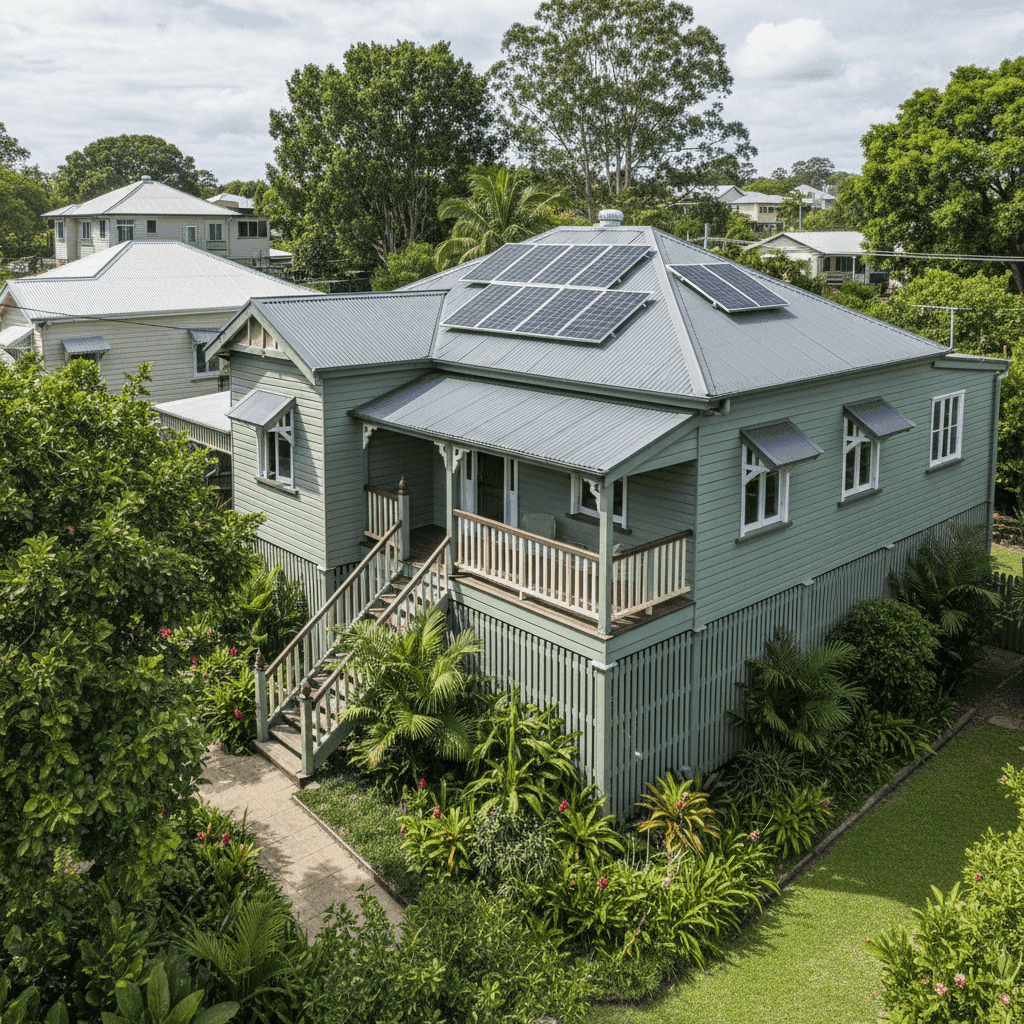
If you own a free standing home in East Brisbane, QLD 4169, you'll know that insurance costs can vary enormously — and not always in ways that feel fair. This article breaks down a real building insurance quote for a four-bedroom, three-bathroom weatherboard home in the suburb, compares it against local, state, and national benchmarks, and offers practical tips to help you manage your premium.
---
Is This Quote Fair?
The quote in question comes in at $7,407 per year (or $724 per month) for building-only cover, with a $1,000 building excess and a sum insured of $1,252,000.
Our price rating for this quote is Expensive — above average for the area.
To put that in context, the suburb average annual premium for East Brisbane sits at $3,235, with a median of $2,915 across 36 quotes in our dataset. This quote is more than double the suburb median, which is a significant gap worth understanding before simply accepting the figure.
That said, "expensive" doesn't automatically mean "wrong." Several property-specific factors — which we'll unpack below — can legitimately push a premium well above the local average. The key is knowing why you're paying more, and whether there's room to negotiate or shop around.
---
How East Brisbane Compares
East Brisbane sits in an interesting position when you zoom out to the broader market. Here's how the numbers stack up:
| Benchmark | Average Premium | Median Premium |
|---|---|---|
| East Brisbane (suburb) | $3,235/yr | $2,915/yr |
| Queensland (state) | $9,129/yr | $3,903/yr |
| National | $5,347/yr | $2,764/yr |
| Brisbane LGA | $16,277/yr | — |
A few things stand out here. Queensland's average premium of $9,129 is dramatically higher than its median of $3,903 — a classic sign that a small number of very high-risk properties (think cyclone-prone coastal areas and flood zones) are pulling the average up sharply. East Brisbane, while not a cyclone risk area, does sit in a flood-affected corridor of inner Brisbane, which contributes to elevated premiums across the suburb.
Nationally, the median sits at $2,764, meaning this property's quote is roughly 2.7 times the national median — though it remains below the Queensland state average and well below the Brisbane LGA average of $16,277.
You can explore the full data for this suburb at CoverClub's East Brisbane stats page, compare it against Queensland-wide figures, or take a look at national home insurance benchmarks.
---
Property Features That Affect Your Premium
Several characteristics of this particular property are likely driving the premium above the suburb average. Here's what insurers are looking at:
1. Construction Era — Built in 1936
Homes built before World War II are a known risk factor for insurers. A 1936 build means original or heavily modified wiring, plumbing, and structural elements that may not meet modern building codes. Older homes are statistically more likely to suffer damage from storms, fire, or gradual deterioration, and they're often more expensive to repair or rebuild to current standards.
2. Weatherboard Timber Walls
Weatherboard construction is charming and common in inner Brisbane, but timber walls carry a higher fire risk rating than brick or rendered concrete. Insurers price this in — sometimes significantly.
3. Pole Foundation
Homes built on poles (also called stumps) are elevated off the ground, which can be a mixed blessing. On one hand, elevation helps with flood resilience. On the other, pole foundations can be more susceptible to movement, termite damage, and structural stress in storm events — all of which factor into underwriting decisions.
4. Timber and Laminate Flooring
Like the walls, timber flooring adds to the fire risk profile and can be costly to replace or match in an older home where original boards may no longer be readily available.
5. Above-Average Fittings Quality
With above-average fittings — think quality joinery, premium fixtures, and high-spec finishes — the cost to rebuild or restore to the same standard is considerably higher. This is reflected directly in the sum insured of $1,252,000, which is substantial for a 235 sqm home, and in the premium itself.
6. Solar Panels and Ducted Climate Control
Both of these additions increase the replacement value of the property and introduce additional risk considerations (electrical systems, inverters, ductwork). Insurers account for these when calculating your premium.
---
Tips for Homeowners in East Brisbane
1. Review Your Sum Insured Carefully
At $1,252,000 for 235 sqm, this property's sum insured works out to roughly $5,328 per sqm — on the higher end, even for above-average fittings. It's worth getting an independent building replacement cost estimate to ensure you're not over-insured (paying too much) or under-insured (at risk of a shortfall). Many insurers offer free online calculators.
2. Shop Around — Seriously
With a quote this far above the suburb median, comparison shopping is essential. Insurers assess risk differently, and a property with older construction and timber walls might be priced very differently across providers. Use a platform like CoverClub to compare multiple quotes side by side without the legwork.
3. Ask About Flood and Storm Definitions
East Brisbane has a history of flood events, most notably in 2011 and 2022. Before accepting any policy, confirm exactly what flood cover is included, how "flood" is defined (rising water vs. storm surge vs. rainwater runoff), and whether there are sub-limits or exclusions. Some policies that appear cheaper may exclude flood entirely.
4. Consider Your Excess Strategy
This quote carries a $1,000 building excess. Opting for a higher excess — say $2,500 or $5,000 — can meaningfully reduce your annual premium. If you have sufficient savings to cover a larger out-of-pocket expense in the event of a claim, this can be a smart way to lower ongoing costs.
---
Ready to Compare?
A quote is just a starting point. Whether $7,407 is the right price for your home in East Brisbane depends on your specific risk profile, the level of cover included, and what else is available in the market. The best way to find out is to compare.
Get a home insurance quote at CoverClub and see how your property stacks up — it takes just a few minutes, and you might be surprised at the difference between providers.