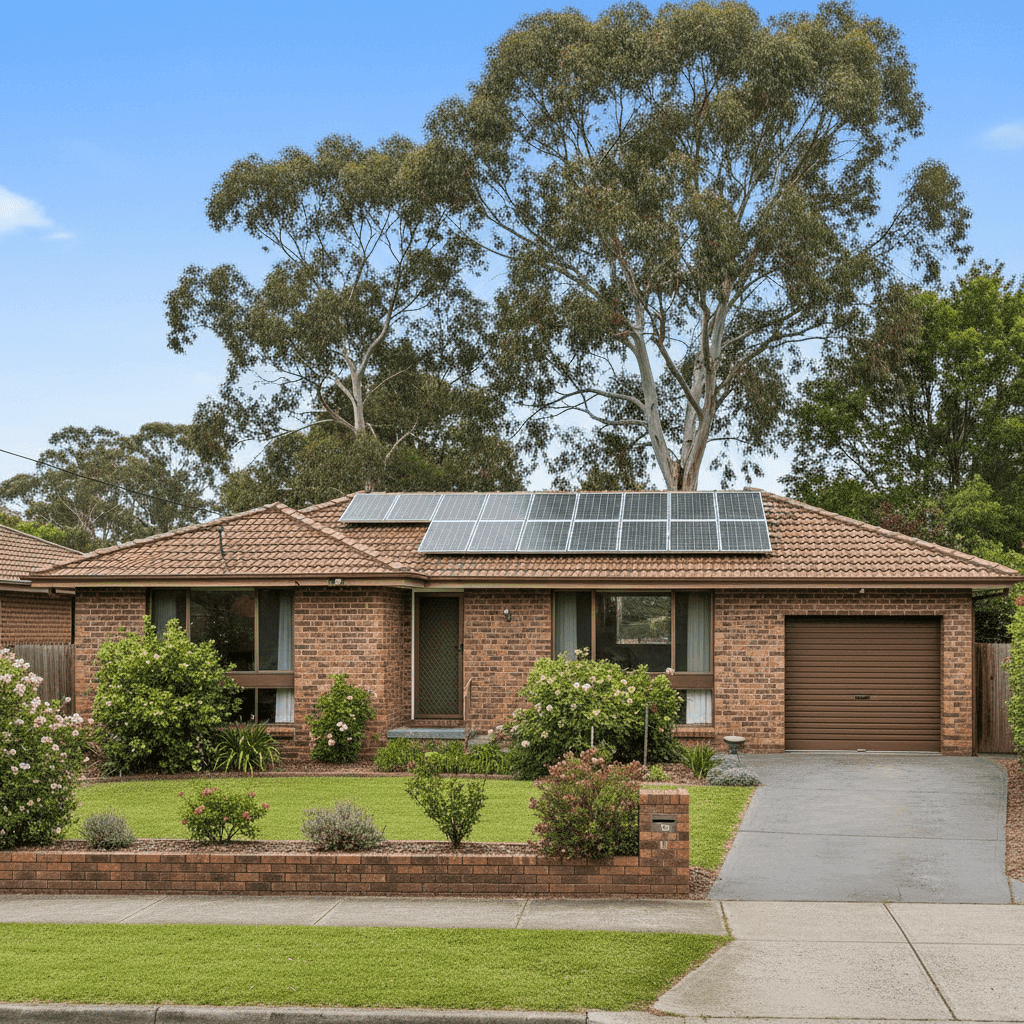
East Gosford is a well-established suburb on the NSW Central Coast, sitting just inland from Brisbane Water and a short drive from the Gosford CBD. It's a popular choice for families and downsizers alike, offering a mix of older character homes and more recent renovations. This article takes a close look at a real home and contents insurance quote for a three-bedroom, two-bathroom free-standing home in the area — and unpacks what's driving the price, how it stacks up against local and national benchmarks, and what East Gosford homeowners can do to keep their premiums competitive.
---
Is This Quote Fair?
The short answer: yes — and then some. At $1,335 per year (or roughly $127 per month), this quote has been rated CHEAP, meaning it sits well below the average for the East Gosford area.
To put that in perspective, the suburb average for comparable quotes is $2,258 per year, and the median sits at $2,006 per year. Even the 25th percentile — the cheapest quarter of quotes in the suburb — comes in at $1,952 per year. This policy at $1,335 is tracking below that bottom quartile, which is a strong result by any measure.
For a property with a building sum insured of $394,000 and contents covered up to $104,000, this represents solid value. The building excess of $2,000 and contents excess of $1,000 are reasonable for the level of cover, and the combined premium is unlikely to cause sticker shock when renewal time rolls around.
Of course, price alone doesn't tell the whole story — the right policy needs to match your circumstances. But from a pure cost standpoint, this quote is performing well above average.
---
How East Gosford Compares
Zooming out to a broader view reveals just how well-priced this quote really is. Here's how it sits across different benchmarks:
| Benchmark | Annual Premium |
|---|---|
| This Quote | $1,335 |
| East Gosford Suburb Average | $2,258 |
| East Gosford Suburb Median | $2,006 |
| NSW State Average | $3,801 |
| NSW State Median | $3,410 |
| National Average | $2,965 |
| National Median | $2,716 |
| Hawkesbury LGA Average | $4,423 |
The figures paint a striking picture. This quote is 41% below the East Gosford suburb average, 65% below the NSW state average, and 55% below the national average. Even compared to the national home insurance statistics, this property is being insured at a fraction of what most Australians pay.
It's worth noting that the NSW state average of $3,801 is notably higher than the national average, reflecting the elevated risk profile of many parts of the state — from flood-prone valleys to bushfire corridors. The Hawkesbury LGA average of $4,423 is particularly striking, a reminder that geography within NSW can dramatically shift what insurers charge.
East Gosford itself sits in a relatively manageable risk zone by Central Coast standards, and the suburb-level data for postcode 2250 reflects that — though premiums in the area are still not trivial.
---
Property Features That Affect Your Premium
Several characteristics of this property likely contribute to its competitive premium. Let's break them down:
Brick Veneer Construction
Brick veneer is one of the more insurer-friendly wall materials in Australia. It offers solid fire resistance and structural durability without the full weight and cost of double brick. Insurers generally view brick veneer favourably, and it can contribute to lower premiums compared to weatherboard or lightweight cladding.
Tiled Roof
Terracotta or concrete tile roofing is considered a lower-risk roofing material by most insurers. Tiles are durable, fire-resistant, and long-lasting — particularly relevant for a home built in 1970 that has likely had at least one re-roof in its lifetime.
Stump Foundation
Homes on stumps are common in older NSW and Queensland-style builds. While they can be more vulnerable to certain types of movement and pest damage, they also allow for better ventilation and easier access for maintenance. Insurers assess stumped homes on a case-by-case basis, but this property doesn't appear to be attracting a significant loading for it.
Solar Panels
This property has solar panels installed, which adds a modest level of replacement cost to the building sum insured. Solar systems can be damaged by hail, storms, or fire, and it's important to confirm they're covered under the building policy. In most cases, rooftop solar is treated as a fixture and falls under building cover — but it's always worth double-checking the product disclosure statement (PDS).
Age of Construction (1970)
A home built in 1970 is over 50 years old, which can sometimes attract higher premiums due to ageing infrastructure — plumbing, wiring, and roofing materials that may be approaching end of life. That said, many older homes have been well-maintained or partially renovated, and this property's premium doesn't appear to reflect any significant age loading.
No Pool, No Ducted Climate Control
The absence of a swimming pool and ducted air conditioning simplifies the risk profile and reduces the replacement cost calculation, both of which can keep premiums lower.
---
Tips for Homeowners in East Gosford
Whether you're renewing your policy or shopping around for the first time, here are a few practical steps to help you get the best outcome:
- Review your sum insured annually. Building costs have risen sharply across Australia in recent years. Make sure your $394,000 building sum insured still reflects what it would actually cost to rebuild your home from scratch — not just its market value. Underinsurance is one of the most common and costly mistakes homeowners make.
- Confirm your solar panels are covered. If you have rooftop solar, check your PDS to ensure the system is explicitly included under your building cover. Some policies have sub-limits or exclusions for solar equipment, particularly for older or non-standard installations.
- Maintain your stumped foundations. Homes on stumps should be inspected periodically for timber rot, termite activity, and uneven settlement. Keeping your foundations in good condition not only protects your home but demonstrates to insurers that the property is well-maintained — which can help at renewal time.
- Compare quotes before you renew. Loyalty doesn't always pay in the insurance market. Even if your current premium seems reasonable, it's worth running a comparison at renewal time. Use CoverClub's free quote tool to see what multiple insurers would charge for your specific property — you might be surprised at the difference.
---
Get a Quote for Your East Gosford Home
If you own a home in East Gosford or anywhere on the Central Coast, it pays to know what the market looks like before you commit to a policy. CoverClub makes it easy to compare home and contents insurance quotes side by side, with suburb-level data to help you understand whether you're getting a fair deal. Start your free quote today and see how your premium stacks up against your neighbours.