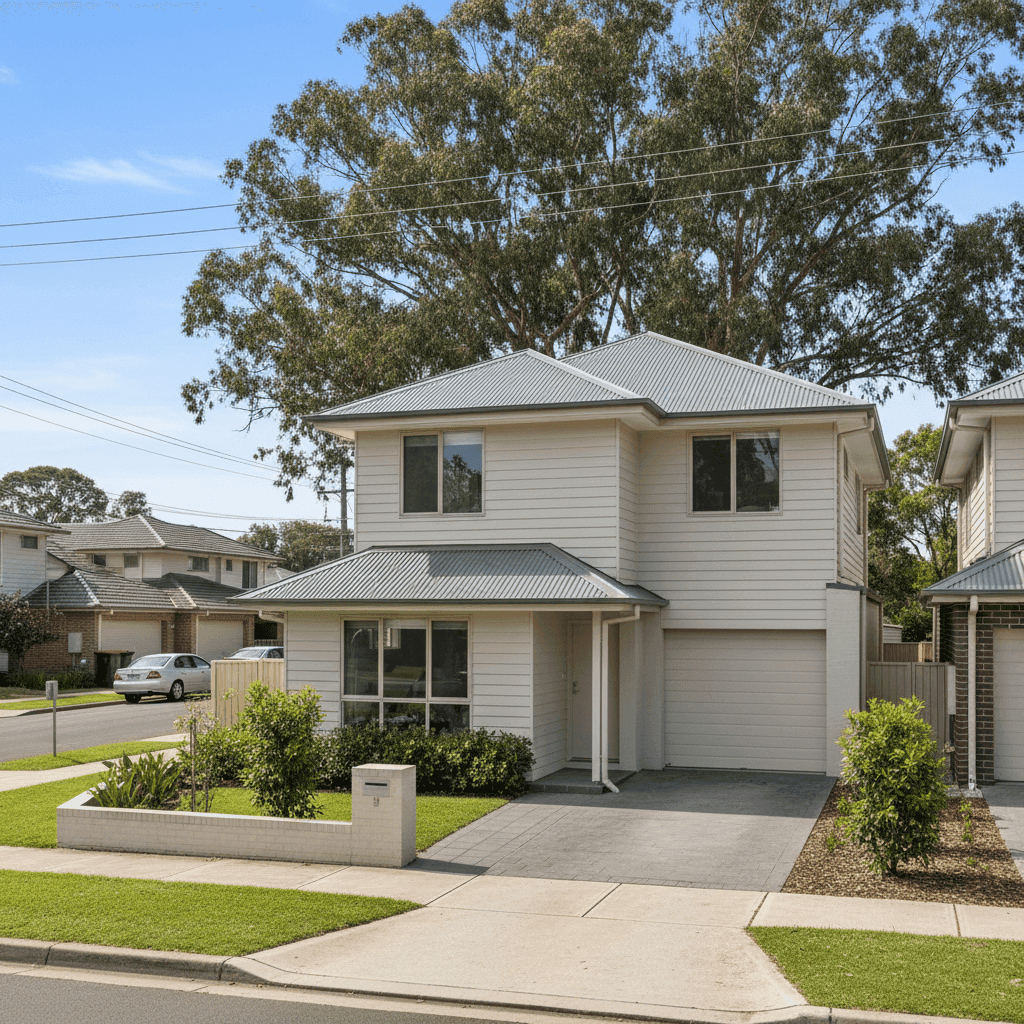
If you own a townhouse in East Hills, NSW 2213, you're living in a quiet, family-friendly suburb tucked into the southern reaches of the Canterbury-Bankstown local government area. Like many homeowners across Greater Sydney, you've probably wondered whether your home insurance premium is actually reasonable — or whether you're quietly paying more than you should be. This article breaks down a real home and contents insurance quote for a four-bedroom townhouse in East Hills, compares it against local, state, and national benchmarks, and offers practical tips to help you get better value on your cover.
---
Is This Quote Fair?
The quote in question comes in at $2,836 per year (or $274 per month) for combined home and contents cover, with a building sum insured of $757,000 and contents valued at $50,000. The building excess is $3,000 and the contents excess is $1,000.
Our analysis rates this quote as EXPENSIVE — above average for the area.
To understand why, it helps to look at the local context. East Hills suburb insurance data shows an average annual premium of just $1,301 and a median of $946, meaning this quote is more than double what many East Hills homeowners are paying. Even at the 75th percentile — where premiums are already on the higher side — the suburb benchmark sits at only $1,483 per year.
That said, it's important to note that the suburb sample size here is small (five quotes), so those figures may not capture the full range of policies in the area. The sum insured on this property is also relatively high at $757,000 for the building alone, which will naturally push the premium upward compared to properties with lower rebuild values.
When you zoom out to the state level, the picture shifts somewhat. The NSW average home insurance premium sits at $3,801 per year, with a median of $3,410 — both well above this quote. So while the premium looks steep compared to East Hills neighbours, it's actually sitting below the NSW average, which is heavily influenced by high-risk coastal and flood-prone areas across the state.
---
How East Hills Compares
Here's a snapshot of how this $2,836 annual premium stacks up across different benchmarks:
| Benchmark | Average Premium | Median Premium |
|---|---|---|
| East Hills (2213) | $1,301/yr | $946/yr |
| Canterbury-Bankstown LGA | $1,910/yr | — |
| New South Wales | $3,801/yr | $3,410/yr |
| National (Australia) | $2,965/yr | $2,716/yr |
Against the national average of $2,965 and median of $2,716, this quote is broadly in line — sitting slightly below the average and just above the national median. For a four-bedroom townhouse with a $757,000 building sum insured in metropolitan Sydney, that's not an unreasonable position to be in nationally.
The real story here is the gap between this quote and local East Hills premiums. If neighbours are paying closer to $946–$1,301 per year, the difference likely comes down to the higher rebuild value, the specific insurer's pricing model, and the property's construction type — all of which we'll explore below.
---
Property Features That Affect Your Premium
Several characteristics of this East Hills townhouse will influence how insurers price the risk:
Weatherboard timber exterior walls Weatherboard construction is one of the more significant premium drivers. Timber walls are considered a higher fire risk than brick veneer or double brick, and they can also be more susceptible to moisture damage and pest activity over time. Most insurers apply a loading to weatherboard homes, which likely contributes to the elevated premium here.
Steel/Colorbond roof On the positive side, a Colorbond steel roof is viewed favourably by insurers. It's durable, low-maintenance, resistant to ember attack, and holds up well in storms — all factors that can help moderate the risk profile of an otherwise timber-clad property.
Slab foundation A concrete slab foundation is generally considered stable and low-risk, which works in the homeowner's favour. It's less susceptible to subsidence or movement compared to older pier-and-beam styles.
Built in 1990 At around 35 years old, the property sits in a middle ground for insurers. It's old enough that some systems (plumbing, electrical) may be approaching the end of their serviceable life, but not so old that it carries the significant age loading applied to pre-1970s homes.
Ducted climate control The presence of ducted air conditioning adds to the contents and building value, and can be a factor in premium calculations — particularly for building cover, where the ducting system forms part of the fixed structure.
No pool, no solar panels The absence of a swimming pool removes a common liability risk, and no solar panels means one less complex system for insurers to factor in. Both are minor positives for the overall risk profile.
---
Tips for Homeowners in East Hills
1. Review your sum insured carefully A building sum insured of $757,000 is substantial. Make sure this figure reflects the actual cost to rebuild your townhouse from scratch — not its market value. Overinsuring can push your premium up unnecessarily, while underinsuring leaves you exposed. Use a building cost calculator or consult a quantity surveyor to confirm your figure is accurate.
2. Consider raising your excess This quote carries a $3,000 building excess and $1,000 contents excess. If you're in a financial position to absorb a higher out-of-pocket cost in the event of a claim, opting for a higher excess is one of the most reliable ways to bring your annual premium down.
3. Shop around — don't auto-renew The gap between this quote and the East Hills suburb average is a strong reminder that premiums vary significantly between insurers. Loyalty rarely pays in home insurance. Comparing quotes annually through a platform like CoverClub can surface meaningfully cheaper options without sacrificing cover quality.
4. Ask about timber wall discounts or fire mitigation credits Some insurers offer discounts if you can demonstrate fire mitigation measures — such as ember guards, fire-rated cladding, or a well-maintained property perimeter. It's worth asking your insurer directly whether any risk-reduction steps could reduce your premium.
---
Compare Your Options with CoverClub
Whether you're renewing your policy or shopping for the first time, it pays to know what the market looks like before you commit. CoverClub makes it easy to compare home and contents insurance quotes tailored to your property in East Hills and across Australia. Get a quote today and see how much you could save.