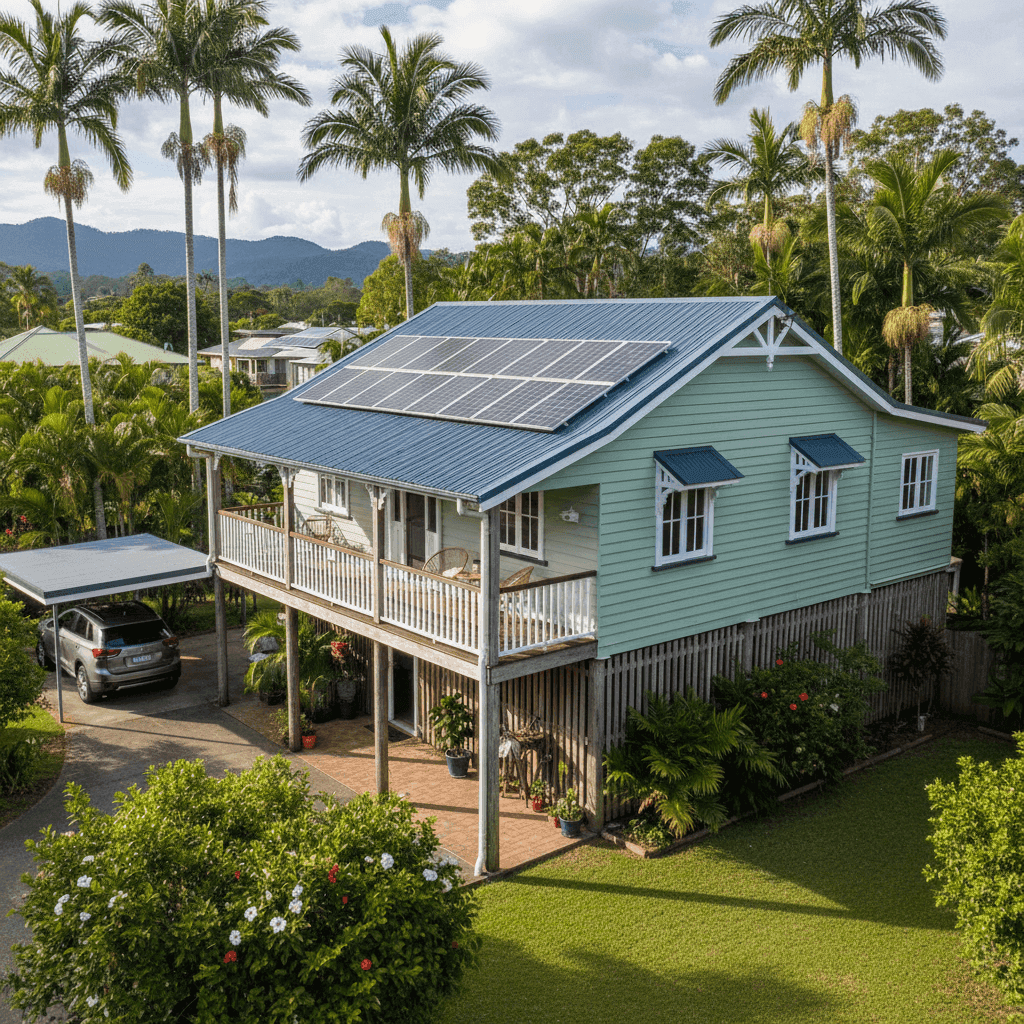
East Innisfail is a quiet residential pocket on the southern fringe of Innisfail in Far North Queensland — a region as beautiful as it is exposed to the forces of nature. For homeowners here, finding affordable home and contents insurance can feel like an uphill battle. This article breaks down a real quote for a 3-bedroom, free-standing home in East Innisfail (postcode 4860), examines how it compares to local, state, and national benchmarks, and offers practical guidance for keeping your cover both comprehensive and cost-effective.
---
Is This Quote Fair?
The quote in question comes in at $2,895 per year (or $277/month) for combined home and contents cover — insuring the building for $423,000 and contents for $20,000, each with a $1,000 excess.
Our price rating for this quote is CHEAP, meaning it sits well below the average for the area. To put that in perspective:
- The suburb average for East Innisfail is a staggering $15,776/year
- The suburb median sits at $15,546/year
- Even the 25th percentile (i.e., the cheaper end of the market locally) is $11,479/year
At $2,895, this quote is roughly 82% below the suburb average — an extraordinary result for a postcode that is widely regarded as one of the most expensive in Australia to insure. Whether you're a first-time buyer or a long-time local, a quote at this level is genuinely exceptional and well worth securing before it changes.
---
How East Innisfail Compares
To fully appreciate what this quote represents, it helps to zoom out and look at the broader picture. You can explore the full data on the East Innisfail suburb stats page.
| Benchmark | Annual Premium |
|---|---|
| This quote | $2,895 |
| East Innisfail suburb average | $15,776 |
| East Innisfail suburb median | $15,546 |
| Tablelands LGA average | $18,083 |
| QLD state average | $9,129 |
| QLD state median | $3,903 |
| National average | $5,347 |
| National median | $2,764 |
The Queensland state average of $9,129/year already reflects the elevated risk profile of insuring homes across a cyclone-prone state. But East Innisfail's suburb average of $15,776 is nearly double that — a clear signal that local insurers are pricing in significant natural hazard exposure.
Compared to the national average of $5,347, this quote is still 46% cheaper, and it even undercuts the national median of $2,764 by only a slim margin. In short, this is a rare find in a suburb where most homeowners are paying five figures annually.
It's also worth noting that the sample of 35 quotes collected for East Innisfail shows a wide spread — from the 25th percentile at $11,479 up to the 75th percentile at $20,109. That kind of range tells you that insurer appetite for this postcode varies enormously, and shopping around makes a real difference.
---
Property Features That Affect Your Premium
Several characteristics of this property are directly relevant to how insurers assess risk — and some work in the homeowner's favour more than you might expect.
Elevated Foundation (Poles)
This home sits elevated by at least one metre on a pole foundation — a classic Queenslander construction style. Elevation is a significant flood-mitigation feature. In a region that has experienced devastating flooding (Innisfail was severely impacted by Cyclone Larry in 2006 and has a long history of flood events), having the living area raised above ground level can meaningfully reduce the risk of inundation damage. Some insurers reward this with lower premiums.
Weatherboard Timber Walls
Weatherboard wood construction is common in older Far North Queensland homes, but it does carry a higher fire and storm damage risk compared to brick or rendered masonry. Built in 1985, this home is nearly 40 years old, which may prompt some insurers to apply age loadings — particularly for the roof and wall cladding.
Steel / Colorbond Roof
On the positive side, a steel Colorbond roof is generally viewed favourably by insurers in cyclone-prone areas. It tends to perform better in high winds than older corrugated iron or tile alternatives, and it's a modern, low-maintenance material.
Solar Panels
The presence of solar panels adds a modest layer of complexity to the insured value. Panels can be damaged in hailstorms or cyclones, and their replacement cost should ideally be factored into the building sum insured. At $423,000, the building cover here appears reasonable for a 130 sqm home in this region, but it's worth confirming that the solar system is explicitly covered under the policy.
Cyclone Risk Zone
East Innisfail sits firmly within a designated cyclone risk area. This is the single biggest driver of elevated premiums in this postcode. Standard policies in QLD include cyclone cover, but the terms — particularly around the cyclone excess — can vary significantly between insurers. Always check whether a separate cyclone excess applies on top of the standard building excess.
---
Tips for Homeowners in East Innisfail
1. Don't assume your current insurer is competitive As the suburb data shows, premiums here vary wildly. A homeowner paying $15,000+ per year may be able to find equivalent cover for a fraction of that price by comparing multiple insurers. Use a comparison platform like CoverClub to benchmark your current policy.
2. Review your sum insured carefully Underinsurance is a serious risk in disaster-prone areas. After a major cyclone or flood event, rebuilding costs can escalate quickly due to high demand for trades and materials. Make sure your building sum insured reflects current construction costs — not the price you paid for the home.
3. Check your cyclone excess Many policies in North Queensland include a separate, higher excess for cyclone-related claims — sometimes $2,500, $5,000 or more. Understand what you'll be out of pocket before a claim arises, not after.
4. Document your contents thoroughly With $20,000 in contents cover, it's important to maintain an up-to-date home inventory. Photographs, receipts, and serial numbers stored securely in the cloud make the claims process significantly smoother after a weather event.
---
Ready to Compare Your Home Insurance?
Whether you're a new homeowner in East Innisfail or simply haven't reviewed your policy in a few years, it pays to see what's available. Premiums in this suburb vary enormously between insurers, and the difference can run into the thousands — or even tens of thousands — of dollars per year. Get a home insurance quote through CoverClub and see how your current cover stacks up against the market in minutes.