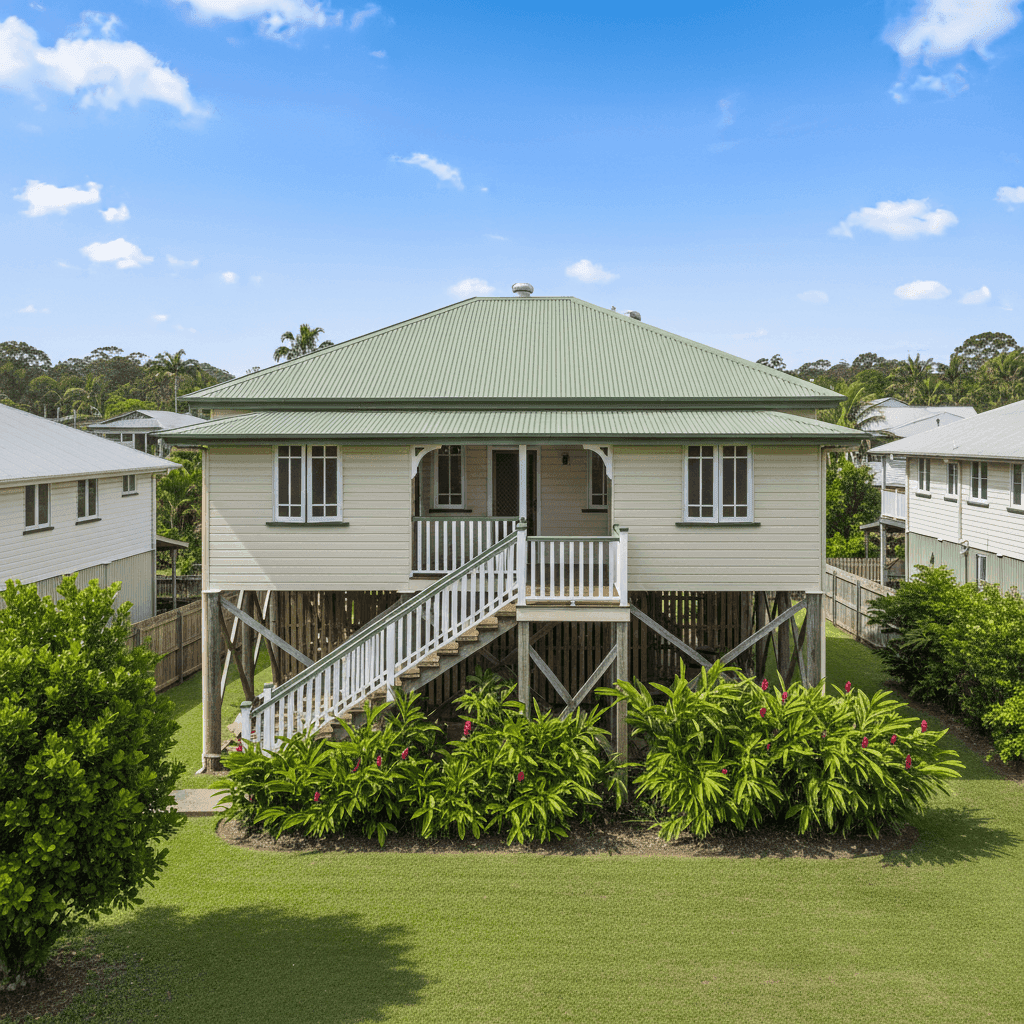
If you own a free standing home in East Innisfail, QLD 4860, you've probably noticed that home insurance doesn't come cheap. This article breaks down a real building-only insurance quote for a 2-bedroom, 1-bathroom weatherboard home in the suburb, examines how it stacks up against local, state, and national benchmarks, and offers practical advice for homeowners looking to manage their premiums.
---
Is This Quote Fair?
The quote in question comes in at $23,256 per year (or $2,325/month) for building-only cover on a home insured for $538,000. Our price rating for this quote is EXPENSIVE — above average by a significant margin.
To put that into context:
- The suburb average for East Innisfail is $6,664/yr, and the median sits at $5,828/yr
- This quote is roughly 3.5× the suburb average and nearly 4× the suburb median
- Even at the 75th percentile for the suburb — meaning 75% of quotes are cheaper — the figure is just $8,266/yr
So yes, this is an outlier, even by East Innisfail standards. That said, there are very clear reasons why certain properties in this postcode attract premiums at this level, which we'll explore below.
---
How East Innisfail Compares
Understanding where East Innisfail sits within the broader insurance landscape helps explain why premiums here are elevated well above the national norm.
| Benchmark | Average Premium | Median Premium |
|---|---|---|
| East Innisfail (suburb) | $6,664/yr | $5,828/yr |
| Tablelands LGA | $7,937/yr | — |
| Queensland (state) | $4,547/yr | $3,931/yr |
| National | $2,965/yr | $2,716/yr |
Even the suburb average of $6,664/yr is 42% higher than the Queensland state average and more than twice the national average. The Tablelands LGA average of $7,937/yr is higher still, reflecting the concentration of high-risk properties across the region.
This isn't arbitrary — Far North Queensland is one of Australia's most challenging insurance environments. Postcode 4860 sits firmly within a designated cyclone risk zone, and the Innisfail area has a well-documented history of severe weather events, including the impact of Tropical Cyclone Larry in 2006. Insurers price this risk into every policy written in the area.
You can explore full premium data for this suburb at the East Innisfail insurance stats page, compare it to the Queensland state overview, or see how it measures against the national picture.
> Note: The suburb sample size for this analysis is 14 quotes, so averages should be interpreted as indicative rather than definitive.
---
Property Features That Affect Your Premium
Several characteristics of this particular property contribute meaningfully to its insurance cost. Here's what insurers are paying close attention to:
Cyclone Risk Zone
This is the dominant factor. East Innisfail falls within a high cyclone risk area, which triggers significant premium loadings across virtually all insurers. Cyclone cover typically includes damage from wind, rain ingress, and storm surge — all of which are costly to underwrite in Far North Queensland.
Age and Construction (1930 Weatherboard)
Built in 1930, this home is nearly a century old. Weatherboard timber construction, while charming and common in the region, is considered higher risk than brick or rendered masonry by most insurers. Older homes may have wiring, plumbing, or structural elements that don't meet modern building standards, increasing the likelihood and cost of a claim.
Elevated on Stumps
The home is elevated by at least 1 metre on stumps — a classic Queensland construction style. Elevation can actually work in your favour for flood risk (water flows beneath the home rather than through it), but it also introduces additional structural considerations. Stumped foundations require maintenance, and the underfloor space can be vulnerable to wind uplift during severe storms.
Roof Type: Steel/Colorbond
A Colorbond steel roof is generally well-regarded by insurers for its durability and resistance to corrosion. In a cyclone zone, however, roof integrity is everything — and even modern metal roofing carries risk in extreme wind events. The age of the roof relative to the 1930 build year may also be a factor in underwriting assessments.
Timber Flooring
Timber and laminate flooring can be costly to replace following water damage, which is a common outcome of storm and cyclone events. This contributes modestly to the overall sum insured and replacement cost calculations.
Sum Insured: $538,000
The building sum insured of $538,000 is the amount it would cost to fully rebuild the home from scratch, including demolition, materials, and labour. In regional Queensland, construction costs have risen sharply in recent years, and this figure reflects that reality. A higher sum insured directly increases the premium.
---
Tips for Homeowners in East Innisfail
Managing home insurance costs in a high-risk postcode isn't easy, but there are steps you can take to make sure you're not overpaying unnecessarily.
1. Compare Multiple Insurers Every Year
Insurers price cyclone risk very differently. One provider might load your premium heavily for your construction type, while another weights location risk more moderately. Using a comparison service like CoverClub takes the legwork out of shopping around and lets you see multiple quotes side by side.
2. Review Your Sum Insured Carefully
Make sure your building sum insured reflects the actual rebuild cost — not the market value of your property. Over-insuring pushes your premium up unnecessarily, while under-insuring can leave you critically exposed after a major event. Consider getting a professional building valuation if your home is older or has unique features.
3. Ask About Cyclone Mitigation Discounts
Some insurers offer premium discounts for cyclone-resilient upgrades, such as cyclone shutters, reinforced roofing connections, or compliance with modern tie-down standards. If you've made improvements to your home's storm resistance, make sure your insurer knows about them.
4. Check Your Excess Settings
This quote carries a $2,000 building excess. Opting for a higher voluntary excess can reduce your annual premium — but make sure it's an amount you could genuinely afford to pay out of pocket in the event of a claim. For properties in cyclone zones, where claims can be large and complex, striking the right balance matters.
---
Ready to Compare?
Whether you're renewing your policy or shopping around for the first time, comparing quotes is the single most effective way to ensure you're getting fair value. At CoverClub, we make it easy to benchmark your premium against real data from your suburb and across Australia.
Get a home insurance quote now and see how your premium stacks up.