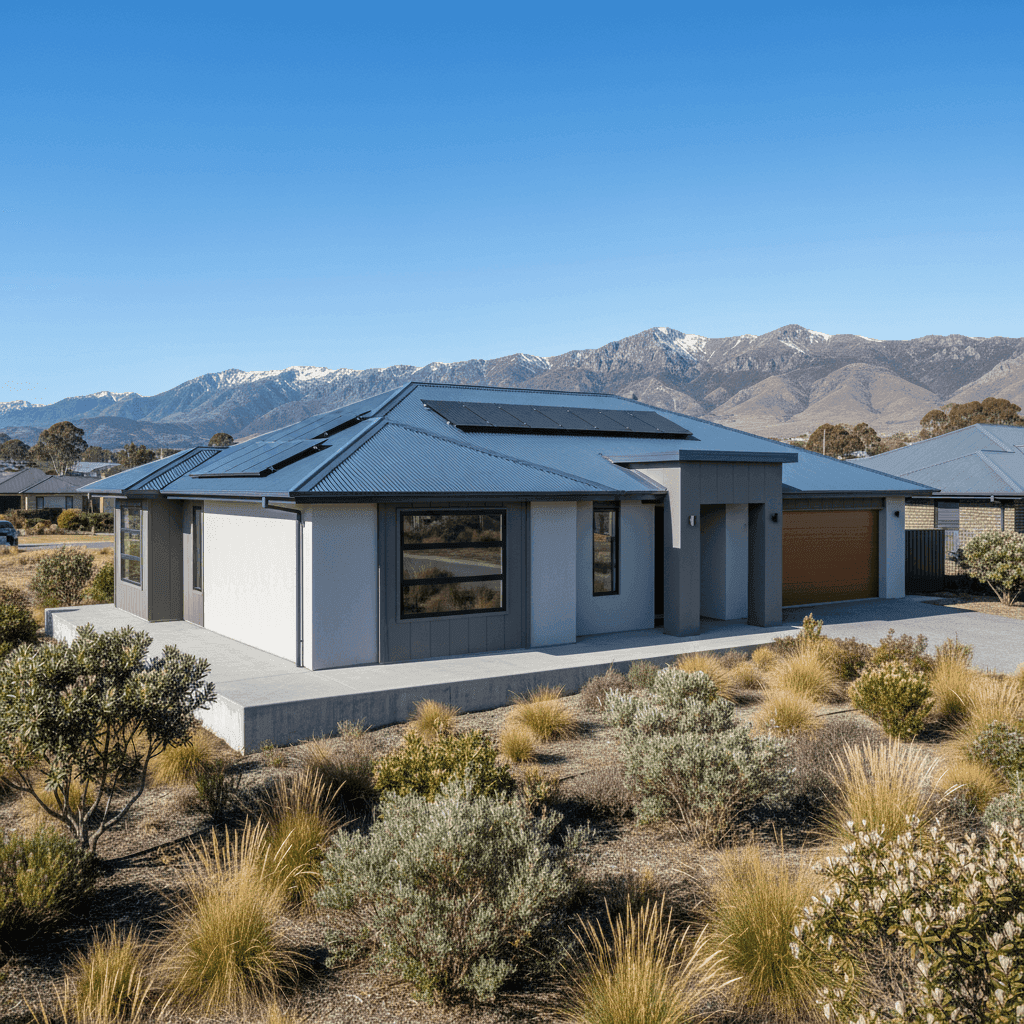
East Jindabyne is a quiet residential pocket on the southern edge of Lake Jindabyne, sitting within the Snowy Monaro Regional Council area of New South Wales. It's a popular base for skiers, snowboarders, and outdoor enthusiasts drawn to the nearby Snowy Mountains — but it's also a genuine year-round community with a growing number of permanent residents. If you own a free standing home here, understanding what you should be paying for home and contents insurance is well worth your time.
This article breaks down a real insurance quote for a 3-bedroom, 2-bathroom free standing home in East Jindabyne, compares it against local, state, and national benchmarks, and offers practical tips for homeowners in the area.
---
Is This Quote Fair?
The quote in question comes in at $1,749 per year (or $168/month) for combined home and contents cover, with a building sum insured of $500,000 and $15,000 in contents cover. Both the building and contents excess are set at $1,000.
Our pricing model rates this quote as CHEAP — below average for the area. That's genuinely good news for the homeowner. To put it in perspective:
- The suburb average for East Jindabyne is $2,555/year
- The suburb median sits at $2,083/year
- Even the 25th percentile (the cheapest quarter of quotes in the area) is $1,930/year
This quote comes in below the cheapest 25% of premiums seen in the suburb — meaning it's an unusually competitive result. At $806 less than the suburb average annually, that's a meaningful saving.
It's worth noting that the suburb sample size is 10 quotes, so while the comparison is directionally useful, a larger dataset would give even greater confidence. That said, the pricing signal is clear: this is a well-priced policy for the location.
---
How East Jindabyne Compares
To understand just how well this quote stacks up, it helps to zoom out and look at the broader picture. You can explore full pricing data on the East Jindabyne suburb stats page, the NSW state overview, and national insurance statistics.
| Benchmark | Annual Premium |
|---|---|
| This Quote | $1,749 |
| East Jindabyne Suburb Average | $2,555 |
| East Jindabyne Suburb Median | $2,083 |
| Snowy Valleys LGA Average | $2,858 |
| NSW State Average | $9,528 |
| NSW State Median | $3,770 |
| National Average | $5,347 |
| National Median | $2,764 |
The NSW state average of $9,528 may look alarming at first glance, but it's heavily skewed by high-risk coastal and flood-prone areas. The state median of $3,770 is a more realistic benchmark for most NSW homeowners — and this quote sits comfortably below that too.
Nationally, the median home insurance premium is $2,764, which again this quote beats. East Jindabyne, despite being in a high-altitude alpine region, appears to benefit from relatively moderate insurance pricing compared to many parts of Australia — particularly coastal Queensland and flood-affected inland areas.
---
Property Features That Affect Your Premium
Several characteristics of this property are worth examining through an insurance lens:
Construction Year (2017)
A home built in 2017 is relatively modern, and newer builds generally attract more favourable premiums. They're constructed to current building codes, which typically means better structural integrity, improved fire resistance, and more robust weather-proofing. Insurers tend to view post-2000 builds more favourably than older homes.
Steel/Colorbond Roof
Colorbond roofing is a popular choice across Australia and for good reason — it's durable, fire-resistant, and performs well under heavy snow loads, which is particularly relevant in the Snowy Mountains region. From an insurance perspective, metal roofing is generally seen as lower risk than older tile or timber alternatives.
Slab Foundation & Vinyl Flooring
A concrete slab foundation is one of the most stable and insurer-friendly foundation types. Combined with vinyl flooring — which is water-resistant and relatively inexpensive to repair or replace — this property has a practical, low-maintenance profile that can help keep claims costs (and premiums) down.
Solar Panels
This property has solar panels installed. It's important to ensure your policy explicitly covers solar panels as part of the building sum insured. Some policies include them automatically; others may require you to specify them. Check your Product Disclosure Statement (PDS) carefully to confirm coverage for both the panels and the inverter.
Slight Elevation (Less Than 1m)
The property is noted as slightly elevated — less than 1 metre. In alpine and sub-alpine areas like East Jindabyne, even modest elevation can assist with drainage and reduce the risk of water ingress during snowmelt or heavy rain events. This is a minor but positive factor for insurers.
No Pool, No Ducted Climate Control
The absence of a swimming pool removes a common liability risk factor. Similarly, no ducted climate control system means fewer mechanical components that could fail and generate a claim. These omissions contribute to a cleaner risk profile.
---
Tips for Homeowners in East Jindabyne
1. Review Your Building Sum Insured Annually
Construction costs in regional NSW — particularly in alpine areas where materials and labour must be transported — can escalate quickly. The $500,000 building sum insured on this policy should be reviewed each year to ensure it reflects the current cost to rebuild, not just the market value of the property. Underinsurance is one of the most common and costly mistakes homeowners make.
2. Confirm Solar Panel Coverage in Your PDS
As mentioned above, solar panels represent a meaningful investment and should be explicitly covered under your building policy. Before renewing or switching insurers, confirm whether your panels (and inverter) are included in the building sum insured and whether accidental damage is covered.
3. Prepare for Alpine Weather Events
East Jindabyne sits at altitude and can experience heavy snowfall, ice, and freezing temperatures. Ensure your policy covers damage from snow load, ice, and freezing — not all standard policies include these as standard. It's also worth checking whether temporary accommodation is covered if your home becomes uninhabitable due to a weather event.
4. Compare Quotes at Renewal — Every Year
Even if you're happy with your current insurer, it pays to compare at renewal. Insurance pricing changes year to year, and loyalty doesn't always equal savings. The fact that this quote came in below the suburb's 25th percentile shows that significant variation exists in the market. Get a new quote at CoverClub to see how your current premium stacks up.
---
Find the Right Cover for Your Home
Whether you're a long-term East Jindabyne local or a recent arrival to the Snowy Mountains region, making sure your home and contents are properly covered — at a fair price — is one of the most important financial decisions you can make as a homeowner.
CoverClub makes it easy to compare home insurance quotes across Australia, with transparent pricing data so you always know where you stand. Start your free quote comparison today and see how your premium measures up against the suburb, state, and national averages.