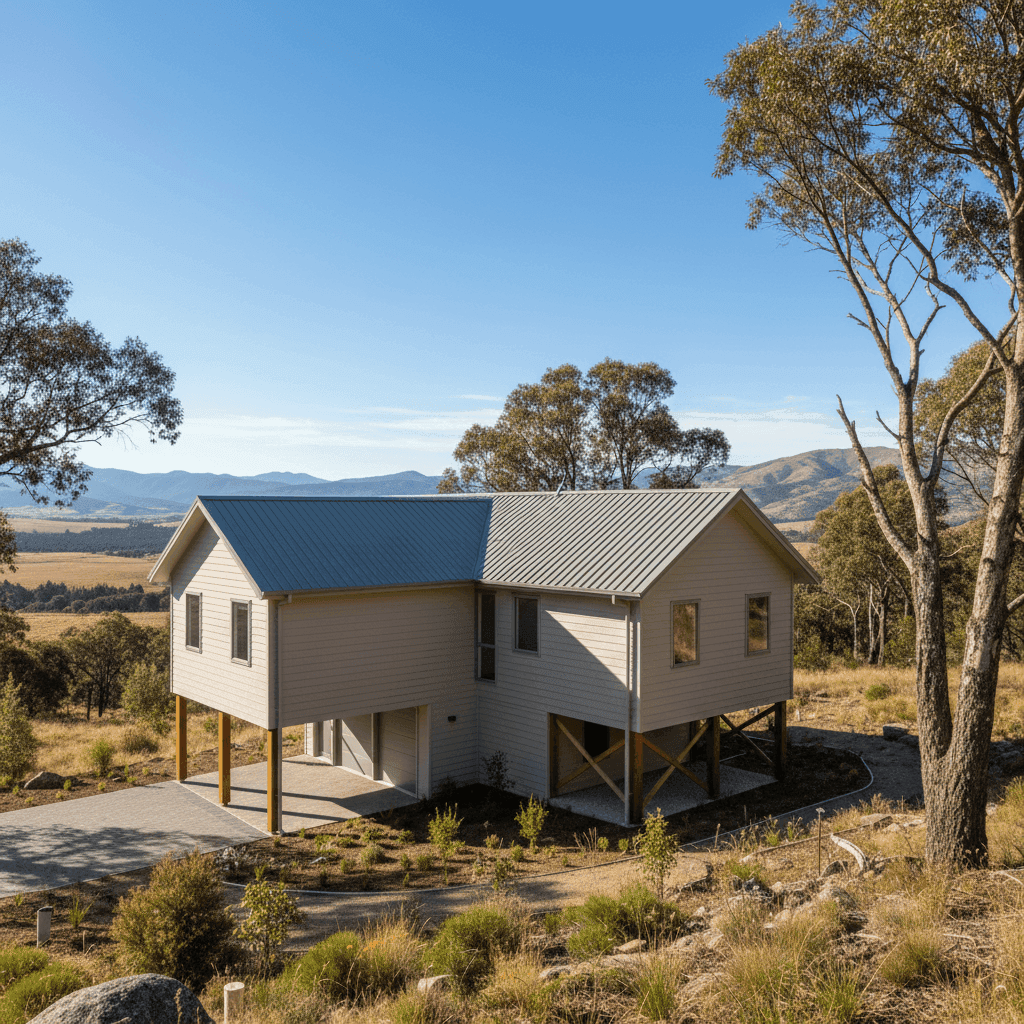
East Jindabyne is a quiet residential pocket sitting on the shores of Lake Jindabyne in the Snowy Mountains region of New South Wales. It's a sought-after area for both permanent residents and holiday homeowners — but its alpine environment and unique construction landscape mean home insurance can be anything but straightforward. This article takes a close look at a real home and contents insurance quote for a five-bedroom, free-standing home in East Jindabyne (postcode 2627), breaking down whether the premium is reasonable, how it stacks up against local and national benchmarks, and what homeowners can do to keep costs in check.
---
Is This Quote Fair?
The quote in question comes in at $3,351 per year (or $314/month) for a home and contents policy covering a building sum insured of $700,000 and contents valued at $20,000, each with a $1,000 excess.
Our price rating for this quote is Expensive — Above Average.
To put that in context, the suburb average premium for East Jindabyne sits at $2,555/yr, and the median is even lower at $2,083/yr. This quote is roughly 31% above the suburb average and nearly 61% above the suburb median, placing it well above the 75th percentile of $2,675/yr for the area. In plain terms, most comparable properties in East Jindabyne are being insured for considerably less.
That said, it's worth noting that the building sum insured here — $700,000 — is substantial for a regional property, and the 315 sqm floor area of a five-bedroom, three-bathroom home does justify a higher rebuild cost. The elevated premium may partly reflect the insurer's assessment of the property's specific risk profile rather than a blanket overcharge. Still, there's likely room to find a more competitive rate by shopping around.
---
How East Jindabyne Compares
Understanding where this quote sits relative to broader benchmarks helps put the number in perspective. Here's a quick snapshot:
| Benchmark | Premium |
|---|---|
| This Quote | $3,351/yr |
| East Jindabyne Suburb Average | $2,555/yr |
| East Jindabyne Suburb Median | $2,083/yr |
| LGA (Snowy Monaro) Average | $2,858/yr |
| NSW State Average | $9,528/yr |
| NSW State Median | $3,770/yr |
| National Average | $5,347/yr |
| National Median | $2,764/yr |
You can explore the full breakdown of premiums for postcode 2627 on our East Jindabyne insurance stats page, or compare against all of NSW and national averages.
One important observation: while this quote feels expensive at the local level, it sits below both the NSW state average and the national average. NSW as a whole carries a very high average premium — $9,528/yr — largely driven by coastal and flood-prone areas. The national median of $2,764/yr is actually below this quote, which suggests the property's size and rebuild value are doing a lot of the heavy lifting on the premium.
The LGA average of $2,858/yr also provides a useful reference point — this quote is around 17% above the LGA average, reinforcing that the premium is on the higher end for the region, though not wildly out of step given the property's size.
---
Property Features That Affect Your Premium
Several characteristics of this property are likely influencing the premium, both upward and downward.
Weatherboard timber walls are one of the more notable risk factors. Timber-clad homes are generally considered higher risk from a fire perspective compared to brick veneer or full brick construction, and insurers typically price this in. In the Snowy Mountains region, where bushfire risk is a genuine concern in surrounding areas, this can have a meaningful impact on premiums.
Steel/Colorbond roofing is generally viewed favourably by insurers. It's durable, low-maintenance, and performs well under the heavy snowfall and freeze-thaw cycles that East Jindabyne experiences each winter. This likely has a moderating effect on the premium.
Stump foundations are common in older regional homes and can introduce some additional risk considerations around subfloor moisture, pest access, and structural movement — though modern stumps are generally well-regarded. The home was built in 1996, placing it in a period where construction standards were solid but pre-date some of the more recent bushfire-resistant building codes.
Ducted climate control adds replacement value to the contents and building assessment, which can nudge premiums slightly higher. With Jindabyne's cold winters, this is essentially a necessity rather than a luxury — but it does factor into the insurer's calculations.
Tile flooring is considered a lower-risk material and is unlikely to significantly affect the premium either way.
No pool and no solar panels are both premium-neutral to mildly positive factors, removing two common sources of claims and liability.
Overall, the property's size (315 sqm), timber construction, and high building sum insured ($700,000) are the dominant drivers of the premium.
---
Tips for Homeowners in East Jindabyne
1. Review your building sum insured carefully At $700,000, the building sum insured is a significant figure. It's worth getting an independent building valuation or using a reputable online calculator to confirm this figure accurately reflects current rebuild costs — not market value. Over-insuring can unnecessarily inflate your premium, while under-insuring leaves you exposed.
2. Increase your excess to lower your premium Both the building and contents excess are set at $1,000. Many insurers will offer a meaningful discount if you're willing to raise your excess to $2,000 or more. If you have the financial buffer to cover a larger out-of-pocket cost in the event of a claim, this can be a smart way to reduce your annual outlay.
3. Shop around — especially given the above-average rating With this quote rated as expensive relative to the suburb, comparing offers from multiple insurers is the single most impactful step you can take. Premiums for the same property can vary by hundreds — sometimes thousands — of dollars between providers. Get a comparison quote at CoverClub to see what else is available.
4. Ask about bundling discounts and loyalty offers Some insurers offer discounts for bundling home and contents cover (which this policy already does), as well as for holding multiple policies (e.g., car insurance) with the same provider. It's always worth asking — these discounts aren't always advertised upfront.
---
Compare Your Options with CoverClub
Whether you're a long-term East Jindabyne local or you've recently purchased in the area, it pays to make sure your home insurance is working as hard as your property does. CoverClub makes it easy to compare home and contents quotes from a range of Australian insurers in one place — so you can see exactly where your premium sits and whether there's a better deal available. Start your free quote comparison today and take the guesswork out of home insurance.