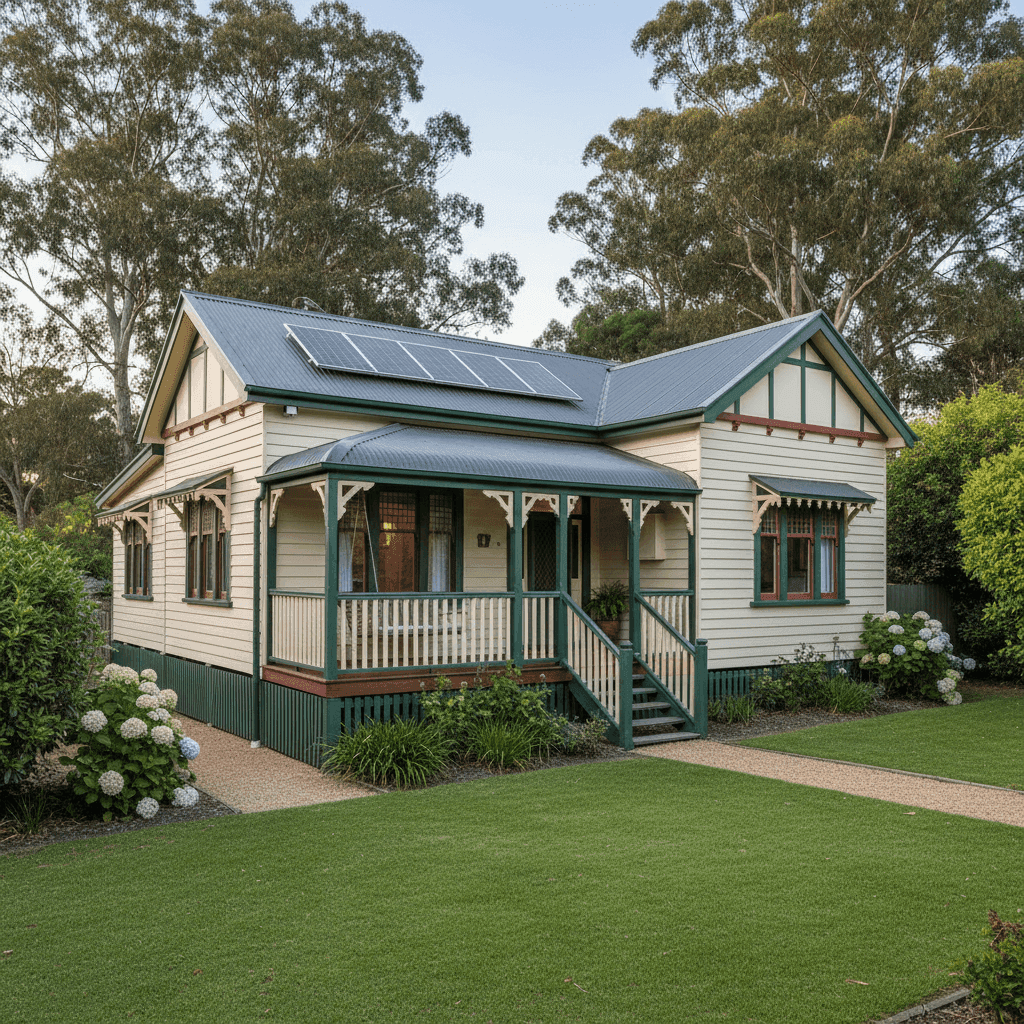
If you own a free standing home in East Launceston, TAS 7250, you've probably wondered whether you're paying a fair price for building insurance — or leaving money on the table by not shopping around. This article breaks down a real building-only insurance quote for a four-bedroom, weatherboard home in the suburb, compares it against local, state, and national benchmarks, and highlights the property features most likely to influence what you pay.
---
Is This Quote Fair?
The quote in question comes in at $774 per year (or $76/month) for building-only cover on a home insured for $514,000, with a $2,000 building excess. Our price rating for this quote is CHEAP — below average — and the numbers back that up convincingly.
To put it in perspective:
- The suburb average for East Launceston is $1,427/yr
- The suburb median sits at $1,422/yr
- Even the 25th percentile — meaning the cheapest quarter of quotes in the area — comes in at $1,118/yr
This quote undercuts even the cheapest tier of local premiums by more than $340 per year. That's not a marginal saving — it's a genuinely strong result. At 54% below the suburb average, this homeowner is getting meaningful value from their insurer.
It's worth noting that a sample of 20 quotes was used to establish the suburb benchmarks, which provides a reasonable snapshot of the local market. The spread between the 25th percentile ($1,118) and 75th percentile ($1,781) also tells us that East Launceston premiums vary considerably depending on the property and insurer — so shopping around clearly pays off here.
---
How East Launceston Compares
East Launceston sits in an enviable position when it comes to home insurance costs — at least relative to broader Tasmanian and national benchmarks. You can explore the full picture on our East Launceston suburb stats page.
| Benchmark | Average Premium |
|---|---|
| East Launceston (suburb) | $1,427/yr |
| Meander Valley LGA | $2,268/yr |
| Tasmania (state) | $2,458/yr |
| Australia (national) | $2,965/yr |
The suburb average of $1,427 is dramatically lower than the Tasmanian state average of $2,458 — nearly $1,000 less per year. And compared to the national average of $2,965, East Launceston homeowners are paying less than half what the typical Australian household does for building insurance.
This suggests that East Launceston is considered a relatively low-risk suburb by insurers — benefiting from its inland location, lower exposure to extreme weather events, and a stable, established residential character. For context, the national median premium is $2,716, which means even the most expensive quotes in this suburb still come in well below what Australians pay on average.
---
Property Features That Affect Your Premium
Several characteristics of this particular property are worth examining, as they each play a role in how insurers price the risk.
Age and Construction (Built 1915)
At over 100 years old, this home carries the charm — and the complexity — of Federation-era construction. Older homes can attract higher premiums due to the cost of sourcing period-appropriate materials and the potential for ageing infrastructure like plumbing and wiring. However, a well-maintained weatherboard home with a modern steel/Colorbond roof can offset some of this concern in the eyes of underwriters.
Weatherboard Timber Walls
Weatherboard is a classic and widely used construction type across Tasmania and Victoria. While it's beloved for its aesthetic, timber-clad homes carry a higher fire risk than brick or rendered masonry. This can push premiums up — though the effect is clearly modest in this case, given the competitive quote received.
Steel/Colorbond Roof
This is a genuine premium-friendly feature. Colorbond roofing is durable, low-maintenance, and performs well in wind and rain events. Insurers tend to view it favourably compared to older tile or iron roofing, and it may have contributed to the competitive pricing here.
Stump Foundation and Elevated Position
The home sits on stumps and is elevated by less than one metre — a very common configuration for older Tasmanian and Victorian homes. Stumped foundations allow for ventilation and can provide some flood resilience, though they also introduce exposure to subfloor damage. The modest elevation here is unlikely to significantly affect pricing either way.
Solar Panels
Solar panels are present on this property. Most standard building policies cover rooftop solar panels as a fixed fixture, but it's always worth confirming with your insurer that the panels and their inverter are explicitly included in the sum insured. Given the replacement cost of a quality solar system, this is an important detail to verify.
Timber and Laminate Flooring
The flooring type — timber and laminate — is relevant mainly for contents insurance, though in a building-only policy, the subfloor and structural flooring elements are still covered. Timber floors in older homes can be costly to repair or replace if water damage occurs, so ensuring your sum insured is adequate is essential.
No Pool, No Ducted Climate Control, No Cyclone Risk
The absence of a pool removes a common liability and maintenance risk factor. No ducted air conditioning means fewer mechanical systems embedded in the structure. And being outside a declared cyclone risk zone keeps the premium well away from the surcharges that affect northern Queensland and parts of WA. These are all factors working in the homeowner's favour.
---
Tips for Homeowners in East Launceston
1. Review your sum insured annually With a sum insured of $514,000 on a 130 sqm home built in 1915, it's important to ensure this figure reflects current rebuild costs — not market value. Construction costs have risen significantly in recent years, and underinsurance remains one of the most common and costly mistakes homeowners make. Use a building calculator or speak with a quantity surveyor if you're unsure.
2. Confirm solar panels are covered If your policy doesn't explicitly list solar panels and the inverter as insured items, you may find yourself out of pocket after a storm or fire. Ask your insurer directly and get it in writing.
3. Consider the excess trade-off This quote carries a $2,000 building excess — on the higher end of the spectrum. While a higher excess typically lowers your premium, it also means more out-of-pocket expense when you do make a claim. Make sure this level is genuinely affordable for you in an emergency.
4. Shop around at renewal time This quote is already well below the suburb average, but that doesn't mean it will stay competitive forever. Insurers regularly reprice at renewal, and loyalty doesn't always pay. Running a comparison every 12 months takes minutes and could save hundreds of dollars.
---
Ready to Compare Your Own Quote?
Whether you're a long-time East Launceston resident or new to the area, it pays to know what the market looks like before you renew. CoverClub makes it easy to compare building insurance quotes from multiple insurers in minutes — with transparent pricing and no hidden agendas.
Get a home insurance quote today and see how your current premium stacks up against the suburb, state, and national benchmarks.