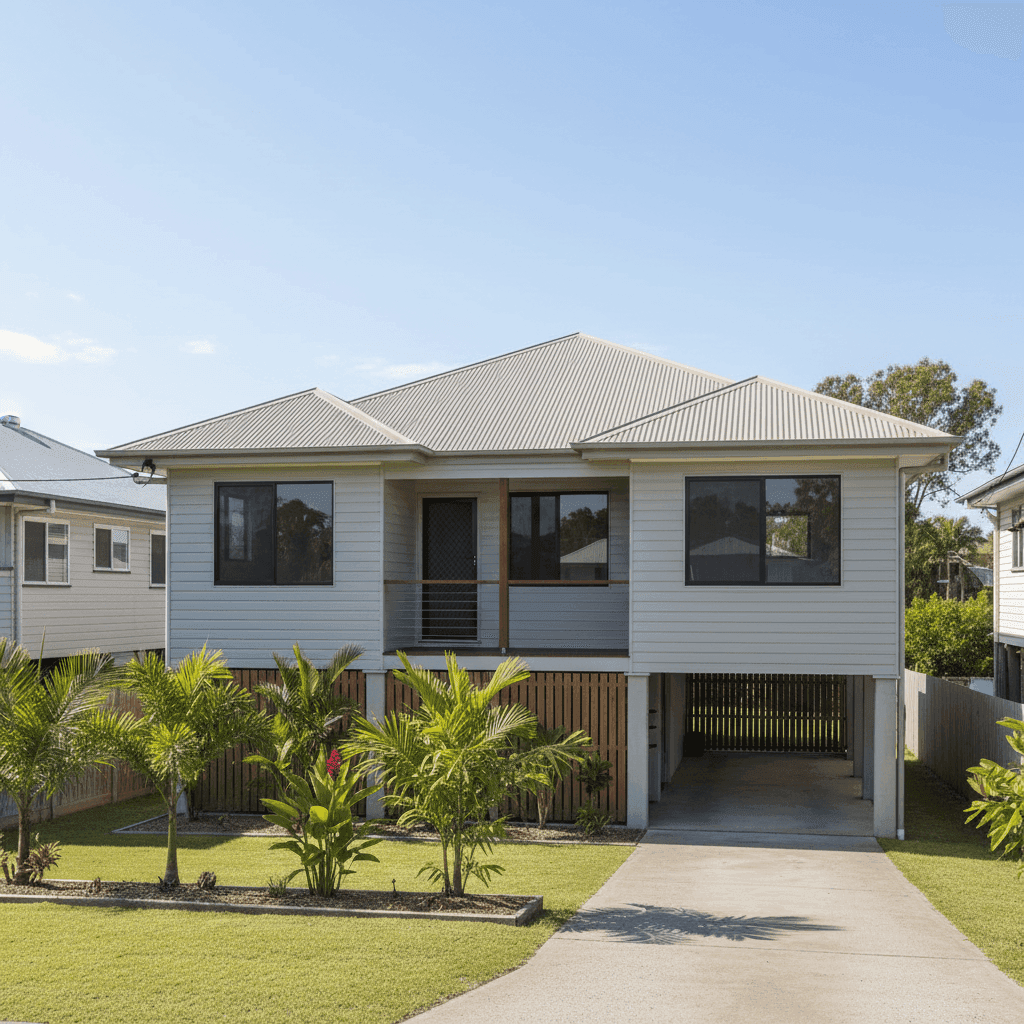
If you own a free standing home in East Mackay, QLD 4740, you already know that insuring your property comes with some unique considerations. Located in a cyclone-prone region of tropical Queensland, East Mackay sits in a part of Australia where home insurance premiums can vary dramatically depending on your property's age, construction, and specific risk profile. This article breaks down a real home and contents insurance quote for a three-bedroom, two-bathroom home in the suburb — and helps you understand whether the price stacks up.
---
Is This Quote Fair?
The quote in question comes in at $6,055 per year (or $600/month) for a combined home and contents policy, covering a building sum insured of $518,000 and contents valued at $50,000. The building excess is $2,000, and the contents excess is $1,000.
Our price rating for this quote is EXPENSIVE — above average for the suburb.
Based on a sample of 16 quotes collected for East Mackay (postcode 4740), the suburb average sits at $4,939/year and the median at $4,881/year. This quote lands above the 75th percentile ($5,813/yr), meaning it is more expensive than at least three-quarters of comparable quotes in the area. That's a meaningful gap — roughly $1,116 above the suburb average — and suggests there may be room to shop around for a more competitive rate.
That said, context matters. The sum insured of $518,000 is on the higher end, and a 1982-built home on stumps with timber flooring does carry additional risk factors that insurers price carefully. The cyclone risk designation for this area also plays a significant role in pushing premiums upward across the board.
---
How East Mackay Compares
Understanding where East Mackay sits relative to broader benchmarks helps put this quote in perspective. Here's a snapshot:
| Benchmark | Average Premium | Median Premium |
|---|---|---|
| East Mackay (4740) | $4,939/yr | $4,881/yr |
| Queensland (State) | $9,129/yr | $3,903/yr |
| Australia (National) | $5,347/yr | $2,764/yr |
A few things stand out here. Queensland's state average of $9,129/year is extremely high — but the median of just $3,903 tells a very different story. This wide gap between average and median is a hallmark of Queensland's insurance market, where a relatively small number of high-risk properties (think beachfront or flood-prone homes) can dramatically skew the average upward. East Mackay's figures are more tightly clustered, suggesting a more consistent risk profile across the suburb.
The LGA (Mackay) average of $8,458/year is also worth noting — significantly higher than the East Mackay suburb average of $4,939. This suggests East Mackay may represent a lower-risk pocket within the broader Mackay local government area.
Nationally, the average sits at $5,347/year, with a median of $2,764. East Mackay's median of $4,881 is well above the national median, which reflects the elevated natural hazard risk in coastal Queensland.
For a full breakdown of insurance pricing in this suburb, visit the East Mackay insurance stats page. You can also explore Queensland-wide insurance data or browse national home insurance benchmarks for broader context.
---
Property Features That Affect Your Premium
Several characteristics of this property have a direct bearing on what insurers charge. Here's how each one factors in:
Built in 1982 Homes built in the early 1980s predate many modern building codes, including cyclone-resistant construction standards that were progressively introduced in Queensland following Cyclone Tracy in 1974. While standards were improving by 1982, older homes may still attract higher premiums due to perceived structural vulnerability.
Hardiplank / Hardiflex External Walls Fibre cement cladding like Hardiplank and Hardiflex is generally well-regarded by insurers. It's durable, fire-resistant, and holds up reasonably well in high-wind events. This is a positive factor that may help moderate the premium compared to timber-clad homes.
Steel / Colorbond Roof Colorbond steel roofing is one of the more insurer-friendly roof types in cyclone-prone areas. It performs well in high winds when properly installed and secured, and is resistant to corrosion and fire. This is another tick in the property's favour.
Stumps Foundation Homes on stumps (also known as post or pier foundations) are common in Queensland, particularly in older builds. They allow airflow beneath the home, which is great for the climate — but they can be more susceptible to movement and may attract slightly higher premiums than slab-on-ground homes in some cases.
Timber / Laminate Flooring Timber and laminate floors can be costly to repair or replace following water damage or flooding, which may influence the building sum insured and, in turn, the premium.
Cyclone Risk Area This is arguably the single biggest premium driver for this property. East Mackay falls within a designated cyclone risk zone, meaning insurers apply a loading to account for the potential cost of wind and storm damage. This affects virtually every policy in the region, regardless of the specific property.
---
Tips for Homeowners in East Mackay
If your premium feels high, there are practical steps you can take to manage costs without sacrificing adequate cover.
1. Review your sum insured carefully A building sum insured of $518,000 for a 139 sqm home works out to roughly $3,727 per square metre — which is at the higher end of rebuild cost estimates for standard construction. It's worth getting an independent building valuation to ensure you're not over-insuring. Reducing the sum insured (if genuinely justified) can bring the premium down meaningfully.
2. Consider a higher excess The building excess on this quote is $2,000. Opting for a higher voluntary excess — say, $2,500 or $3,000 — can reduce your annual premium. Just make sure the excess is an amount you could comfortably cover in the event of a claim.
3. Compare multiple insurers With a quote sitting above the 75th percentile for the suburb, this is a clear signal to shop around. Insurers assess risk differently, and the spread of quotes in East Mackay (from around $4,154 at the 25th percentile to $5,813 at the 75th) shows there's real variation in the market. Get a new quote at CoverClub to see what other insurers are offering for your property.
4. Check for discounts and bundling options Some insurers offer discounts for bundling home and contents policies (which this quote already does), paying annually rather than monthly, or having security features like deadbolts and alarm systems. It's worth asking your insurer directly what discounts may apply.
---
Ready to Find a Better Rate?
Whether you're renewing your existing policy or shopping for the first time, comparing quotes is the single most effective way to make sure you're not overpaying. At CoverClub, we make it easy to benchmark your premium against real data from your suburb and across Australia. Start comparing home insurance quotes today and see how much you could save.