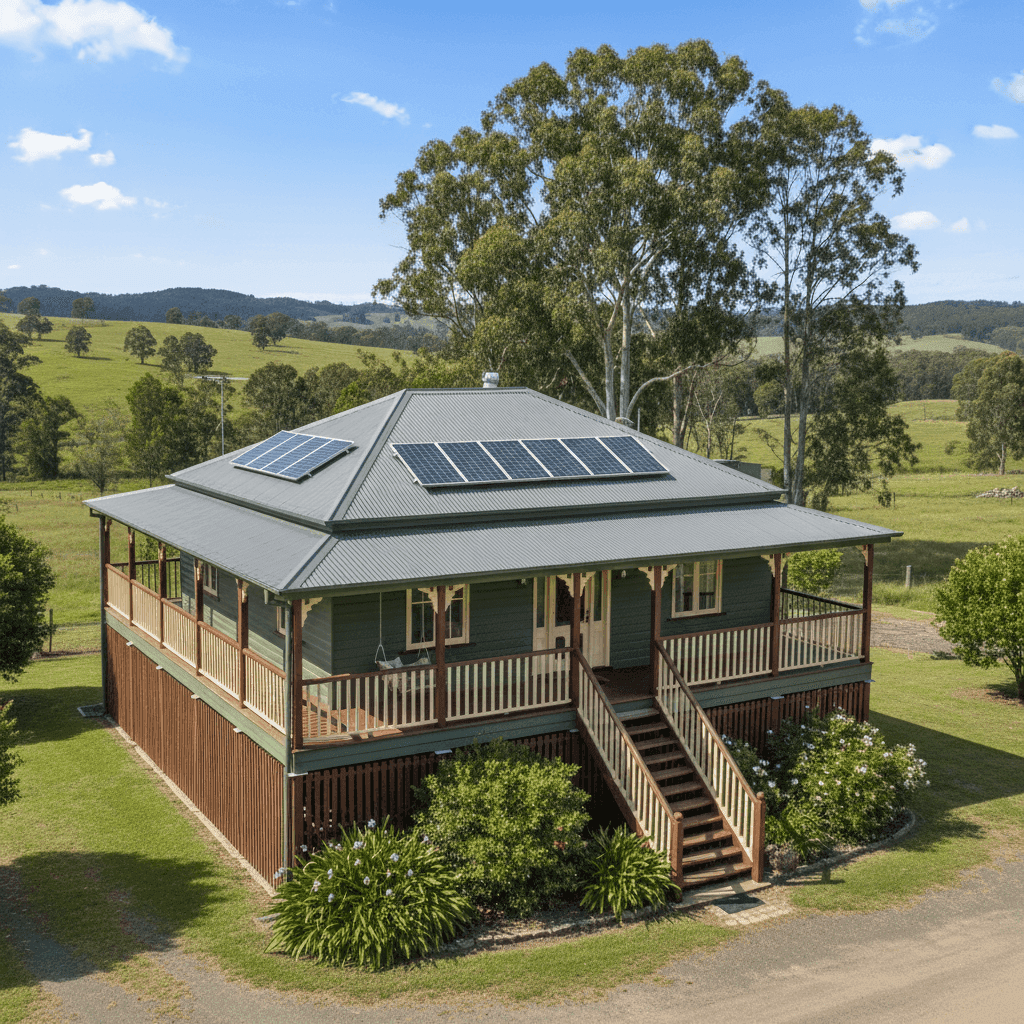
East Nanango is a quiet rural locality in Queensland's South Burnett region, and like many properties scattered through this part of the state, its homes carry a distinct character — think elevated timber frames, weatherboard cladding, and the kind of wide-open surroundings that make Queensland living so appealing. This article takes a close look at a recent home and contents insurance quote for a 3-bedroom free standing home in East Nanango (postcode 4615), breaking down whether the price stacks up and what local homeowners should know before renewing or switching their policy.
---
Is This Quote Fair?
The quote in question comes in at $3,530 per year (or $338/month) for combined home and contents cover, with a building sum insured of $900,000 and contents valued at $35,000. Both the building and contents excess are set at $1,000.
Our price rating for this quote is Expensive — Above Average.
To put that in context: the suburb average premium for East Nanango sits at $2,224/yr, and the median is even lower at $2,025/yr. This quote is roughly 59% above the suburb average and nearly 74% above the suburb median. Even when measured against the 75th percentile of local quotes ($2,630/yr), this premium still comes in significantly higher.
That said, it's worth noting that the building sum insured of $900,000 is a substantial figure, and the total insured value plays a major role in determining the premium. Homes with higher rebuild costs naturally attract higher premiums — so part of the gap between this quote and the suburb average may simply reflect a more generous level of building cover rather than the insurer overcharging on a like-for-like basis.
Still, a gap this wide warrants scrutiny. It's always worth comparing multiple insurers to ensure you're not overpaying for equivalent coverage.
---
How East Nanango Compares
Understanding where East Nanango sits relative to broader benchmarks helps put this quote into perspective. Here's a snapshot:
| Benchmark | Average Premium | Median Premium |
|---|---|---|
| East Nanango (suburb) | $2,224/yr | $2,025/yr |
| Queensland (state) | $9,129/yr | $3,903/yr |
| Australia (national) | $5,347/yr | $2,764/yr |
| Gympie LGA | $5,581/yr | — |
A few things stand out here. Queensland's state average of $9,129/yr is extraordinarily high — one of the most expensive in the country — largely driven by cyclone-prone coastal and far-north regions where insurers price in significant catastrophe risk. The state median of $3,903/yr tells a more balanced story once those outliers are removed.
East Nanango's suburb average of $2,224/yr is well below both the national average and the Queensland state average, which reflects the area's relatively lower risk profile compared to coastal or cyclone-exposed parts of Queensland.
The Gympie LGA average of $5,581/yr is notably higher than the East Nanango suburb average, suggesting that risk and pricing can vary considerably even within the same local government area.
You can explore more local data on the East Nanango suburb stats page, compare it against the Queensland state overview, or see how it measures up on the national insurance stats page.
---
Property Features That Affect Your Premium
Several characteristics of this property are worth unpacking from an insurance perspective:
Weatherboard timber construction (1940 build) Older weatherboard homes are generally considered higher risk by insurers. Timber is more susceptible to fire, termite damage, and general wear than brick or concrete construction. A home built in 1940 may also have older wiring, plumbing, and structural elements that increase the likelihood of a claim. Insurers factor all of this into their pricing.
Elevated on poles This is a classic Queensland Queenslander-style design — the home sits at least one metre above ground on timber or steel poles. Elevation can actually work in your favour in flood-prone areas, as it reduces the risk of inundation damage. However, the subfloor space also introduces additional exposure (e.g., wind uplift, pest access), and elevated homes can be more costly to repair after storm events.
Steel/Colorbond roof Colorbond roofing is generally viewed favourably by insurers — it's durable, fire-resistant, and performs well in high-wind conditions. This is a positive feature for the property's risk profile.
Solar panels The presence of solar panels adds to the replacement value of the property. Many policies cover solar panels as part of the building sum insured, so it's important to ensure the $900,000 building cover accounts for the cost of replacing the system.
Timber/laminate flooring Timber floors in elevated homes can be vulnerable to moisture and flooding from below. In the event of a significant rain event, subfloor flooding can cause costly damage to flooring and structural elements.
No cyclone risk zone East Nanango is not classified as a cyclone risk area, which is a meaningful cost advantage compared to coastal Queensland properties. This likely contributes to the suburb's relatively modest average premiums.
---
Tips for Homeowners in East Nanango
1. Review your building sum insured carefully A $900,000 sum insured is substantial. Make sure it reflects the actual cost to rebuild your home from scratch — including demolition, materials, and labour at current rates — rather than the market value of the property. Overinsuring can inflate your premium unnecessarily, while underinsuring leaves you exposed. A quantity surveyor can provide an accurate rebuild estimate.
2. Compare quotes across multiple insurers With this quote rated as expensive relative to the suburb, it's well worth shopping around. Premiums for the same property can vary by hundreds — or even thousands — of dollars between insurers. Get a comparison quote through CoverClub to see what other providers are offering for your address.
3. Ask about discounts for your Colorbond roof and solar panels Some insurers offer discounts or more competitive pricing for homes with fire-resistant roofing or energy-efficient features. It's worth asking your insurer directly whether these features are reflected in your premium.
4. Check your contents sum insured At $35,000, the contents cover is relatively modest. Take the time to do a proper home inventory — furniture, appliances, electronics, clothing, and valuables all add up quickly. Being underinsured on contents is a common issue that only becomes apparent at claim time.
---
Compare Your Home Insurance Today
Whether you're renewing an existing policy or taking out cover for the first time, it pays to compare. CoverClub makes it easy to see what home and contents insurance actually costs for properties like yours in East Nanango — with real data from real quotes. Start your free quote comparison now and make sure you're getting the right cover at a fair price.