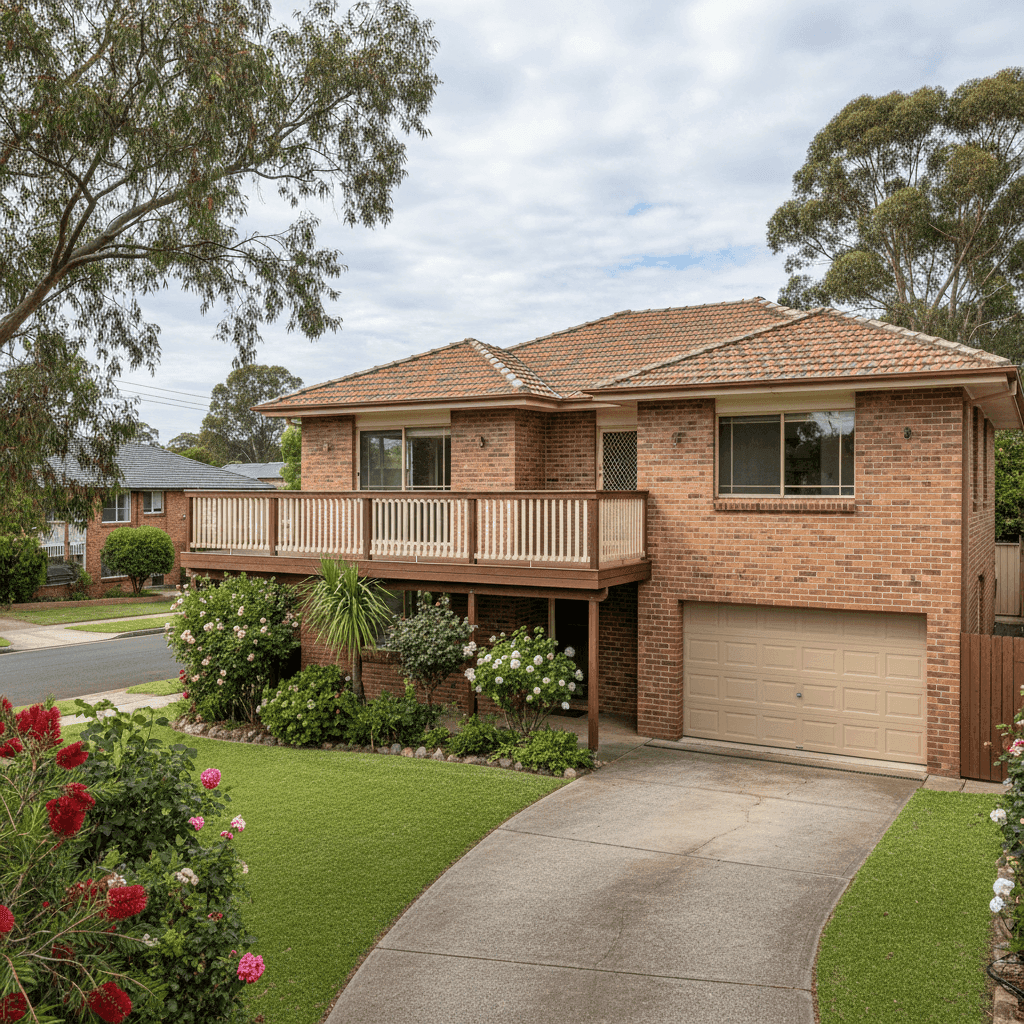
East Ryde is a well-established residential suburb on Sydney's Lower North Shore, known for its leafy streets, solid post-war housing stock, and proximity to the Lane Cove River. If you own a free-standing home here, understanding what you should be paying for home and contents insurance — and why — can save you a meaningful amount each year. This article breaks down a real insurance quote for a four-bedroom, three-bathroom brick veneer home in East Ryde, compares it against local, state, and national benchmarks, and offers practical tips to help you get the best value cover.
---
Is This Quote Fair?
The quote in question comes in at $2,604 per year (or $271/month) for combined home and contents insurance, covering a building sum insured of $1,220,000 and contents valued at $50,000. The building excess is $4,000 and the contents excess is $1,000.
Our pricing engine rates this quote as Fair — Around Average, and the data backs that up. At $2,604/yr, this premium sits almost exactly in line with the suburb median of $2,619/yr for East Ryde (NSW 2113). That's a reassuring sign — the homeowner isn't being gouged, but there may still be room to do better depending on which insurer is being used and what discounts are available.
It's worth noting that the suburb average premium is $2,306/yr — somewhat lower than the median. This gap between mean and median often indicates a skewed distribution, where a handful of lower-priced quotes pull the average down while the majority of homeowners pay closer to the median figure. In practical terms, this quote is right in the thick of what most East Ryde homeowners are paying.
---
How East Ryde Compares
To put this premium in broader context, here's how East Ryde stacks up against New South Wales and the national picture:
| Benchmark | Average Premium | Median Premium |
|---|---|---|
| East Ryde (2113) | $2,306/yr | $2,619/yr |
| LGA: Ryde | $2,161/yr | — |
| NSW | $9,528/yr | $3,770/yr |
| National | $5,347/yr | $2,764/yr |
A few things stand out here. The NSW average of $9,528/yr looks alarming at first glance, but it's heavily skewed by high-risk and high-value properties across the state — the median of $3,770/yr is a much more representative figure. East Ryde's median of $2,619/yr comfortably undercuts the NSW median, which reflects the suburb's relatively low exposure to catastrophic weather events like floods or cyclones.
Compared to the national median of $2,764/yr, East Ryde homeowners are paying a touch less — a positive outcome for a Sydney suburb where property values and therefore building sums insured tend to be high. The Ryde LGA average of $2,161/yr is the lowest benchmark in the comparison, suggesting that some neighbouring properties in the council area may attract lower premiums, potentially due to different construction types, lower sums insured, or newer builds.
---
Property Features That Affect Your Premium
Several characteristics of this particular property have a direct bearing on what the insurer charges. Understanding these factors helps you anticipate costs and make informed decisions.
Brick Veneer Construction & Tiled Roof Brick veneer walls and tiled roofs are among the most common combinations in Sydney's post-war suburbs, and insurers generally view them favourably. Brick veneer offers solid fire resistance and durability, while tiles are considered more resilient than corrugated iron in many weather scenarios. These factors typically contribute to a more competitive premium compared to, say, a weatherboard home with a metal roof.
Construction Year: 1978 A home built in 1978 is now approaching 50 years old. While the construction quality of that era was generally sound, older homes can carry higher reinstatement costs due to the need to bring electrical wiring, plumbing, and structural elements up to current building codes in the event of a major claim. This is likely a contributing factor to the relatively high building sum insured of $1,220,000.
Elevated Foundation (Stumps) This property sits elevated by at least one metre on stumps — a construction style that was common in Sydney during the mid-20th century. Elevation can actually be a positive factor for flood risk (water is less likely to enter the living areas), but it does introduce additional considerations around subfloor maintenance, pest access, and the cost of repairs to the underfloor structure. Insurers factor this into their pricing models.
Above-Average Fittings Quality The property is noted as having above-average fittings — think quality kitchen appliances, stone benchtops, premium bathroom fixtures, and the like. This elevates the cost to rebuild or repair to a high standard, which is appropriately reflected in the sum insured and, by extension, the premium.
Ducted Climate Control Ducted air conditioning systems are a significant fixed asset and contribute to both the building sum insured and the overall replacement cost. They're also a common source of claims (water damage from leaks, electrical faults), so their presence can nudge premiums upward slightly.
No Pool, No Solar Panels The absence of a pool removes a notable liability risk factor that can increase premiums. Similarly, no solar panels means there's no additional risk of roof penetration issues or electrical faults associated with inverter systems. Both are modest but real pricing benefits.
---
Tips for Homeowners in East Ryde
1. Review Your Building Sum Insured Carefully At $1,220,000, the building sum insured is substantial — and rightly so for a 268 sqm home with above-average fittings built in 1978. However, it's worth using an independent building cost calculator (such as the Cordell Sum Sure tool) to verify this figure annually. Being over-insured means you're paying more premium than necessary; being under-insured can leave you seriously out of pocket after a major claim.
2. Consider Raising Your Excess to Lower Your Premium The building excess on this policy is $4,000 — already on the higher side. If you're financially comfortable absorbing a larger out-of-pocket cost in the event of a claim, asking your insurer about a higher excess tier could reduce your annual premium meaningfully. Just make sure the saving justifies the additional risk you're carrying.
3. Shop Around at Renewal Time Insurer loyalty rarely pays off in Australia's home insurance market. Premiums can vary by hundreds of dollars for identical cover across different providers. With a suburb median of $2,619/yr and a 25th percentile of just $1,263/yr, there's clearly a wide spread of pricing in East Ryde — meaning competitive quotes absolutely exist. Use a comparison platform like CoverClub to benchmark your renewal offer before accepting it.
4. Check What's Actually Covered for an Older Home on Stumps Homes on stumps can sometimes have exclusions or sub-limits around gradual damage, pest damage to the subfloor, or movement/subsidence. Read your Product Disclosure Statement (PDS) carefully to understand what's included, and ask your insurer directly if you're unsure. Knowing your policy's boundaries before you need to claim is always time well spent.
---
Ready to Compare?
Whether you're reviewing an existing policy or shopping for cover for the first time, comparing quotes is the single most effective way to ensure you're not overpaying. Get a home insurance quote at CoverClub and see how your premium stacks up against real data from East Ryde and across Australia. It takes just a few minutes and could save you hundreds every year.