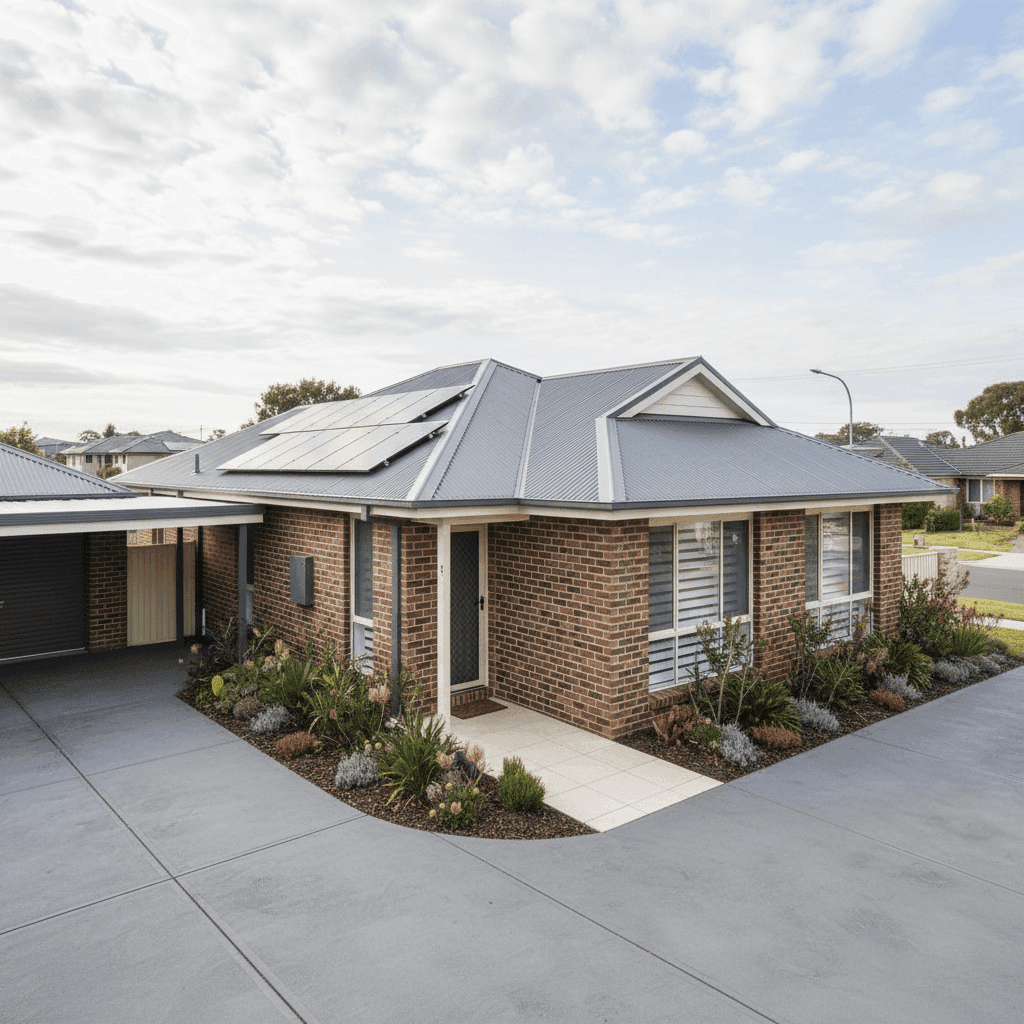
If you own a semi detached home in East Ryde, NSW 2113, you're probably curious about what a fair home insurance premium looks like — and whether the quote sitting in your inbox is actually worth acting on. East Ryde is a well-established suburb in the City of Ryde, offering a mix of modern builds and older character homes close to the Lane Cove River. In this analysis, we take a close look at a building-only insurance quote for a five-bedroom, three-bathroom semi detached property and benchmark it against local, state, and national data.
---
Is This Quote Fair?
The short answer: yes — this is an exceptionally competitive quote.
At $1,665 per year (or roughly $162 per month), this building-only premium has been rated CHEAP — meaning it sits well below the average for comparable properties in the area. To put that in perspective, the suburb average for East Ryde sits at $3,013 per year, and the median is $2,758 per year. Even the cheapest quarter of quotes in the suburb (the 25th percentile) comes in at $2,555 per year — still more than $890 above this quote.
That's a significant saving. Homeowners who simply renew with their existing insurer without shopping around could be paying nearly double for the same level of cover.
It's worth noting the building sum insured is $836,000, which is a substantial coverage amount appropriate for a modern 315 sqm home. The building excess is $2,000, which is on the higher side but is a common trade-off for keeping premiums lower. If you're comfortable covering the first $2,000 of a claim out of pocket, this kind of structure can make a lot of sense financially.
---
How East Ryde Compares
Zooming out to a broader view, the pricing picture becomes even more striking. Here's how East Ryde sits relative to other benchmarks:
| Benchmark | Average Premium | Median Premium |
|---|---|---|
| This Quote | $1,665/yr | — |
| East Ryde (2113) | $3,013/yr | $2,758/yr |
| LGA (City of Ryde) | $1,920/yr | — |
| NSW State | $3,801/yr | $3,410/yr |
| National | $2,965/yr | $2,716/yr |
You can explore the full breakdown for this postcode on the East Ryde suburb stats page, or compare it against all of NSW and the national average.
A few things stand out here. First, NSW as a whole is notably more expensive than the national average — $3,801/yr vs $2,965/yr — reflecting the higher property values, rebuild costs, and weather-related risk across parts of the state. Second, the City of Ryde LGA average of $1,920/yr is considerably lower than the East Ryde suburb average, suggesting there's meaningful variation even within the same council area. This quote, at $1,665/yr, comes in below even the LGA average — a strong result.
The suburb sample size of 25 quotes gives us a reasonable (if modest) dataset to work with. As more data comes in over time, these averages will become even more reliable benchmarks.
---
Property Features That Affect Your Premium
Several characteristics of this property work in favour of a lower premium, while a couple of features add modest complexity. Here's what matters most:
🟢 Factors likely reducing the premium:
- Brick Veneer external walls — One of the most common and well-regarded construction types in Australia. Brick veneer is durable, fire-resistant, and well-understood by insurers, which typically translates to lower risk pricing.
- Steel/Colorbond roof — Colorbond roofing is highly regarded for its longevity, resistance to corrosion, and performance in storms. Insurers generally view it more favourably than older tile or fibro roofs.
- Slab foundation — Concrete slab is a stable, low-maintenance foundation type that carries minimal subsidence or pest-related risk compared to suspended timber floors.
- Tile flooring — Hard-wearing and less susceptible to water damage than carpet or timber, which can reduce the cost of water-related claims.
- Built in 2018 — A relatively modern home means updated wiring, plumbing, and building standards. Newer builds tend to attract lower premiums due to reduced maintenance risk.
- No pool — Pools add liability exposure and can push premiums up. The absence of one here is a small but meaningful factor.
- Not in a cyclone risk zone — East Ryde is not classified as a cyclone-prone area, which removes one of the more significant risk loadings applied in northern and coastal Queensland regions.
🟡 Features that may add some premium loading:
- Solar panels — While solar panels are a great investment, they do add to the insured value of the roof and introduce some additional risk (fire, storm damage, installation issues). Most insurers will factor these in.
- Ducted climate control — A ducted HVAC system is a high-value fixture that increases the overall rebuild cost and can be expensive to repair or replace if damaged.
- 315 sqm building size — This is a substantial home. Larger floor areas mean higher rebuild costs, which flows directly into the sum insured and, in turn, the premium.
---
Tips for Homeowners in East Ryde
1. Don't let your policy auto-renew without checking the market The gap between this quote ($1,665/yr) and the suburb average ($3,013/yr) is nearly $1,350 per year. That's money left on the table if you simply roll over an existing policy. Set a calendar reminder a month before your renewal date to run a fresh comparison.
2. Review your sum insured annually Construction costs in NSW have risen sharply in recent years. Make sure your $836,000 sum insured still reflects the true cost of rebuilding your home — not just its market value. Underinsurance is one of the most common and costly mistakes homeowners make.
3. Consider whether building-only cover is right for you This quote covers the building structure only. If you have valuable contents — furniture, appliances, electronics, clothing — a separate contents policy or combined building and contents cover could be worth exploring. Get a quote at CoverClub to compare both options side by side.
4. Understand your excess before you claim The $2,000 building excess on this policy is higher than the national norm. This is a deliberate trade-off that lowers the annual premium, but it means you'll need to cover the first $2,000 of any building claim yourself. Make sure you have that buffer available — or consider whether a lower excess (at a slightly higher premium) suits your financial situation better.
---
Compare Your Own Quote
Whether you've just received a renewal notice or you're insuring a new purchase, it pays to see how your premium stacks up. CoverClub aggregates real quote data from across Australia so you can make an informed decision — not just take the first number you're given.
Run your own comparison at CoverClub and find out if you're paying a fair price for your home insurance.