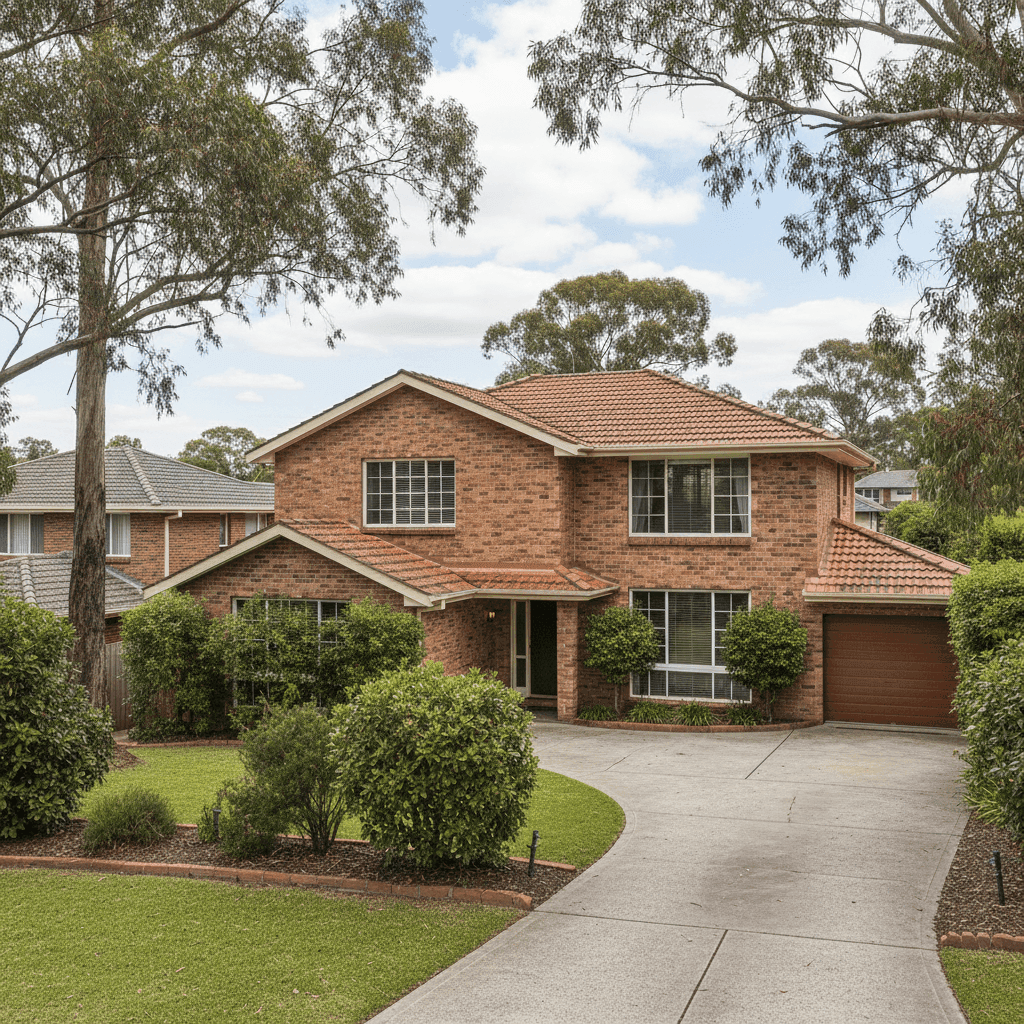
East Ryde is a well-established residential suburb on Sydney's Lower North Shore, sitting within the City of Ryde local government area. Known for its leafy streets and solid family homes, it's the kind of suburb where a well-built brick veneer house can represent a significant financial asset — and one worth protecting properly. This article breaks down a recent building insurance quote for a five-bedroom, three-bathroom free standing home in East Ryde, helping you understand whether the premium stacks up and what factors are driving the cost.
---
Is This Quote Fair?
The quote in question comes in at $3,047 per year (or $292/month) for building-only cover on a home insured for $800,000, with a $1,000 building excess. Our price rating for this quote is FAIR — Around Average, which means it sits in a reasonable range but isn't the sharpest deal on the market.
To put that in context: the suburb average premium in East Ryde is $2,306/yr, and the median sits at $2,619/yr. This quote lands above both of those figures, but it's still comfortably within the suburb's 75th percentile of $3,097/yr — meaning most quotes in the area come in cheaper, though a meaningful portion are similarly priced or higher.
It's worth noting that this is a large property — five bedrooms on a 139 sqm footprint — with a relatively high sum insured of $800,000. Larger, higher-value homes naturally attract higher premiums, so the above-average price isn't surprising given the scope of cover.
---
How East Ryde Compares
One of the more striking data points here is just how favourable East Ryde looks compared to broader benchmarks. You can explore the full East Ryde suburb insurance statistics on CoverClub, but here's a quick summary:
| Benchmark | Premium |
|---|---|
| This quote | $3,047/yr |
| East Ryde suburb average | $2,306/yr |
| East Ryde suburb median | $2,619/yr |
| LGA (Ryde) average | $2,161/yr |
| NSW state average | $9,528/yr |
| NSW state median | $3,770/yr |
| National average | $5,347/yr |
| National median | $2,764/yr |
The NSW state average of $9,528/yr is dramatically higher than what East Ryde homeowners are typically paying — a reflection of the enormous variation in risk across the state, with regional and coastal areas often facing much steeper premiums due to flood, bushfire, and cyclone exposure. East Ryde, by contrast, is a relatively low-risk metropolitan suburb.
Compared to the national average of $5,347/yr, this quote looks quite reasonable. Even against the national median of $2,764/yr — a more representative figure than the average — this quote is only modestly higher, and the property is substantially larger and more valuable than a typical benchmark home.
---
Property Features That Affect Your Premium
Several characteristics of this home influence how insurers price the risk:
Brick Veneer Construction Brick veneer is one of the most common wall materials in Sydney's suburban housing stock, and insurers generally view it favourably. It offers good resistance to fire and is well understood by underwriters, which tends to keep premiums more competitive than less conventional materials.
Tiled Roof A tiled roof is considered a durable, low-maintenance roofing option. Tiles perform well in moderate weather conditions and are a standard feature on homes of this era, contributing to a stable risk profile.
Concrete Slab Foundation Slab foundations are typical in NSW and present no unusual risk factors. They're straightforward for insurers to assess and don't attract loading in the way that some other foundation types might.
Built in 1975 At around 50 years old, this home is mature but not ancient. Homes from this era are generally well-built, though insurers may factor in the potential cost of updating older wiring, plumbing, or structural elements if a major claim were made. This can nudge premiums slightly higher compared to newer builds.
Ducted Climate Control The presence of ducted air conditioning is a notable inclusion. This is a significant fixed asset within the building, and its replacement cost contributes to the overall sum insured. It's one reason a $800,000 building sum insured is justifiable for a home of this size.
No Pool, No Solar Panels The absence of a pool and solar panels simplifies the risk profile. Both can add complexity and cost to a policy, so their absence may help keep the premium from climbing further.
Standard Fittings With standard-quality fittings throughout, the rebuild cost is more predictable than a home with high-end custom finishes. This keeps the sum insured grounded in realistic replacement costs.
---
Tips for Homeowners in East Ryde
1. Make sure your sum insured reflects true rebuild costs $800,000 for a 139 sqm home in Sydney is substantial, but rebuild costs in metropolitan NSW have risen sharply in recent years due to labour and material inflation. Use a building cost calculator or speak to a quantity surveyor to confirm your sum insured is adequate — being underinsured can be just as costly as overpaying on your premium.
2. Consider bundling contents cover This quote covers building only. If your contents aren't separately insured, you could be exposed in the event of theft, fire, or water damage to your belongings. Many insurers offer discounts when you bundle building and contents, so it's worth getting a combined quote to compare the total cost.
3. Review your excess to manage your premium A $1,000 excess is fairly standard, but opting for a higher voluntary excess — say $2,000 or $2,500 — can meaningfully reduce your annual premium. If you're a low-claims household with good financial reserves, this trade-off often makes sense.
4. Shop the market at renewal time Insurers rarely reward loyalty with their best pricing. The East Ryde suburb sample shows a wide spread between the 25th percentile ($1,263/yr) and the 75th percentile ($3,097/yr) — a gap of nearly $1,800 per year. That range exists because different insurers price the same risk very differently. Comparing quotes annually is one of the simplest ways to avoid overpaying.
---
Compare Your Home Insurance Quote Today
Whether you're reviewing an existing policy or shopping around for the first time, CoverClub makes it easy to see how your premium stacks up. Get a home insurance quote in minutes and compare it against real data from your suburb, your state, and across Australia. You might be surprised by how much room there is to save.