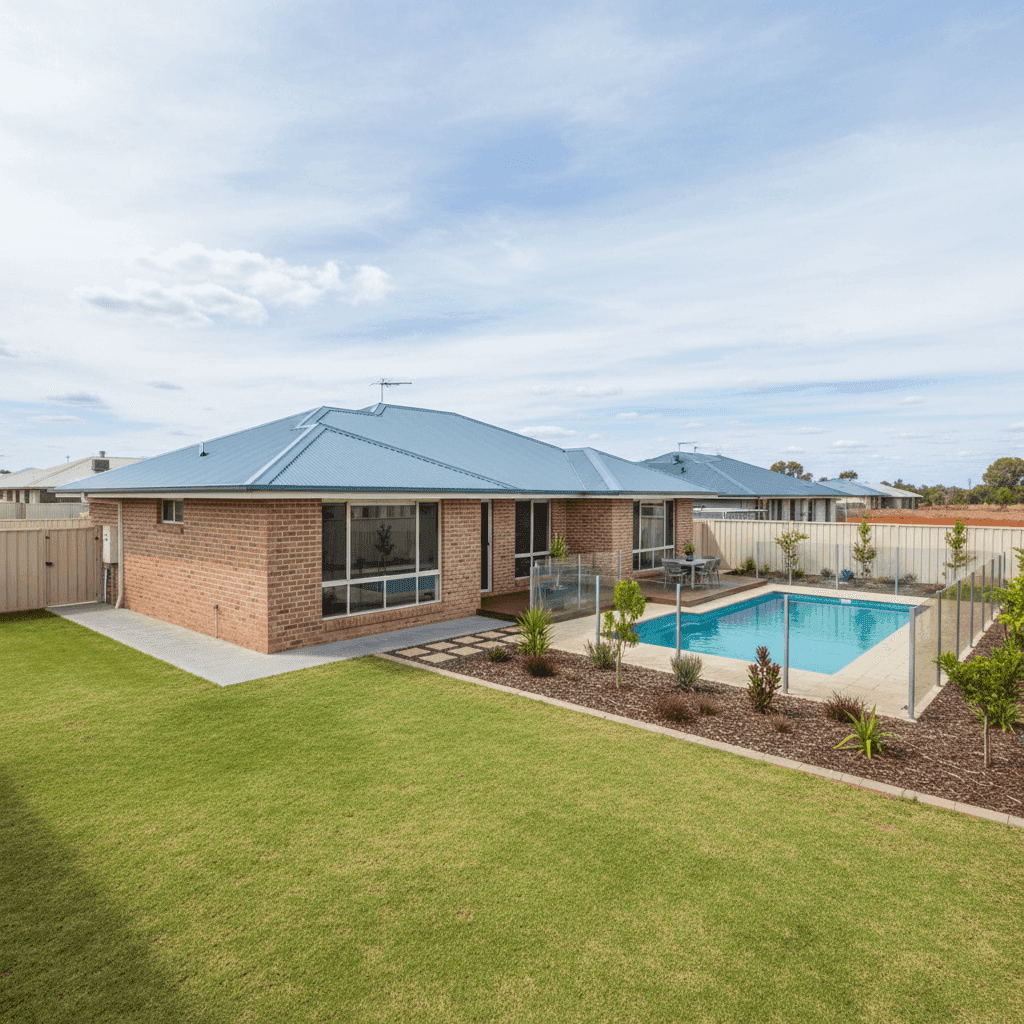
If you own a free standing home in East Side, NT 0870, you already know that insuring a property in the Northern Territory comes with its own set of considerations. From the region's climate to the age and construction of local homes, a range of factors feed into what you'll ultimately pay for cover. This article breaks down a real home and contents insurance quote for a three-bedroom, two-bathroom brick veneer home in East Side — and helps you understand whether the price stacks up.
---
Is This Quote Fair?
The quote in question sits at $5,958 per year (or $584 per month) for combined home and contents insurance, with a building sum insured of $650,000 and contents valued at $59,000. The building excess is $3,000 and the contents excess is $1,000.
Our price rating for this quote is Expensive — Above Average.
To put that in context: the suburb average premium in East Side is $4,328 per year, and the suburb median sits at $3,787. That means this quote is running roughly 38% above the suburb average and nearly 57% above the suburb median. Even when you look at the 75th percentile for the area — meaning only 25% of quotes are higher — the figure is $4,800 per year, still well below this premium.
That's a meaningful gap, and it's worth understanding what's driving it before simply accepting the price.
---
How East Side Compares
East Side sits in the Alice Springs local government area, which has its own distinct insurance profile. Here's how the numbers stack up across different benchmarks:
| Benchmark | Annual Premium |
|---|---|
| This Quote | $5,958 |
| East Side Suburb Average | $4,328 |
| East Side Suburb Median | $3,787 |
| East Side 25th Percentile | $3,170 |
| East Side 75th Percentile | $4,800 |
| NT State Average | $3,709 |
| NT State Median | $3,580 |
| Alice Springs LGA Average | $2,896 |
| National Average | $2,965 |
| National Median | $2,716 |
(Based on 52 quotes sampled for the East Side postcode.)
A few things stand out here. First, even the suburb average in East Side ($4,328) is noticeably higher than both the NT state average of $3,709 and the national average of $2,965. This tells us that East Side is already a relatively expensive area to insure — but this particular quote goes well beyond what most locals are paying.
Interestingly, the Alice Springs LGA average of $2,896 is actually below the national average, suggesting there's considerable variation within the broader region. East Side's postcode appears to attract higher premiums than many surrounding areas. You can explore the full local data on the East Side suburb stats page.
---
Property Features That Affect Your Premium
Several characteristics of this property are likely contributing to the above-average premium. Let's work through the key ones.
Age of Construction
Built in 1964, this home is over 60 years old. Older properties often attract higher premiums because ageing infrastructure — plumbing, wiring, and structural elements — can increase the likelihood of claims. Insurers factor in the cost of restoring or replacing components that may no longer meet current building codes.
High Building Sum Insured
A $650,000 building sum insured is a significant figure, especially for a 139 sqm home. While it's important to insure for the full cost of rebuilding (not just market value), a higher sum insured directly increases your premium. It's worth periodically reviewing whether your building sum insured accurately reflects current construction costs in your area — over-insuring can be just as costly as under-insuring is risky.
Swimming Pool
The presence of a pool adds liability exposure to your policy. Pools increase the risk of injury on your property, which insurers price into the premium. Pool maintenance and the risk of accidental damage to pool equipment also factor in.
Brick Veneer Walls and Colorbond Roof
Brick veneer construction is generally well-regarded by insurers for its durability and fire resistance, which can work in your favour. A steel/Colorbond roof is also viewed positively — it's lightweight, resistant to corrosion, and performs well in harsh Australian conditions. These features may be moderating the premium to some extent, even if other factors are pushing it higher.
Slab Foundation and Tile Flooring
A concrete slab foundation is considered low-risk by most insurers, as it's stable and less susceptible to subsidence or pest damage than other foundation types. Tile flooring is similarly durable and less prone to water damage than carpet or timber, which can be minor positives in the insurer's risk assessment.
Standard Fittings
Standard-quality fittings mean the cost of replacing fixtures and finishes is more predictable and moderate. High-end or custom fittings can significantly increase rebuilding costs, so standard fittings help keep that component of the premium in check.
---
Tips for Homeowners in East Side
If your premium is coming in above what you'd expect, here are some practical steps worth considering.
1. Shop Around and Compare Multiple Quotes
The single most effective thing you can do is compare. With a 52-quote sample showing a suburb median of $3,787, there's clearly a wide range of prices available in East Side. A quote that's $2,000 above the median is a strong signal that a better deal may be out there. Get a comparison quote at CoverClub to see what other insurers are offering for your property.
2. Review Your Building Sum Insured
Make sure your $650,000 building sum insured is accurate — not inflated. Use a reputable building cost calculator (many insurers provide one) to estimate the true rebuild cost of your home at 139 sqm. Even a modest adjustment downward, if justified, can meaningfully reduce your annual premium.
3. Consider a Higher Excess
The building excess on this policy is $3,000, which is already on the higher side. However, if you're in a financial position to absorb a larger out-of-pocket cost in the event of a claim, asking for an even higher excess option could reduce your premium further. Just make sure the saving justifies the additional risk.
4. Ask About Discounts and Bundling
Some insurers offer discounts for bundling home and contents cover (which this policy already does), for paying annually rather than monthly, or for loyalty. It's always worth asking your insurer directly what discounts are available — these aren't always advertised upfront.
---
Start Comparing Today
Whether you're reviewing an existing policy or shopping for the first time, comparing quotes is the fastest way to find better value. CoverClub makes it easy to see how your premium stacks up against real data from your suburb, state, and across Australia. Compare home insurance quotes at CoverClub and make sure you're not paying more than you need to for quality cover.