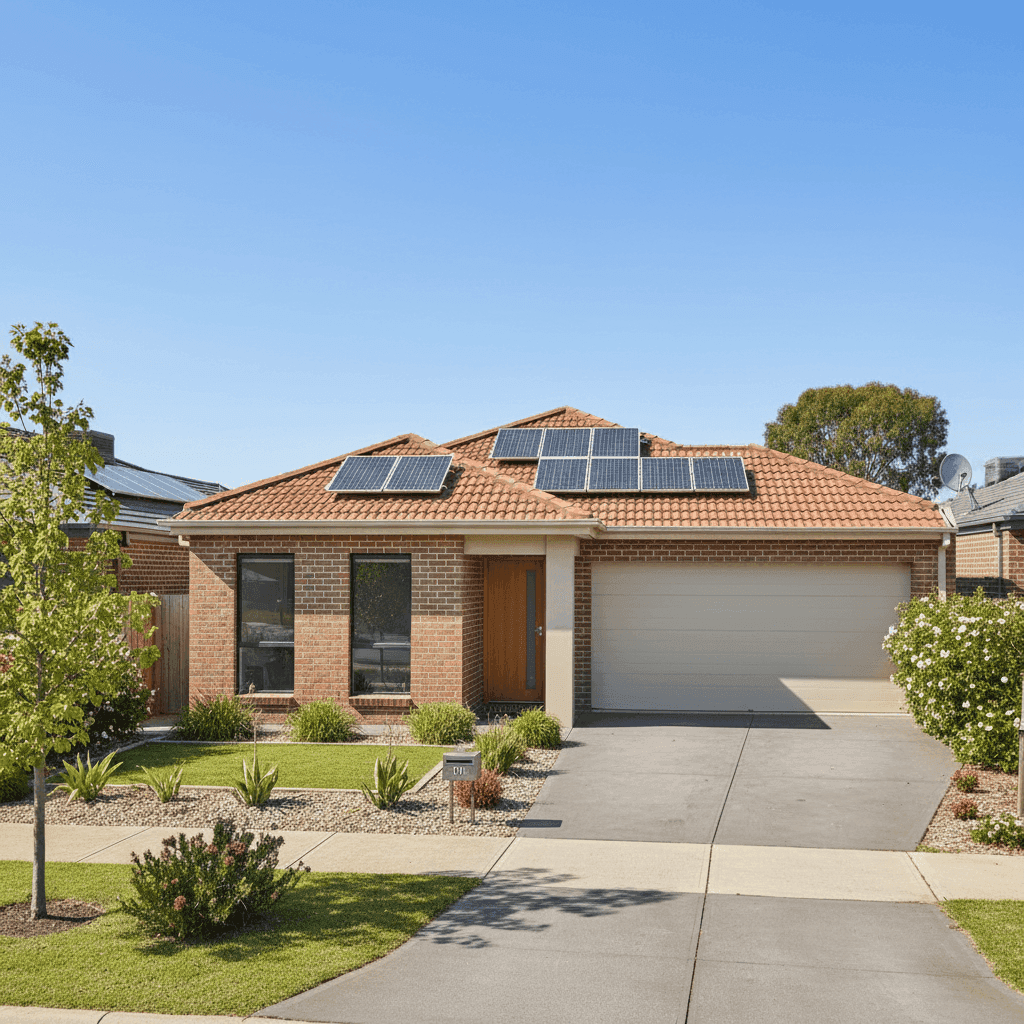
If you own a townhouse in Echuca, VIC 3564, you're probably curious about what a fair home insurance premium looks like — and whether you're paying too much, too little, or just about right. Echuca is a charming Murray River town on the northern edge of Victoria, known for its heritage paddle steamers, warm summers, and tight-knit community. It's also a region where flood and weather risk can play a meaningful role in how insurers price your policy. This article breaks down a real home and contents insurance quote for a 3-bedroom, 2-bathroom townhouse in Echuca, and puts it in context against local, state, and national benchmarks.
---
Is This Quote Fair?
The annual premium for this quote comes in at $1,609 per year (or roughly $154 per month), covering both building and contents for a sum insured of $480,000 on the building and $50,000 on contents. Both the building and contents excess are set at $1,000.
Based on data from 70 quotes collected for Echuca (postcode 3564), this premium is rated CHEAP — below average for the suburb. The suburb average sits at $2,863 per year, and the median is $2,521 per year, meaning this quote comes in well beneath both measures. Even against the 25th percentile — the point at which only one quarter of quotes are cheaper — this premium of $1,609 undercuts the $1,843 mark, placing it firmly in the most competitive tier of pricing available in the area.
In plain terms: if you were quoted this premium, you'd be getting a genuinely good deal relative to what most Echuca homeowners are paying.
---
How Echuca Compares
To put this quote in broader context, here's how Echuca stacks up against Victoria-wide and national benchmarks:
| Benchmark | Average Premium | Median Premium |
|---|---|---|
| Echuca (3564) | $2,863/yr | $2,521/yr |
| LGA (Campaspe) | $2,979/yr | — |
| Victoria | $3,000/yr | $2,718/yr |
| National | $5,347/yr | $2,764/yr |
A few things stand out here. First, Echuca's average premium is actually slightly below the Victorian state average, which is somewhat surprising given the town's proximity to the Murray River and its associated flood risk. This may reflect a mix of property types and ages in the sample, as well as competitive pricing from insurers in regional Victoria.
Second, the national average of $5,347 per year looks dramatically higher than both the Echuca and Victorian figures. This is largely driven by premiums in high-risk areas such as Far North Queensland and parts of coastal New South Wales, where cyclone and flood exposure can push costs into the thousands. Victoria, by comparison, remains relatively affordable on a national scale.
The quote analysed here — at $1,609 per year — sits 44% below the Echuca suburb average and 46% below the Victorian state average. That's a substantial saving, and one worth understanding in the context of the property's features.
---
Property Features That Affect Your Premium
Several characteristics of this particular townhouse work in the owner's favour when it comes to insurance pricing.
Brick veneer construction is generally viewed favourably by insurers. It offers solid fire resistance and structural durability compared to timber-framed or weatherboard homes, and tends to attract lower premiums as a result.
A tiled roof is another positive. Tiles are durable, low-maintenance, and perform well in moderate weather conditions. They're generally considered lower risk than older corrugated iron or fibreglass roofing.
Slab foundation is the standard for modern construction and presents minimal risk of subsidence or movement under typical conditions — a reassuring factor for insurers.
Built in 2009, this townhouse is relatively modern. Newer properties tend to be built to more current building codes, which means better structural integrity, updated electrical wiring, and improved fire safety features. This often translates to lower premiums.
Solar panels are worth noting. While they add value to the property, they can slightly increase replacement costs in the event of damage, and some insurers factor this into their pricing. It's worth confirming with your insurer that your solar system is explicitly covered under your building policy.
Ducted climate control is another fixture that increases the replacement value of the home. At 139 sqm, this townhouse is a manageable size, but with quality fixtures like ducted air conditioning, ensuring your sum insured accurately reflects full rebuild costs — including these systems — is important.
One factor that doesn't apply here but is worth mentioning for context: this property is not in a cyclone risk area, which keeps premiums lower than they might otherwise be in northern parts of Australia.
---
Tips for Homeowners in Echuca
1. Review your flood cover carefully. Echuca sits on the Murray River, and the region has experienced significant flooding in recent years, including the 2022 floods that affected much of northern Victoria. Standard home insurance policies don't always include flood cover automatically — check your Product Disclosure Statement (PDS) carefully and ensure flood is explicitly listed as a covered event.
2. Make sure your sum insured reflects true rebuild costs. A building sum insured of $480,000 for a 139 sqm townhouse built in 2009 with standard fittings seems reasonable, but construction costs have risen sharply in recent years. Use a building cost calculator or speak with a local builder to validate this figure. Being underinsured at claim time can be a costly mistake.
3. Don't forget your solar panels. As mentioned above, solar panels should be explicitly covered under your building policy. Confirm the replacement value of your system is accounted for in your sum insured, and ask your insurer directly whether panels are included.
4. Compare quotes annually. The fact that this quote comes in well below the suburb average is a reminder that premiums vary significantly between insurers for the same property. Loyalty doesn't always pay — shopping around at renewal time can uncover meaningful savings. Get a new quote at CoverClub to see how your current premium stacks up.
---
Find a Better Deal with CoverClub
Whether you're a first-time buyer in Echuca or a long-time homeowner reviewing your policy, CoverClub makes it easy to see what you should be paying. Explore suburb-level insurance data for Echuca (3564), compare it against Victoria-wide trends, or see how your area stacks up nationally. When you're ready, get a personalised quote in minutes and make sure you're not paying more than you need to.