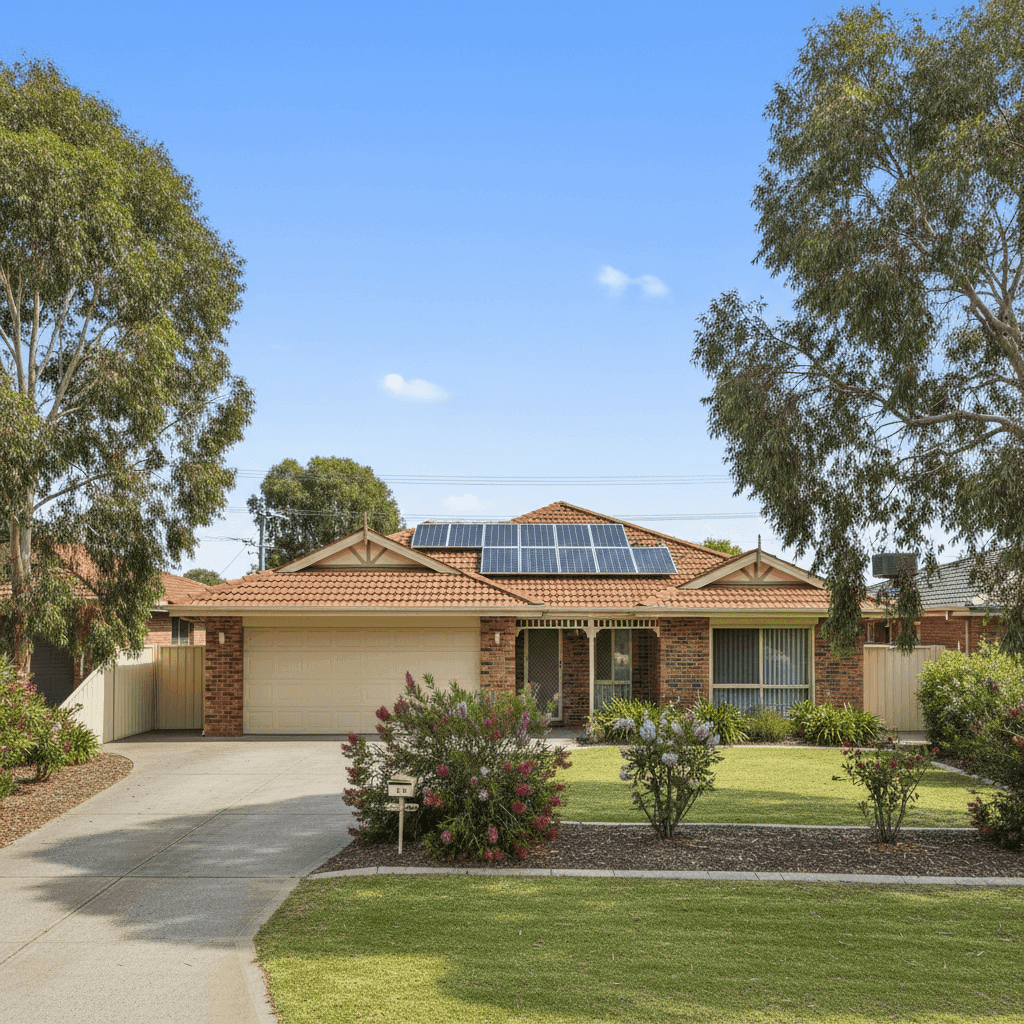
Echuca is one of regional Victoria's most beloved river towns, sitting on the Murray River at the border of New South Wales. It's a popular destination for tree-changers and long-term locals alike — and with that appeal comes a healthy property market and, naturally, questions about the true cost of insuring a home here. This article breaks down a real home and contents insurance quote for a four-bedroom, free-standing home in Echuca (VIC 3564), and puts the numbers in context so you can judge whether you're getting a fair deal.
---
Is This Quote Fair?
The quote in question comes to $3,963 per year (or $373/month) for combined home and contents cover, with a building sum insured of $995,000 and contents valued at $299,999. Both the building and contents excess are set at $1,000 each.
CoverClub's pricing engine has rated this quote as FAIR — Around Average, and the data backs that up. Based on 103 quotes collected for the Echuca area, the suburb average sits at $4,286/year, while the median is $3,766/year. At $3,963, this quote lands comfortably between those two figures — slightly above the median but noticeably below the suburb average. That's a reasonable position to be in.
It's worth noting the wide spread of premiums in Echuca. The 25th percentile sits at just $1,533/year, while the 75th percentile reaches $5,866/year. That's a $4,333 gap between the cheaper and more expensive ends of the market, which tells you that property characteristics, sum insured levels, and insurer pricing strategies vary enormously in this postcode. A quote of $3,963 is solidly in the middle of that range — not a bargain, but certainly not excessive for the coverage on offer.
---
How Echuca Compares
When you zoom out beyond the suburb level, Echuca's premiums look notably higher than broader benchmarks:
| Benchmark | Average | Median |
|---|---|---|
| Echuca (3564) | $4,286/yr | $3,766/yr |
| LGA (Campaspe) | $2,979/yr | — |
| Victoria | $2,921/yr | $2,694/yr |
| National | $2,965/yr | $2,716/yr |
Echuca's suburb average is roughly 47% higher than the Victorian state average and about 45% above the national average. Even the LGA average for Campaspe ($2,979/yr) is significantly lower than what Echuca-specific quotes are returning.
Why the gap? A few factors are likely at play. Echuca's proximity to the Murray River means flood risk is a genuine consideration for insurers — even properties not directly on the floodplain can be affected by riverine flooding events. The town has experienced significant flood events in recent years, and insurers price that risk into premiums for the broader postcode. You can explore Victoria-wide insurance data and national benchmarks to see how other regions compare.
---
Property Features That Affect Your Premium
Several characteristics of this particular property have a meaningful influence on how insurers assess and price the risk:
Brick Veneer Construction Brick veneer is one of the most common wall types in Australian suburban homes, and insurers generally view it favourably. It offers good fire resistance and structural durability compared to timber-framed weatherboard homes, which can translate to more competitive premiums.
Tiled Roof Concrete or terracotta tiles are considered a robust roofing material. They hold up well against hail and general weather events, which is a plus for insurers. That said, tiles can crack under significant hail impact or be dislodged by strong winds, so they're not without risk.
Slab Foundation A concrete slab foundation is standard for homes built in this era and is generally considered low-risk from an insurer's perspective. Unlike homes on stumps or piers, slabs offer less exposure to underfloor moisture issues and pest ingress.
Solar Panels This property has solar panels installed, which adds value to the building sum insured. Solar systems can be expensive to replace after storm, hail, or fire damage, and it's important to confirm with your insurer that panels are explicitly covered under your building policy — not all policies treat them the same way.
Ducted Climate Control Ducted heating and cooling systems are a significant fixed asset. Like solar panels, they contribute to the overall replacement cost of the home and should be factored into your building sum insured to avoid being underinsured.
Building Size: 214 sqm At 214 square metres, this is a mid-to-large family home. The building sum insured of $995,000 reflects a rebuild cost that accounts for the size, quality of fittings, and current construction costs — which have risen sharply in recent years. Getting your sum insured right is one of the most important steps in securing adequate cover.
---
Tips for Homeowners in Echuca
1. Understand your flood exposure Echuca's flood history is well-documented. Before selecting a policy, check whether flood cover is included as standard or available as an optional add-on. Some insurers exclude flood entirely in high-risk postcodes, while others include it but at a higher premium. Don't assume you're covered — read the Product Disclosure Statement carefully.
2. Review your building sum insured regularly Construction costs across regional Victoria have increased significantly since 2020. A sum insured that was accurate two or three years ago may now leave you underinsured. Use a quantity surveyor estimate or your insurer's rebuild calculator to make sure $995,000 still reflects the true cost of rebuilding your home from scratch.
3. Check your solar panel coverage With solar panels on the roof, confirm exactly how your insurer treats them. Are they covered for accidental damage, storm, and hail? Is there a sub-limit that applies? Some policies cap solar panel claims at a lower amount than you'd expect. If your system is worth $10,000–$15,000 or more, this detail matters.
4. Compare at least three quotes The 25th-to-75th percentile range in Echuca spans over $4,300 per year. That spread alone is reason enough to shop around. Insurers use different models to price flood-prone postcodes, and you may find meaningful variation in what you're offered — without sacrificing cover quality.
---
Ready to Compare?
Whether you're a long-time Echuca local or recently made the move to the Murray, making sure your home insurance is both competitive and comprehensive is worth the effort. Get a home insurance quote through CoverClub and see how your options stack up — side by side, in plain language. You can also explore detailed Echuca suburb insurance statistics to benchmark any quote you receive.