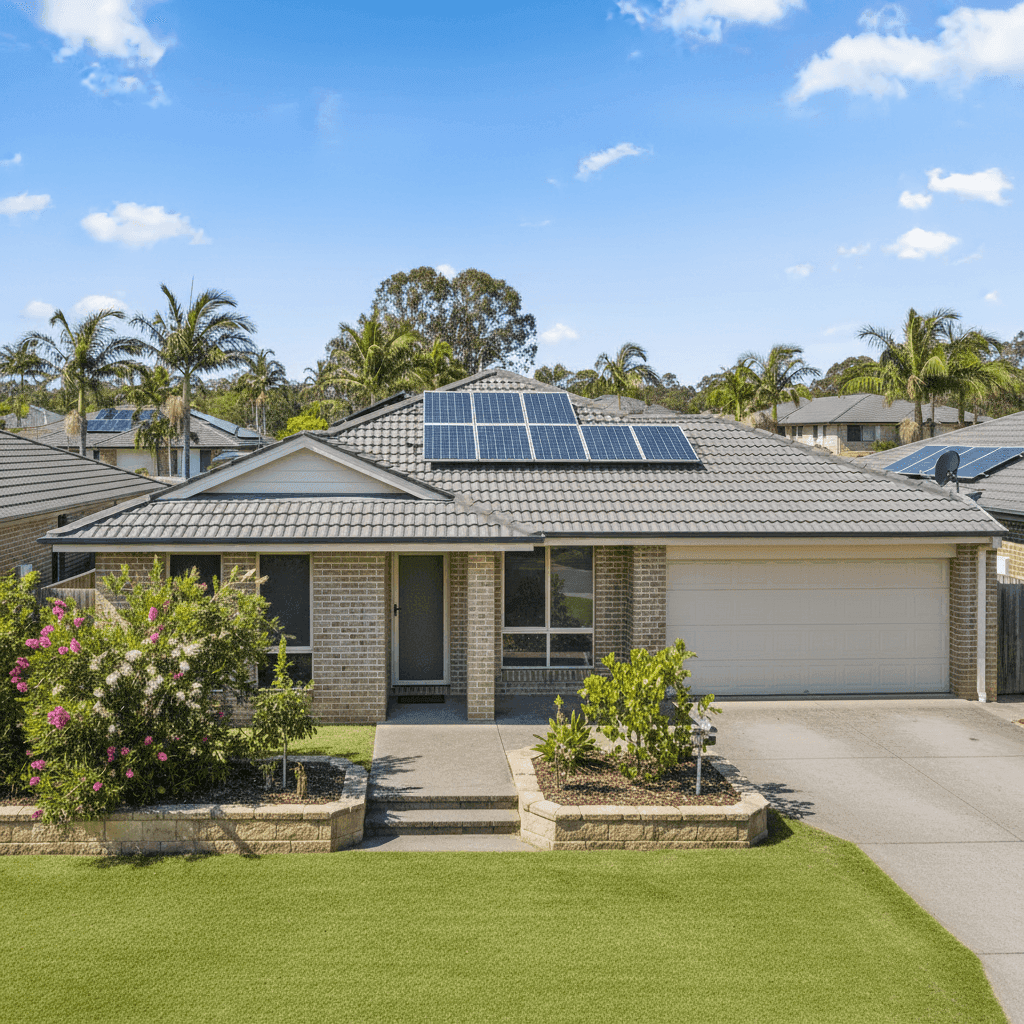
If you own a free standing home in Edens Landing, QLD 4207, you're probably wondering whether the premium sitting in your inbox is a good deal or whether you're quietly paying too much. This article breaks down a real home and contents insurance quote for a four-bedroom, two-bathroom brick veneer home in Edens Landing — and puts the numbers in context using suburb, state, and national data so you can make a genuinely informed decision.
---
Is This Quote Fair?
The quote in question comes in at $2,731 per year (or $262 per month) for combined home and contents cover, with a building sum insured of $620,000 and contents valued at $200,000. Both the building and contents excess sit at $500.
Our independent price rating for this quote is FAIR — Around Average.
That assessment holds up when you look at the numbers. The suburb average premium for Edens Landing is $2,416 per year, and the median sits at $2,336. This quote lands about $315 above the suburb average — not dramatically so, but enough to warrant a closer look. It falls comfortably within the middle range of the market, sitting below the 75th percentile of $3,000 per year. In other words, roughly a quarter of comparable quotes in this suburb cost more.
A "fair" rating doesn't mean you should simply accept the quote and move on. It means the price isn't unreasonable for the risk profile and cover level — but there may still be room to do better with a different insurer.
---
How Edens Landing Compares
To really understand what this quote means, it helps to zoom out and look at the broader picture. You can explore the full data on the Edens Landing suburb stats page.
| Benchmark | Premium |
|---|---|
| This quote | $2,731/yr |
| Edens Landing suburb average | $2,416/yr |
| Edens Landing suburb median | $2,336/yr |
| QLD state average | $9,129/yr |
| QLD state median | $3,903/yr |
| National average | $5,347/yr |
| National median | $2,764/yr |
| Gold Coast LGA average | $8,161/yr |
The contrast with the broader QLD state average of $9,129 per year is striking. Edens Landing homeowners are paying a fraction of what many Queensland residents face — a reflection of the suburb's relatively low flood and cyclone exposure compared to coastal or far-north Queensland locations. The Gold Coast LGA average of $8,161 per year further illustrates how much variation exists even within the same local government area.
Compared to the national average of $5,347, this quote looks quite reasonable. Even the national median of $2,764 is only marginally above the quote — suggesting this homeowner is sitting in a genuinely competitive position relative to the rest of the country.
The suburb sample size of 44 quotes provides a solid basis for comparison, giving us reasonable confidence in the local benchmarks.
---
Property Features That Affect Your Premium
Every property is different, and insurers price risk based on a combination of construction characteristics, location, and the features that either increase or reduce exposure. Here's how this particular property's attributes play into the premium.
Brick veneer construction and tiled roof are generally viewed favourably by insurers. Brick veneer walls offer good fire resistance and structural integrity, while concrete or terracotta tiles are more durable than corrugated iron in many weather scenarios. Together, these materials typically attract lower premiums than timber-framed or clad homes.
Slab foundation is standard for a 2003-era Queensland home and is a neutral factor from an underwriting perspective. The property is noted as elevated by less than one metre — a modest elevation that provides some protection against minor surface water ingress, though it wouldn't qualify for significant flood-related premium discounts.
Solar panels are an increasingly common feature in Queensland and are generally covered under home insurance, but they do add to the overall replacement cost of the building. Homeowners should ensure their sum insured accounts for the cost of replacing panels, inverters, and associated wiring — not just the structure itself.
Ducted climate control similarly adds to the insured value of the home. These systems can be expensive to repair or replace, and their presence is a reasonable contributor to the $620,000 building sum insured.
No pool and no cyclone risk are both premium-friendly attributes. Pools introduce liability considerations and additional maintenance risks, while the absence of cyclone risk classification means this property avoids the significant loadings applied to homes in far-north Queensland.
At 235 square metres, this is a comfortably sized family home, and the standard fittings quality keeps replacement cost estimates grounded — avoiding the premium uplift that comes with high-end or custom finishes.
---
Tips for Homeowners in Edens Landing
1. Review your building sum insured annually Construction costs have risen significantly in recent years across Queensland. A sum insured of $620,000 may have been accurate at policy inception but could fall short if you needed to rebuild today. Use a building cost calculator or speak with a quantity surveyor to ensure you're not underinsured.
2. Check that your solar panels are explicitly covered Not all policies automatically include solar panel systems in the building cover. Review your Product Disclosure Statement (PDS) to confirm your panels, inverter, and associated components are covered — and that the replacement value is reflected in your sum insured.
3. Compare quotes at renewal, not just when you first take out cover Insurance markets shift, and loyalty doesn't always pay. Given that this quote sits above the suburb median, it's worth running a fresh comparison at each renewal. A few minutes on CoverClub can reveal whether a better-priced policy exists for the same level of cover.
4. Consider your excess level carefully Both the building and contents excess on this policy are set at $500. Opting for a higher voluntary excess — say $1,000 or $2,000 — can meaningfully reduce your annual premium. If you have a solid emergency fund and are unlikely to make small claims, this trade-off is often worth considering.
---
Ready to See What Else Is Out There?
A fair rating is a reasonable starting point, but it's not the finish line. Whether you're renewing an existing policy or shopping for the first time, comparing multiple quotes is the single most effective way to ensure you're getting genuine value. Head to CoverClub to enter your property details and see how different insurers price your specific risk — it takes just a few minutes and could save you hundreds of dollars a year.