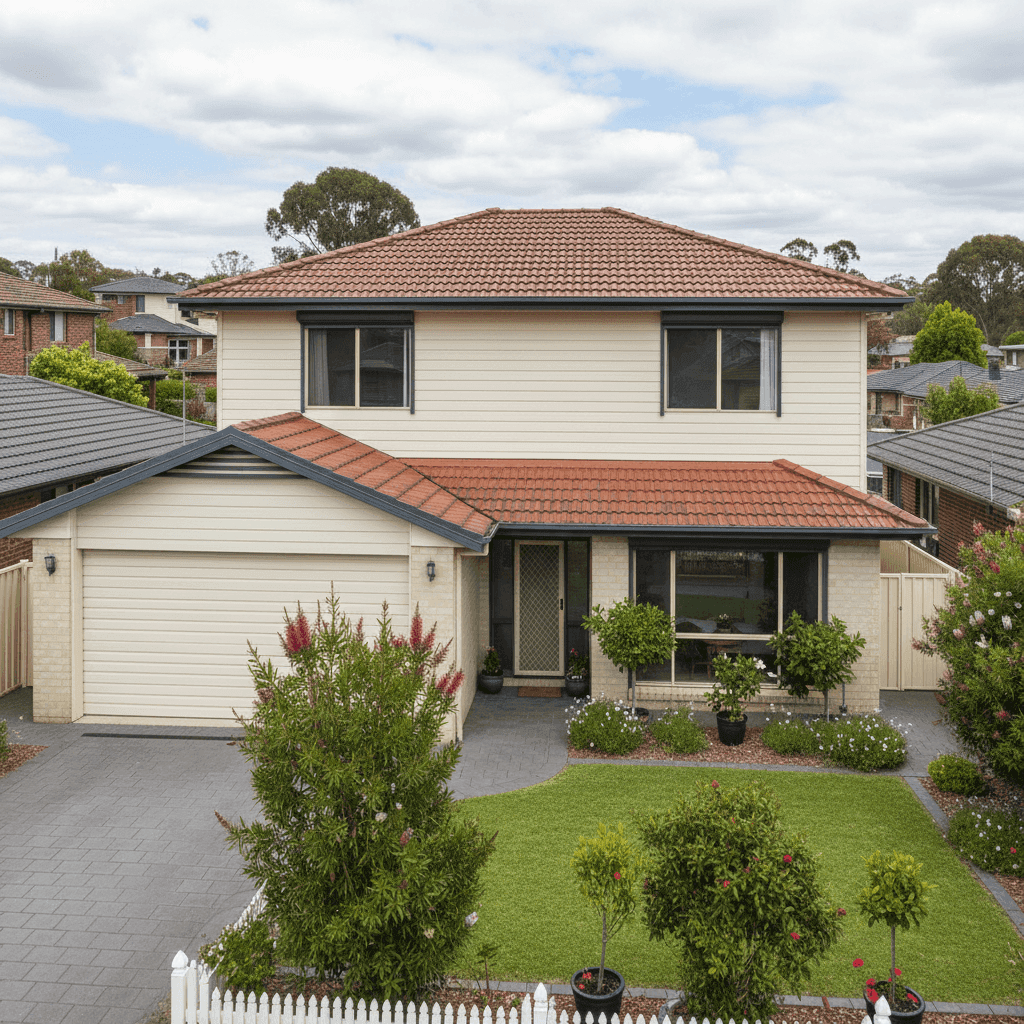
If you own a free standing home in Edgeworth, NSW 2285, you're probably well aware that insurance premiums can vary wildly depending on who you ask. This article breaks down a real home and contents insurance quote for a five-bedroom property in the suburb, benchmarks it against local, state, and national data, and offers practical tips to help you make sure you're not overpaying.
---
Is This Quote Fair?
The quote in question comes in at $3,632 per year (or $348/month) for combined home and contents cover, with a building sum insured of $583,000 and contents valued at $100,000. Both the building and contents excesses are set at $500.
Our price rating for this quote is EXPENSIVE — above average for the Edgeworth area.
To put that in context: the suburb average premium sits at $2,701/yr, and the median is even lower at $2,059/yr. This quote lands above the 75th percentile for the suburb (which is $3,062/yr), meaning it's pricier than at least three-quarters of comparable quotes we've seen in Edgeworth. That's a meaningful gap — roughly $930 more per year than the suburb average, and nearly $1,570 above the median.
That said, it's worth noting that this is a larger-than-average home (235 sqm, five bedrooms), which naturally pushes the building sum insured — and therefore the premium — higher than a typical three-bedroom dwelling. The $583,000 building cover is a significant figure and will be one of the primary drivers of cost.
---
How Edgeworth Compares
Understanding where Edgeworth sits in the broader insurance landscape helps put any individual quote into perspective.
| Benchmark | Premium |
|---|---|
| This quote | $3,632/yr |
| Edgeworth suburb average | $2,701/yr |
| Edgeworth suburb median | $2,059/yr |
| NSW state average | $9,528/yr |
| NSW state median | $3,770/yr |
| National average | $5,347/yr |
| National median | $2,764/yr |
| Newcastle LGA average | $3,835/yr |
A few things stand out here. First, the NSW state average of $9,528/yr looks alarming, but it's heavily skewed by high-risk coastal and flood-prone areas across the state — the median of $3,770/yr is a more reliable indicator of what most NSW homeowners pay. Against that benchmark, this quote is actually slightly below the NSW median, which is reassuring.
Nationally, the picture is similar. The national average of $5,347/yr is inflated by extreme-weather regions in Queensland and WA, while the national median of $2,764/yr is closer to what most Australian homeowners experience. This quote sits above both the national and Edgeworth medians, but below the NSW median — placing it in a middle ground that reflects the property's size and location.
Compared to the Newcastle LGA average of $3,835/yr, this quote is actually a touch cheaper, which suggests the pricing isn't wildly out of step with the broader Newcastle region.
---
Property Features That Affect Your Premium
Several characteristics of this property have a direct influence on what insurers charge.
Age of construction (1975): Homes built in the mid-1970s are now 50 years old, and insurers factor this in. Older homes can carry higher rebuild costs due to non-standard materials, updated compliance requirements, and the likelihood of ageing infrastructure (plumbing, wiring, roofing substrates). This can push premiums upward compared to newer builds.
Hardiplank/Hardiflex external walls: Fibre cement cladding like Hardiplank is generally viewed favourably by insurers — it's durable, fire-resistant, and low maintenance. This material is unlikely to be adding a loading to the premium and may actually work in the homeowner's favour compared to weatherboard or other timber-clad homes.
Tiled roof: Terracotta or concrete tiles are considered a solid, low-risk roofing choice by most insurers. They're durable, fire-resistant, and widely used across NSW. This is a neutral-to-positive factor for pricing.
Stump foundation: Homes on stumps (also known as pier foundations) are common in older Australian properties. While they offer good ventilation and are easier to inspect, some insurers apply a modest loading due to the potential for movement, rot, or pest damage to stumps over time. This could be a minor contributing factor to the premium.
Timber and laminate flooring: These floor types are generally standard for insurance purposes, though timber floors in older homes can be costly to repair or replace following water damage. Insurers are aware of this and it may be priced into the contents or building component.
Five bedrooms, 235 sqm: The sheer size of this home is arguably the biggest premium driver. A larger floor area means a higher rebuild cost, and the $583,000 building sum insured reflects that. Ensuring this figure is accurate — neither over- nor under-insured — is critical.
---
Tips for Homeowners in Edgeworth
1. Review your sum insured carefully. At $583,000, the building cover is substantial. Use an independent building cost calculator (many insurers offer these free) to verify this figure reflects current construction costs in the Newcastle region. Being over-insured means you're paying more premium than necessary; being under-insured can leave you seriously out of pocket after a major claim.
2. Shop around — especially at renewal. This quote is rated as expensive relative to the Edgeworth suburb average. Insurers rarely reward loyalty, and premiums can vary by hundreds of dollars for the same level of cover. Comparing at least three quotes before renewing is one of the simplest ways to save.
3. Consider your excess level. Both excesses here are set at $500, which is relatively low. Opting for a higher excess (say, $1,000 or $1,500) can meaningfully reduce your annual premium. If you have a good claims history and financial capacity to cover a higher out-of-pocket cost in the event of a claim, this is worth exploring.
4. Check for discounts you may be eligible for. Some insurers offer discounts for security features (deadbolts, alarm systems, security cameras), being claim-free for several years, or bundling home and contents with other policies. It's worth asking directly — these discounts aren't always advertised upfront.
---
Compare Your Options with CoverClub
Whether you're renewing an existing policy or insuring a new property, it pays to know where your quote stands. CoverClub makes it easy to benchmark your premium against real data from homeowners in your suburb, LGA, and state. Get a quote today and find out if you could be paying less for the same level of protection.