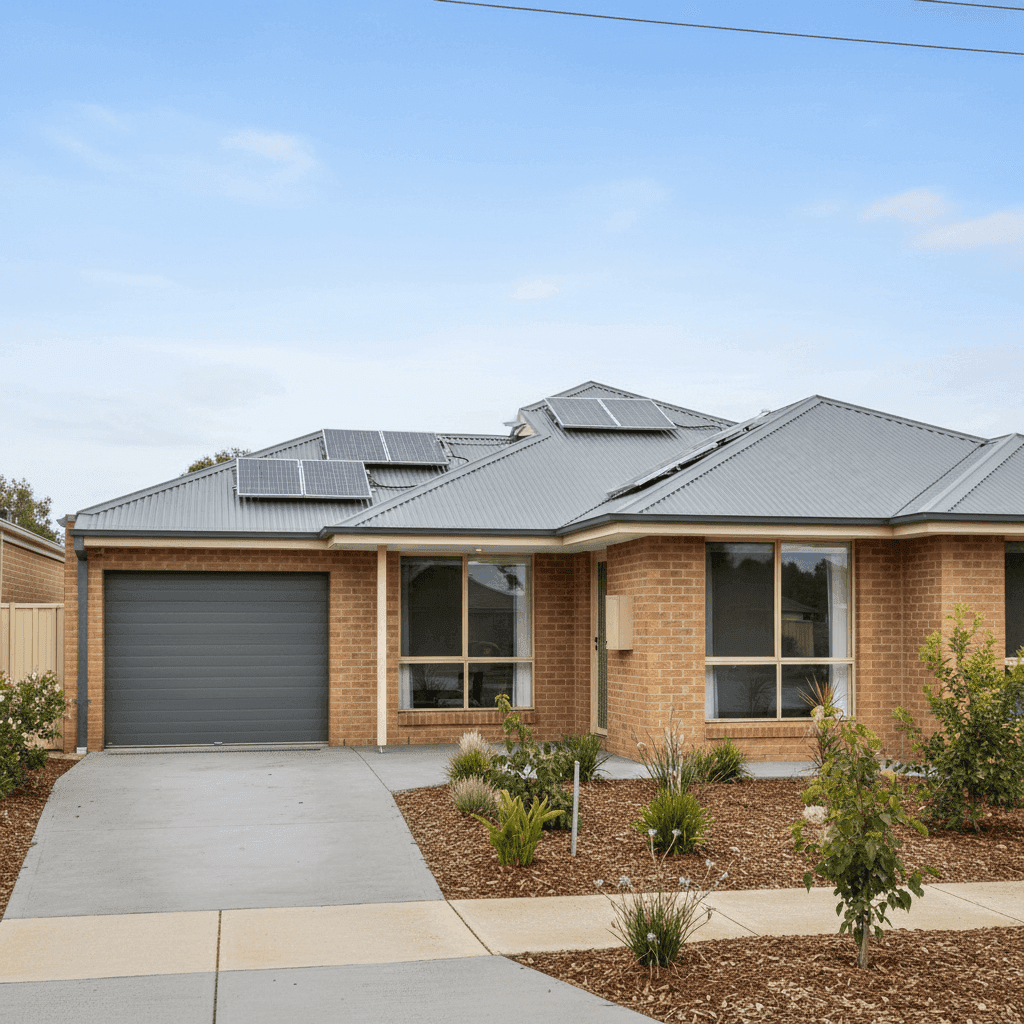
If you own a semi detached home in Edwardstown, SA 5039, you're in one of Adelaide's well-established southern suburbs — a leafy, mostly residential area that sits comfortably within the City of Marion. Whether you've just received a building insurance renewal or you're shopping around for the first time, understanding what a fair premium looks like for your specific property type can save you hundreds of dollars a year.
This article breaks down a real building-only insurance quote for a 3-bedroom, 2-bathroom semi detached in Edwardstown, compares it against local, state, and national benchmarks, and offers practical tips for getting the best value on your cover.
---
Is This Quote Fair?
The quote in question comes in at $1,208 per year (or roughly $118 per month) for building-only cover, with a $1,000 building excess and a sum insured of $553,000. Our assessment? This is a cheap (below average) premium — and that's genuinely good news for the homeowner.
To put it in perspective, the average home insurance premium across South Australia sits at $2,433 per year, with a state median of $1,679. At $1,208, this quote is comfortably below both figures — coming in around 50% cheaper than the SA average and well under the state median. That's a meaningful saving, not a marginal one.
Nationally, the picture is even starker. The national average premium has climbed to $5,347 per year, with a national median of $2,764. Compared to those figures, this Edwardstown quote looks exceptionally competitive. Of course, national averages are heavily influenced by high-risk regions — cyclone-prone areas in Queensland and the Northern Territory, flood-affected zones in NSW and Victoria — so a direct comparison needs to be taken with some context. But even accounting for that, a sub-$1,300 building premium for a 226 sqm property with a $553,000 sum insured is a solid result.
---
How Edwardstown Compares
While suburb-level data for Edwardstown specifically isn't available in isolation, we can look at the broader LGA of Marion, which gives us a useful local benchmark. The Marion LGA average premium sits at $1,463 per year — and this quote beats that figure too, coming in around $255 cheaper.
You can explore more detailed pricing trends for the area on the Edwardstown suburb stats page and compare them against broader South Australian home insurance data.
The City of Marion is generally considered a moderate-risk area for home insurance purposes. It doesn't face the extreme weather exposures of coastal Queensland or bushfire-prone regions in the Adelaide Hills, which helps keep premiums relatively contained. Edwardstown itself is a flat, urban suburb with established infrastructure, which insurers tend to view favourably.
| Benchmark | Annual Premium |
|---|---|
| This Quote | $1,208 |
| Marion LGA Average | $1,463 |
| SA State Median | $1,679 |
| SA State Average | $2,433 |
| National Median | $2,764 |
| National Average | $5,347 |
---
Property Features That Affect Your Premium
Several characteristics of this particular property work in the homeowner's favour when it comes to pricing.
Brick Veneer Walls Brick veneer is one of the most common — and insurer-friendly — external wall materials in Australia. It offers solid fire resistance and durability, and most insurers price it more favourably than timber cladding or other materials that carry higher fire or moisture risk.
Steel / Colorbond Roof A Colorbond steel roof is another tick in the right column. It's resistant to ember attack, handles heavy rain well, and has a long service life. Older terracotta or concrete tile roofs can attract higher premiums due to maintenance concerns and susceptibility to hail damage; Colorbond generally doesn't carry the same loading.
Concrete Slab Foundation Slab foundations are considered low-risk by most insurers. They're structurally stable, resistant to subfloor moisture issues, and don't carry the same subsidence concerns as older homes on stumps or piers.
Newer Construction (2016) A home built in 2016 benefits from modern building codes, which means better fire safety standards, improved structural integrity, and more reliable electrical and plumbing systems. Newer builds are statistically less likely to generate claims related to wear and tear or outdated materials.
Solar Panels The property has solar panels, which is worth noting. Some insurers include solar systems under building cover automatically; others may require you to confirm this with your insurer and check whether the panels are covered for accidental damage or storm events. It's worth a quick call to verify.
Body Corporate / Strata Property As a strata property, the building insurance is typically arranged through the body corporate — meaning this quote may represent either a standalone policy or a top-up arrangement. It's important to understand exactly what the body corporate policy covers (usually the common areas and the building shell) and whether you need additional cover for your lot's internal fixtures and fittings.
Ducted Climate Control Ducted systems are a fixed building feature and are generally included under building cover. They can add to the replacement cost of the home, so ensuring your sum insured accurately reflects the cost to rebuild — including these systems — is important.
---
Tips for Homeowners in Edwardstown
1. Confirm What Your Body Corporate Policy Covers In a strata or semi detached arrangement, the body corporate typically holds a master building policy. Before taking out your own building cover, get a copy of the strata insurance certificate and understand exactly what's included. You may find you only need contents cover — or a specific lot owner's policy to cover internal fixtures.
2. Review Your Sum Insured Annually Construction costs in South Australia have risen significantly in recent years. A sum insured of $553,000 for a 226 sqm home works out to roughly $2,447 per square metre — which is within a reasonable range for a modern brick veneer build, but worth validating against current rebuild cost estimates each year. Underinsurance is one of the most common and costly mistakes homeowners make.
3. Check Your Solar Panel Coverage With solar panels on the roof, confirm with your insurer whether they're automatically covered under the building policy and what events are included. Storm damage, hail, and accidental breakage are the key scenarios to ask about.
4. Consider a Higher Excess to Reduce Your Premium If your current $1,000 excess feels manageable, you could explore whether increasing it to $1,500 or $2,000 brings your premium down further. This strategy works best for homeowners who have an emergency fund and are unlikely to make small claims.
---
Compare and Save with CoverClub
Even a below-average quote is worth comparing. Insurance markets shift, and the best deal today may not be the best deal at your next renewal. At CoverClub, you can quickly compare building and contents insurance quotes from a range of Australian insurers — all in one place. It takes just a few minutes and could uncover meaningful savings on your next policy.