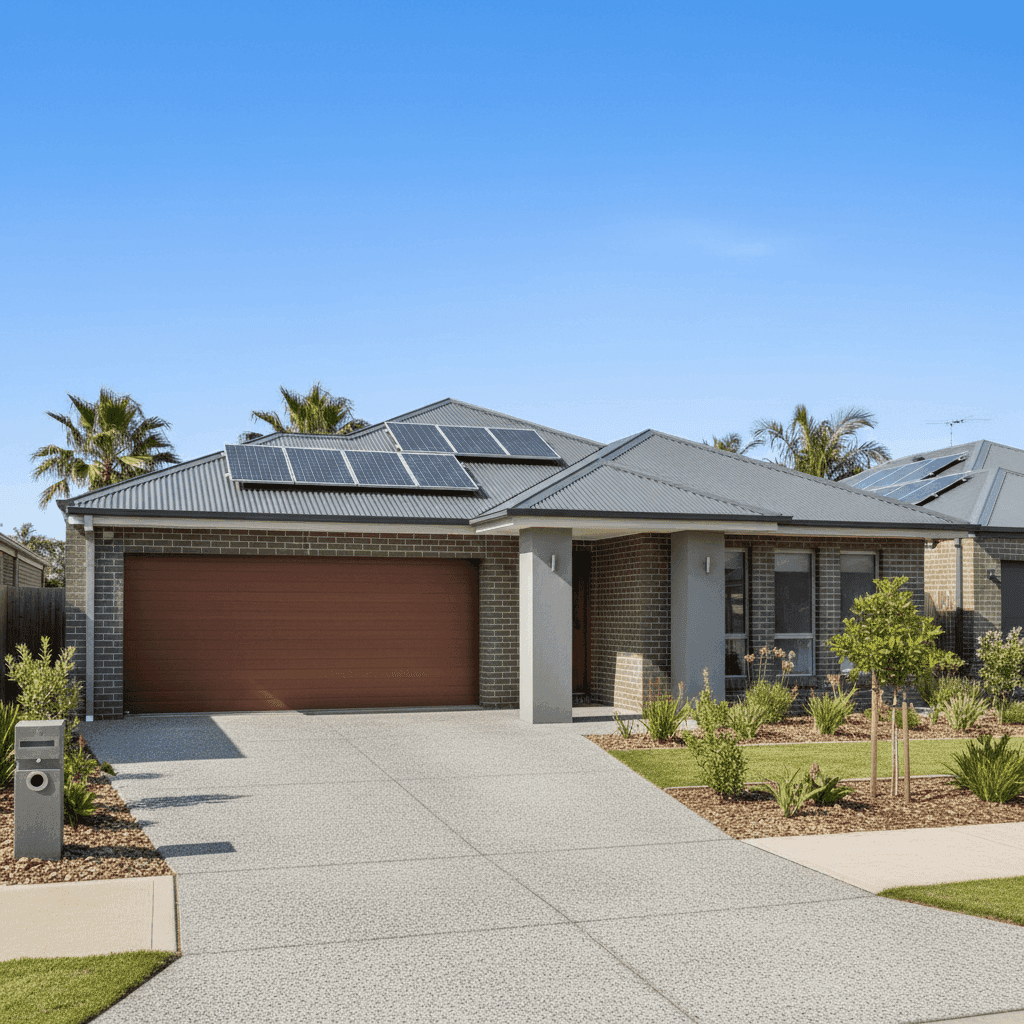
If you own a free standing home in Eglinton, WA 6034, you're living in one of Perth's fastest-growing coastal corridors — and like many homeowners in the area, you're probably wondering whether you're paying a fair price for your home insurance. This article breaks down a real home and contents insurance quote for a modern, 3-bedroom property in Eglinton, comparing it against local, state, and national benchmarks so you can make a more informed decision.
---
Is This Quote Fair?
The quote in question sits at $2,328 per year (or $223/month) for combined home and contents cover, with a building sum insured of $896,000 and contents valued at $50,000. Both the building and contents carry a $1,000 excess.
Our price rating for this quote is Expensive (Above Average).
To put that in context: the suburb average for Eglinton sits at just $1,565/year, with a median of $1,148/year. That means this quote is roughly 49% above the local average and more than double the suburb median. It does, however, fall within the suburb's 75th percentile of $2,026/year — sitting just above that threshold, which suggests it's not wildly out of range for higher-value properties, but it's certainly on the pricier end of the spectrum for the area.
The good news? There's likely room to negotiate or shop around for a more competitive rate without sacrificing meaningful cover.
---
How Eglinton Compares
Understanding where Eglinton sits relative to broader benchmarks is useful when evaluating any quote.
| Benchmark | Average Premium | Median Premium |
|---|---|---|
| Eglinton (6034) | $1,565/yr | $1,148/yr |
| LGA – Wanneroo | $1,550/yr | — |
| Western Australia | $2,811/yr | $2,127/yr |
| National | $5,347/yr | $2,764/yr |
A few things stand out here. First, Eglinton and the broader Wanneroo LGA are notably affordable compared to the WA state average of $2,811/year — suggesting that local risk factors (flooding, bushfire, storm damage) are relatively contained in this part of Perth's northern suburbs. Second, when you zoom out to the national picture, premiums in Eglinton look very reasonable — the national average of $5,347/year is more than three times the local suburb average, largely driven by high-risk regions in Queensland, Northern Territory, and cyclone-prone coastal areas.
For this particular quote at $2,328/year, the premium is above the Eglinton suburb average but well below both the WA and national averages. The elevated cost relative to local peers is likely attributable to the property's high building sum insured ($896,000) and above-average fittings quality, rather than any unusual geographic risk.
---
Property Features That Affect Your Premium
Several characteristics of this property have a direct bearing on the premium calculated. Here's how each one plays into the equation:
New construction (2023): Newly built homes typically attract more competitive premiums. Modern building codes mean better structural integrity, improved fire resistance, and fewer maintenance-related claims. This is a genuine pricing advantage.
Double brick external walls: Double brick is one of the most durable and insurer-favoured wall types in Australia. It offers strong resistance to impact, fire, and weather events, which generally works in your favour at renewal time.
Steel/Colorbond roof: Colorbond roofing is highly regarded by insurers for its durability, resistance to corrosion, and low maintenance profile. It's a common choice in WA and tends to be viewed positively during underwriting.
Slab foundation: Concrete slab foundations are considered low-risk in most contexts, particularly in Perth's sandy coastal soils. They're less susceptible to subsidence and termite ingress compared to older stumped or suspended timber foundations.
Timber/laminate flooring: While aesthetically appealing, timber and laminate floors can be more expensive to replace than tiles following water damage events. This may contribute modestly to the contents and building replacement cost.
Above-average fittings quality: This is one of the more significant premium drivers here. Above-average fittings — think stone benchtops, quality cabinetry, premium fixtures — increase the cost to rebuild or repair, which flows directly into a higher sum insured and, consequently, a higher premium.
Solar panels: Solar panel systems add to the insured value of the home and can be a source of claims (storm damage, electrical faults). Most insurers include them under building cover, but it's worth confirming the extent of cover in your policy documents.
Ducted climate control: Ducted air conditioning systems are expensive to repair or replace and are typically covered under building insurance. Their presence contributes to the overall replacement cost of the property.
No pool, no cyclone risk zone: The absence of a swimming pool removes a common liability exposure. And being outside a designated cyclone risk zone means no cyclone-specific loading on the premium — a meaningful saving compared to properties in northern WA.
---
Tips for Homeowners in Eglinton
If you're looking to ensure you're getting the best value from your home insurance, here are four practical steps worth taking:
- Review your sum insured carefully. A building sum insured of $896,000 is substantial — make sure it reflects the actual cost to rebuild (not the market value of the land). Use a quantity surveyor estimate or an online building calculator to verify this figure. Over-insuring unnecessarily inflates your premium.
- Compare at least three quotes. With 30 quotes in our Eglinton dataset showing a wide range from $799/year (25th percentile) to $2,026/year (75th percentile), there's clearly significant variation in how insurers price this suburb. Shopping around is one of the most effective ways to reduce your premium.
- Ask about new home discounts. Some insurers offer reduced premiums for homes built within the last five years. Given this property was completed in 2023, it may qualify — but not all insurers advertise this proactively, so it's worth asking directly.
- Bundle your home and contents cover. This quote already combines building and contents, which typically attracts a discount compared to purchasing them separately. If you haven't already bundled, doing so could reduce your overall outlay.
---
Ready to Compare?
Whether this quote reflects your own situation or you're simply exploring your options, the best way to know if you're getting a fair deal is to compare. At CoverClub, we make it easy to benchmark your premium against real quotes from across Eglinton and wider WA. Get a home insurance quote today and see how your current cover stacks up — you might be surprised at what's available.