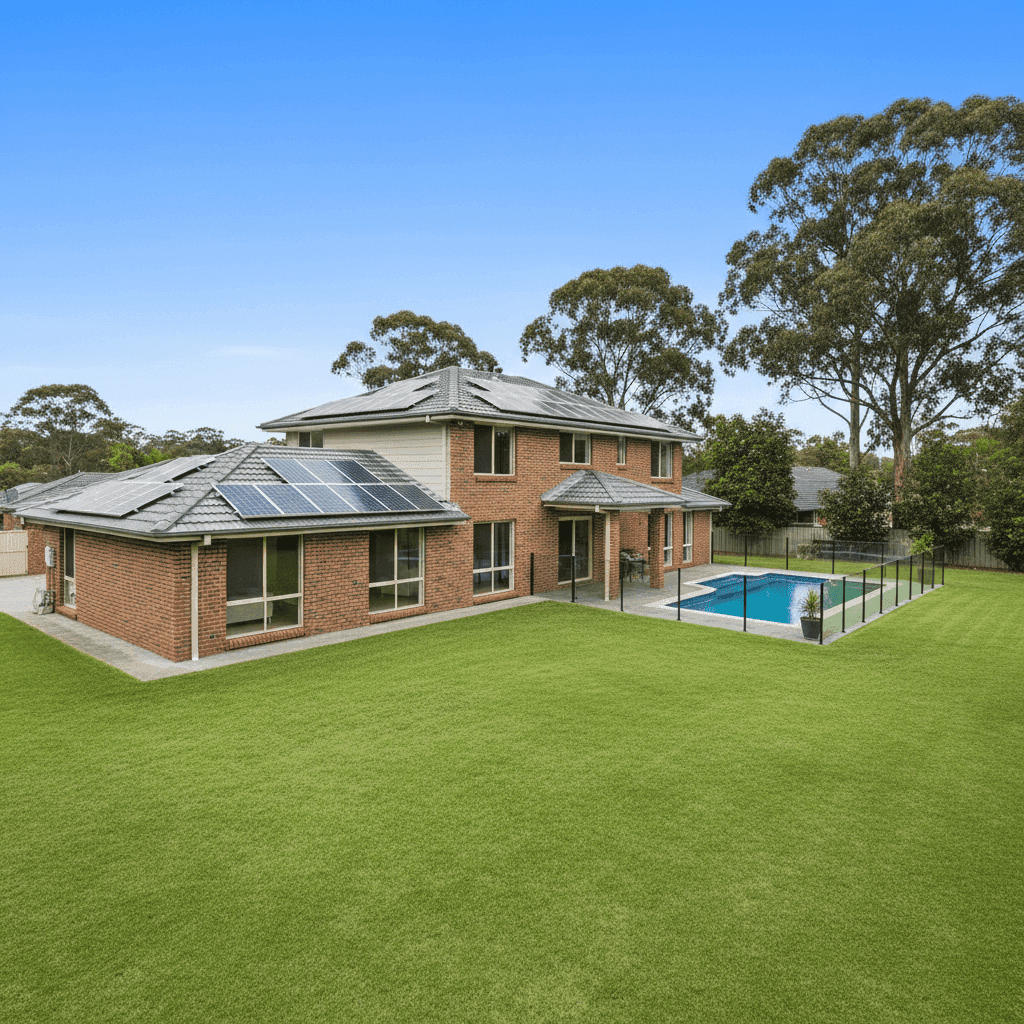
Eleebana is a leafy, lake-side suburb in the Lake Macquarie local government area of New South Wales — a sought-after pocket of the Hunter Region known for its relaxed lifestyle and quality housing stock. If you own a free standing home here, you'll know that protecting it with the right insurance is no small matter. In this article, we break down a real home and contents insurance quote for a five-bedroom property in Eleebana, compare it against local, state, and national benchmarks, and share some practical tips to help you get the best value on your cover.
---
Is This Quote Fair?
The quote in question comes to $3,416 per year (or $345/month) for combined home and contents cover, with a building sum insured of $1,251,000 and contents valued at $200,000. Both the building and contents excess are set at $5,000.
Our pricing model rates this quote as CHEAP — below average for the area. That's a meaningful finding. Eleebana's suburb average sits at $5,973/year, meaning this quote comes in roughly 43% below what most homeowners in the same postcode are paying. Even against the suburb's 25th percentile (the cheapest quarter of quotes), which sits at $3,943/year, this quote still undercuts the field by more than $500 annually.
For a property of this size — 315 sqm, five bedrooms, three bathrooms, with a pool, solar panels, and ducted climate control — landing a premium this competitive is a genuinely strong result. It suggests the insurer has assessed the risk profile of this property favourably, and that the policyholder is getting solid value for the level of cover on offer.
That said, a low premium should always be weighed against the policy's terms. A $5,000 excess on both building and contents is on the higher side, which is one of the ways insurers reduce the headline premium. It's worth ensuring that excess level is comfortable and manageable before committing.
---
How Eleebana Compares
To put this quote in proper context, here's how it stacks up across different benchmarks:
| Benchmark | Annual Premium |
|---|---|
| This Quote | $3,416 |
| Eleebana Suburb Average | $5,973 |
| Eleebana Suburb Median | $5,933 |
| Eleebana 25th Percentile | $3,943 |
| Lake Macquarie LGA Average | $3,593 |
| NSW State Average | $3,801 |
| NSW State Median | $3,410 |
| National Average | $2,965 |
| National Median | $2,716 |
A few things stand out here. First, Eleebana's suburb average ($5,973) is substantially higher than both the NSW state average of $3,801 and the national average of $2,965. This tells us that insuring a home in Eleebana is generally more expensive than in most parts of Australia — likely reflecting the higher property values, larger homes, and proximity to water in this area.
Second, this particular quote sits comfortably below the Eleebana suburb average and is even slightly below the NSW state median of $3,410. For a large, well-appointed home in a premium suburb, that's a competitive outcome.
It's worth noting that the suburb sample size here is 18 quotes, which is a reasonable but not enormous dataset. The wide spread between the 25th percentile ($3,943) and 75th percentile ($6,856) suggests there's significant variation in what Eleebana homeowners are paying — making it all the more important to shop around rather than simply accepting a renewal price.
---
Property Features That Affect Your Premium
Several characteristics of this property will influence how insurers price the risk:
Size and value: At 315 sqm with five bedrooms and three bathrooms, this is a large home with a substantial building sum insured of $1,251,000. Larger homes cost more to rebuild, and insurers price accordingly. The $200,000 contents value also adds to the overall exposure.
Brick veneer construction and tiled roof: These are generally viewed favourably by insurers. Brick veneer walls offer good fire resistance and structural durability, while tiled roofs are considered more resilient than corrugated iron or Colorbond in many risk assessments. Together, they can contribute to a more competitive premium.
Slab foundation: A concrete slab foundation is standard for many Australian homes built in this era and is typically considered a neutral-to-positive risk factor. It avoids the under-floor moisture and pest risks sometimes associated with older raised timber foundations.
Swimming pool: Pools add to the insured value of the property and can introduce liability considerations. Some insurers factor pool ownership into their pricing, so it's worth confirming your policy covers pool-related incidents, including accidental damage and legal liability.
Solar panels: Solar systems are increasingly common, but they do add to the replacement cost of the home. Make sure your building sum insured accounts for the full replacement value of your solar installation — panels, inverter, and all associated components.
Ducted climate control: Ducted systems are a significant fixture and can be expensive to repair or replace. As with solar, confirm these are adequately captured in your sum insured.
Construction year (1991): A home built in 1991 is well past the 30-year mark. While brick veneer homes of this era are generally solid, ageing plumbing, electrical systems, and roofing materials can be a factor in claims. Some insurers apply loadings for older homes, so it pays to be transparent about the property's condition.
---
Tips for Homeowners in Eleebana
1. Don't let your sum insured fall behind. With a building sum insured of $1,251,000 on a 315 sqm home, you're in reasonable territory — but construction costs in NSW have risen sharply in recent years. Review your sum insured annually and use a building cost calculator to ensure you're not underinsured. Underinsurance is one of the most common and costly mistakes Australian homeowners make.
2. Review your excess before renewal. A $5,000 excess is one way to keep premiums down, but it means you'll need to cover the first $5,000 of any claim out of pocket. If that feels uncomfortable, consider whether a slightly higher premium with a lower excess might suit your financial position better.
3. Shop around — the spread in Eleebana is wide. The gap between the cheapest and most expensive quotes in this suburb is enormous. Don't assume your renewal price is competitive. Compare quotes at CoverClub to see what other insurers are offering for your specific property.
4. Check your pool and solar are properly covered. These are two features that are sometimes underspecified in standard policies. Ask your insurer explicitly whether your pool structure, equipment, and solar system (including the inverter) are covered under your building policy, and for what events.
---
Compare Your Own Quote
Whether you're renewing your current policy or buying insurance for the first time, it pays to know what the market looks like. CoverClub makes it easy to compare home and contents insurance quotes tailored to your property. Get a quote today and see how your premium stacks up against your neighbours — you might be surprised at the savings on offer.