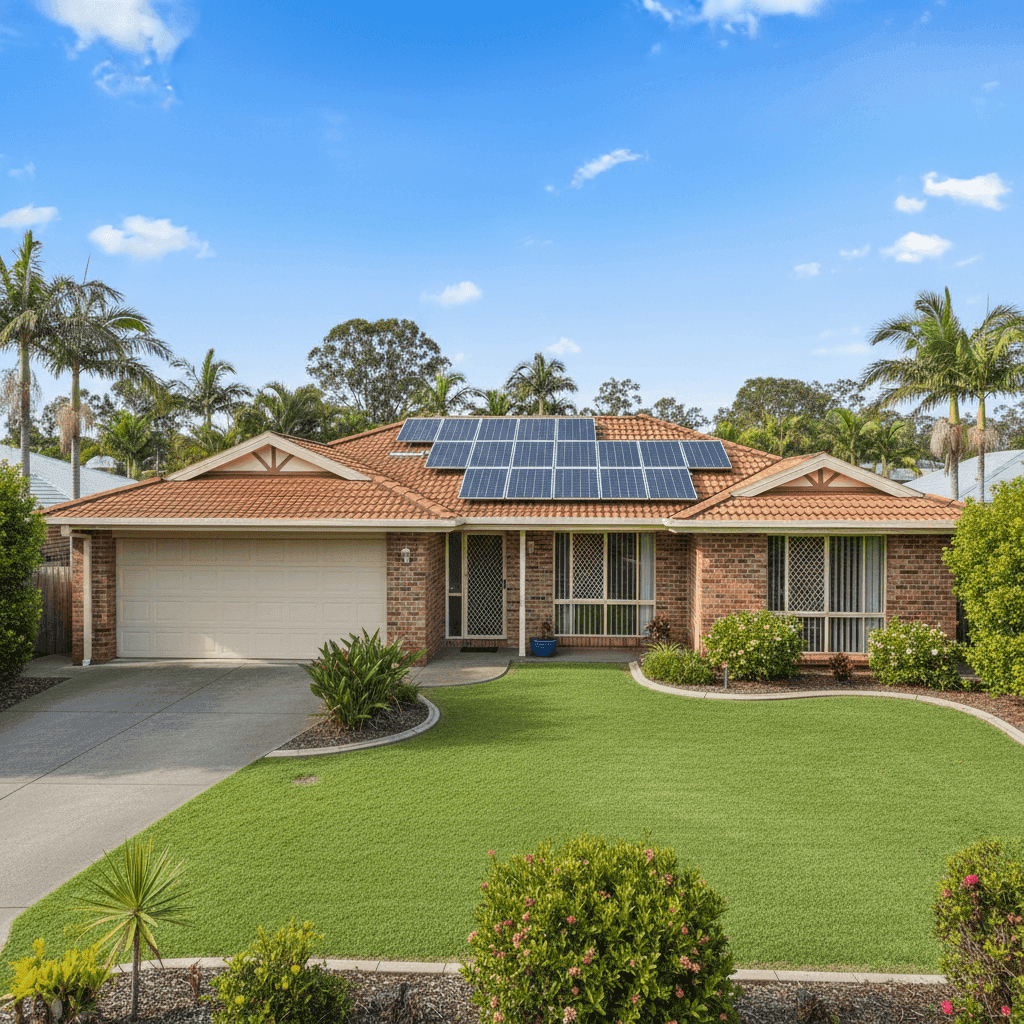
If you own a free standing home in Eli Waters, QLD 4655, you're likely no stranger to the challenge of finding competitive home insurance. Sitting in the Fraser Coast region, Eli Waters is a growing residential suburb where property values — and the cost to protect them — can vary significantly. This article takes a close look at a real home and contents insurance quote for a four-bedroom, two-bathroom brick veneer home in the suburb, breaking down whether the price stacks up and what factors are shaping the premium.
---
Is This Quote Fair?
The quote in question comes in at $2,001 per year (or $195/month) for combined home and contents cover, with a building sum insured of $719,000 and contents valued at $200,000. The building excess is set at $3,000, and the contents excess at $600.
Our price rating for this quote is FAIR — Around Average.
That rating reflects a nuanced position: the premium sits just above the suburb's 25th percentile ($1,977/yr), meaning it's slightly more expensive than the cheapest quarter of quotes in Eli Waters, but considerably below the suburb average of $3,013/yr and the median of $3,069/yr. In other words, this homeowner is paying less than most of their neighbours for equivalent cover — which is a solid outcome.
It's worth noting that "fair" doesn't mean "the best available." There may be room to sharpen this premium further by adjusting excesses, reviewing the sum insured, or simply shopping around. But relative to what most Eli Waters residents are paying, this quote is competitive.
---
How Eli Waters Compares
To put this quote into proper context, it helps to look at the broader pricing landscape. Here's how Eli Waters stacks up:
| Benchmark | Annual Premium |
|---|---|
| This Quote | $2,001 |
| Eli Waters 25th Percentile | $1,977 |
| Eli Waters Average | $3,013 |
| Eli Waters Median | $3,069 |
| Eli Waters 75th Percentile | $3,663 |
| QLD State Average | $4,547 |
| QLD State Median | $3,931 |
| National Average | $2,965 |
| National Median | $2,716 |
The numbers tell an interesting story. Queensland as a whole carries some of the highest home insurance premiums in the country — the state average of $4,547/yr is well above the national average of $2,965/yr. This is largely driven by the elevated risk profile of many QLD postcodes, including cyclone exposure, flooding, and storm damage across much of the state.
Eli Waters, however, performs considerably better than the QLD state average. The suburb's average premium of $3,013/yr is roughly 34% below the state figure — a meaningful difference. The quote analysed here sits even lower, coming in 33% below the suburb average and 56% below the state average. That's a strong result for the homeowner.
Compared to the national median of $2,716/yr, this quote is also very close — just $715 more per year, but for a significantly higher sum insured ($719,000 building + $200,000 contents), which makes the comparison even more favourable.
---
Property Features That Affect Your Premium
Several characteristics of this property influence how insurers assess risk and calculate the premium. Here's what's relevant:
Brick Veneer Construction Brick veneer walls are generally viewed favourably by insurers. They offer solid resistance to fire and moderate resilience in storms, which typically translates to lower risk ratings compared to timber or lightweight cladding. This is a positive factor for the premium.
Tiled Roof A tiled roof is another feature that insurers tend to view positively. Tiles are durable, fire-resistant, and long-lasting when well maintained. However, they can be more expensive to repair after hail or storm damage than metal roofing, so the net effect on premiums is broadly neutral to slightly positive.
Slab Foundation A concrete slab foundation is standard for homes built in this era and region. It provides structural stability and reduces the risk of subsidence or underfloor moisture damage — both of which can be costly claims.
Solar Panels This property has solar panels installed. While solar adds value and sustainability, it does introduce a small additional risk from an insurance perspective — panels can be damaged by hail or storms and may require specific coverage. Homeowners should confirm their policy explicitly covers solar panels as part of the building sum insured.
Construction Year: 2004 At roughly 20 years old, this home is neither new nor ageing. It was built to standards that predate some of the more recent building code improvements but is generally considered a low-risk age bracket by insurers — old enough to have settled, but not old enough to have significant wear concerns.
Building Size: 214 sqm At 214 square metres, this is a mid-to-large family home. The $719,000 building sum insured works out to approximately $3,360 per square metre — a reasonable rebuild cost estimate for a brick veneer home in regional Queensland, though homeowners should periodically review this figure to account for rising construction costs.
---
Tips for Homeowners in Eli Waters
1. Review your sum insured annually Construction costs in Queensland have risen sharply in recent years. A sum insured that was accurate two or three years ago may now fall short of what it would actually cost to rebuild. Use a building calculator or speak with a quantity surveyor to keep this figure current.
2. Confirm solar panel coverage Not all standard home insurance policies automatically cover solar panels, or they may only cover them up to a sub-limit. Check the Product Disclosure Statement (PDS) carefully and ask your insurer to confirm how panels are treated under your policy.
3. Consider your excess strategy This quote carries a relatively high building excess of $3,000. While a higher excess reduces your annual premium, it means more out-of-pocket costs when you do need to claim. If cash flow is a concern, it may be worth modelling what a lower excess would cost in additional premium each year.
4. Shop around at renewal time Loyalty rarely pays in insurance. Insurers frequently offer better rates to new customers than to existing ones. Even if you're happy with your current cover, it's worth comparing quotes each year — particularly given the wide spread of premiums seen in Eli Waters (from $1,977 to $3,663 in our data).
---
Compare Your Home Insurance Today
Whether you're a long-time Eli Waters resident or new to the area, making sure you're not overpaying for home insurance is one of the simplest ways to save money each year. CoverClub makes it easy to compare home and contents quotes from multiple insurers in minutes. Get a quote today and see how your current premium stacks up against the market.