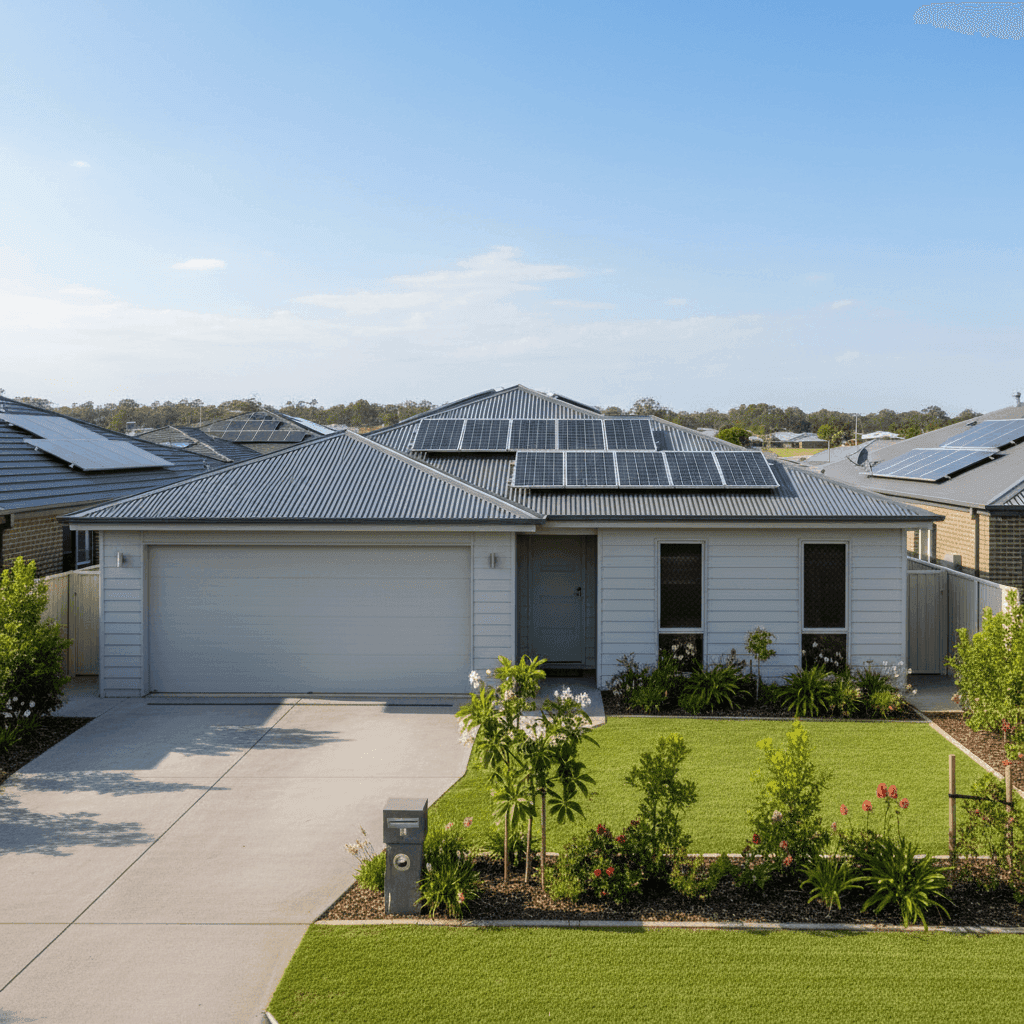
If you own a free standing home in Eli Waters, QLD 4655 — a growing residential suburb on the Fraser Coast — you've probably wondered whether you're paying too much (or too little) for home insurance. This article breaks down a real home and contents insurance quote for a three-bedroom, two-bathroom property in the area, comparing it against Queensland and national benchmarks so you can make a more informed decision.
---
Is This Quote Fair?
The annual premium for this property came in at $4,077 per year (or $391 per month), covering both building and contents. Our pricing engine has rated this quote as CHEAP — below average — which is genuinely good news for the homeowner.
To put that in perspective:
- The Queensland state average premium is $9,129/yr, with a median of $3,903/yr
- The national average is $5,347/yr, with a national median of $2,764/yr
So while this quote sits above the national median, it comes in at less than half the Queensland state average — a significant saving in a state that consistently records some of the highest home insurance premiums in the country. Queensland's elevated averages are largely driven by extreme weather exposure across much of the state, including cyclone zones, flood corridors, and severe storm activity.
For a brand-new home (built in 2024) insured for $500,000 in building cover and $30,000 in contents, this premium represents solid value.
---
How Eli Waters Compares
Without suburb-level data available for Eli Waters specifically, we can look at the broader Queensland insurance landscape for context. QLD is one of Australia's most expensive states for home insurance — a reality shaped by decades of natural disaster claims, rising reinsurance costs, and the sheer geographic diversity of the state's risk profile.
Compared to the national picture, Queensland homeowners pay a significant premium. The state average of $9,129/yr is 70% higher than the national average of $5,347/yr — and more than double the national median of $2,764/yr.
The Eli Waters quote at $4,077/yr lands between the national average and the Queensland median, suggesting the property's individual risk characteristics are working in the homeowner's favour. You can explore more local data for this postcode at the Eli Waters suburb stats page.
---
Property Features That Affect Your Premium
Several characteristics of this particular property influence how insurers assess and price the risk. Here's what's likely contributing to the relatively competitive premium:
✅ New Construction (2024)
A home built in 2024 is subject to the latest Australian building codes, which include significantly improved standards for structural integrity, fire resistance, and weather resilience. Insurers generally reward newer builds with lower premiums because the likelihood of a major structural claim is reduced.
✅ Hardiplank / Hardiflex Cladding
Fibre cement cladding like Hardiplank and Hardiflex is well regarded by insurers. It's resistant to fire, rot, and termites — all meaningful risk factors in Queensland's subtropical climate. Compared to timber weatherboard or older cladding types, this material profile is a positive signal for underwriters.
✅ Steel / Colorbond Roof
A Colorbond steel roof is one of the most insurer-friendly roofing materials available in Australia. It's durable, low-maintenance, and performs well in high-wind conditions. It's also resistant to ember attack — an important consideration even in non-cyclone zones.
✅ Concrete Slab Foundation
Slab foundations are stable, well-understood by insurers, and associated with lower subsidence and movement risk compared to older pier-and-beam or strip footings. This is a neutral-to-positive factor in premium calculations.
⚠️ Timber / Laminate Flooring
While aesthetically popular, timber and laminate flooring can be more susceptible to water damage than tiles. In the event of a burst pipe or internal flood, these floor coverings may need full replacement — which can push contents and building claims higher.
☀️ Solar Panels
The property includes solar panels, which adds a modest layer of complexity to the insurance equation. Solar systems are typically covered under building insurance, but their replacement cost (panels, inverter, racking) needs to be factored into the sum insured. At $500,000, the building cover here should comfortably accommodate this.
❄️ Ducted Climate Control
Ducted air conditioning systems are a contents or building item depending on how they're installed. These systems can be expensive to repair or replace, and their inclusion is worth confirming with your insurer to ensure they're adequately covered under the policy.
🌀 Not in a Cyclone Risk Area
This is a meaningful factor. Much of coastal and northern Queensland attracts cyclone loading on premiums. Eli Waters, while on the Fraser Coast, falls outside the designated cyclone risk zone — which helps keep the premium more competitive than properties further north.
---
Tips for Homeowners in Eli Waters
Whether you're reviewing an existing policy or shopping around for the first time, here are four practical steps to make sure you're getting the best deal:
- Review your sum insured annually. Building costs have risen sharply in recent years. A home built in 2024 for a certain amount may cost significantly more to rebuild in 2026 or 2027. Use a building cost calculator or speak with a quantity surveyor to ensure your $500,000 cover remains adequate.
- Confirm your solar panels are covered. Ask your insurer explicitly whether your solar system is included in the building sum insured and what the claims process looks like for panel damage (e.g., from hail or storm). Not all policies treat solar the same way.
- Check your contents cover reflects reality. At $30,000, the contents cover in this policy is on the lower end. Take the time to do a proper home contents inventory — furniture, appliances, clothing, electronics, and valuables all add up quickly. Underinsurance is one of the most common issues at claim time.
- Compare quotes at renewal. Even if you're happy with your current insurer, the home insurance market is competitive. Running a comparison at renewal takes minutes and could save you hundreds of dollars — especially given the wide variance in QLD premiums.
---
Compare Your Home Insurance Today
Whether this quote reflects your own situation or you're simply curious about what's available, the best way to know if you're getting a fair deal is to compare. Get a home insurance quote at CoverClub and see how your property stacks up against the market in seconds. No obligation, no jargon — just clear, comparable pricing for Australian homeowners.