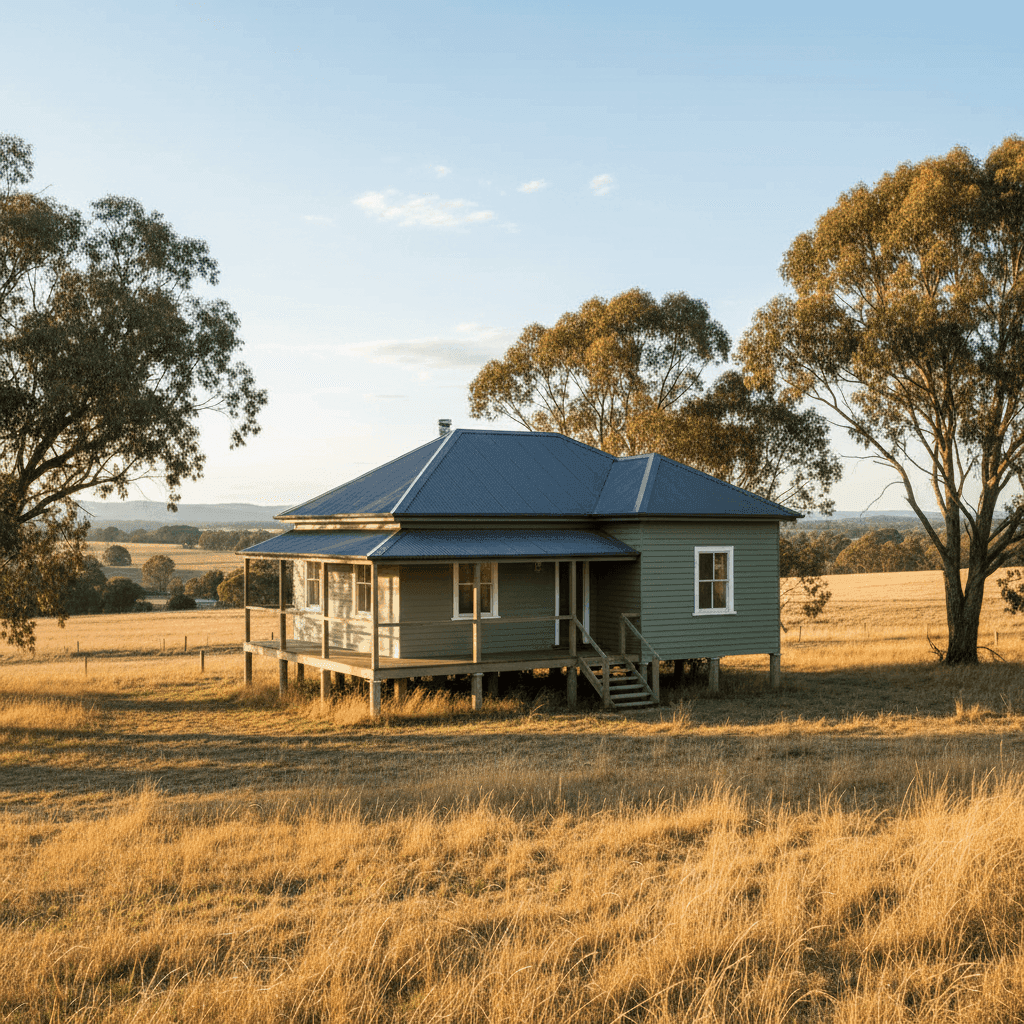
Nestled in the Pyrenees region of central Victoria, Elmhurst (VIC 3469) is a quiet rural locality known for its rolling farmland and relaxed country lifestyle. For owners of a free standing home in this area, understanding what you should be paying for home and contents insurance — and why — can make a real difference to your household budget. This article breaks down a recent quote for a 2-bedroom, 1-bathroom weatherboard home in Elmhurst, comparing it against local, state, and national benchmarks so you know exactly where you stand.
---
Is This Quote Fair?
The short answer: yes — and then some. The annual premium on this quote comes in at $1,021 per year (or roughly $102 per month), which CoverClub rates as Cheap (Below Average). That means this homeowner is paying significantly less than most comparable properties across Victoria and Australia.
To put it in perspective:
- The Victorian state average sits at $2,921/yr, with a median of $2,694/yr
- The national average is $2,965/yr, with a median of $2,716/yr
- The Pyrenees LGA average is even higher at $3,410/yr
At $1,021, this quote is roughly 65% below the Victorian average and 70% below the Pyrenees LGA average. That's a substantial saving — and it's not a fluke. Several features of this particular property help explain why the premium lands so low, which we'll explore below.
It's worth noting that the policy covers both building ($446,000 sum insured) and contents ($50,000), with a building excess of $3,000 and a contents excess of $1,000. The higher-than-standard building excess is likely one factor keeping the premium down — opting to wear more of the initial cost in a claim reduces the insurer's exposure, which is reflected in a lower price.
---
How Elmhurst Compares
While there isn't enough suburb-level data to produce a precise Elmhurst average, we can draw useful comparisons from the broader regional and state picture. You can explore Elmhurst-specific insurance stats on CoverClub as more data becomes available.
What we do know is that Victoria as a whole carries an average premium of $2,921/yr — already above the national average of $2,965/yr in median terms. The Pyrenees LGA, which encompasses Elmhurst, sits notably higher again at $3,410/yr. This elevated LGA average likely reflects the bushfire risk that is prevalent across much of regional Victoria, where properties can face significant exposure during fire season.
Given this context, a quote of just over $1,000 for a home and contents policy in the Pyrenees region is genuinely competitive. Homeowners in this area should treat it as a benchmark worth comparing carefully — not every insurer will price this property the same way.
| Benchmark | Annual Premium |
|---|---|
| This Quote | $1,021 |
| VIC State Average | $2,921 |
| VIC State Median | $2,694 |
| National Average | $2,965 |
| National Median | $2,716 |
| Pyrenees LGA Average | $3,410 |
---
Property Features That Affect Your Premium
Every property is unique, and insurers weigh up a range of characteristics when calculating your premium. Here's how the features of this Elmhurst home play into the final price:
Weatherboard Timber Walls
Weatherboard construction is one of the most common wall types found in older Australian homes, and it does carry a slightly higher fire and damage risk compared to brick or rendered masonry. Timber is combustible and can deteriorate over time if not well maintained. Insurers factor this in — which makes the competitive premium here all the more notable.
Steel / Colorbond Roof
Colorbond roofing is generally viewed favourably by insurers. It's durable, fire-resistant, and performs well in high-wind conditions. Compared to older corrugated iron or terracotta tiles, a steel roof reduces the likelihood of storm and hail damage claims, which can help moderate premiums.
Stump Foundation (Elevated Less Than 1m)
The home sits on stumps and is elevated by less than one metre. This style of foundation is typical of homes built in the mid-20th century across rural Victoria. While stump foundations can be susceptible to subsidence or pest damage over time, the modest elevation does offer some protection against surface water ingress — a minor but positive factor for flood-related risk.
Construction Year: 1950
Older homes like this one — built around 1950 — can be a mixed bag for insurers. On one hand, they may carry higher maintenance and repair costs due to ageing materials and outdated wiring or plumbing. On the other, a well-maintained heritage-era home in a low-density rural area may not attract the same risk loading as an older property in a flood-prone urban suburb.
Timber / Laminate Flooring & Standard Fittings
Standard fittings and timber or laminate flooring are straightforward to price. There are no high-end custom finishes that would push rebuild costs — and therefore the sum insured — significantly higher. This keeps the building sum insured at a reasonable $446,000 for a 130 sqm home.
No Pool, No Solar, No Ducted Climate Control
The absence of a swimming pool, solar panel system, and ducted air conditioning removes several common sources of claims and complexity from the policy. Each of these features can add incremental cost to a premium, so their absence here contributes to the lower overall price.
---
Tips for Homeowners in Elmhurst
Whether you're renewing your policy or shopping around for the first time, here are four practical tips tailored to homeowners in this part of Victoria:
- Review your sum insured annually. Building costs have risen sharply across Australia in recent years. A rebuild cost estimate that was accurate in 2020 may be well short of what it would actually cost today. Use a building cost calculator or speak to a local builder to sense-check your $446,000 sum insured against current construction rates in regional Victoria.
- Consider your bushfire preparedness. The Pyrenees region has a real bushfire risk. While this may already be priced into your policy, taking active steps — such as clearing gutters, maintaining a defendable space around the home, and having a fire plan — can sometimes support a case for a lower premium at renewal. Some insurers also offer discounts for homes that meet certain bushfire resilience standards.
- Weigh up your excess carefully. This policy carries a $3,000 building excess, which is on the higher side. While it helps keep the premium low, it means you'd need to cover the first $3,000 of any building claim yourself. Make sure you have that amount accessible as a financial buffer, or consider whether a lower excess (at a slightly higher premium) better suits your situation.
- Compare quotes before you renew. The fact that this quote comes in well below the Pyrenees LGA average of $3,410/yr is a good sign — but it doesn't mean there isn't a better deal out there. Insurance markets shift, and loyalty doesn't always pay. Run a fresh comparison at CoverClub each year to make sure you're still getting the best value.
---
Find Your Best Rate with CoverClub
Whether you're a long-time Elmhurst local or new to the area, making sure your home and contents are properly protected — at the right price — is one of the most important financial decisions you can make. CoverClub makes it easy to compare home insurance quotes from leading Australian insurers in minutes. Get a quote today and see how your current policy stacks up.