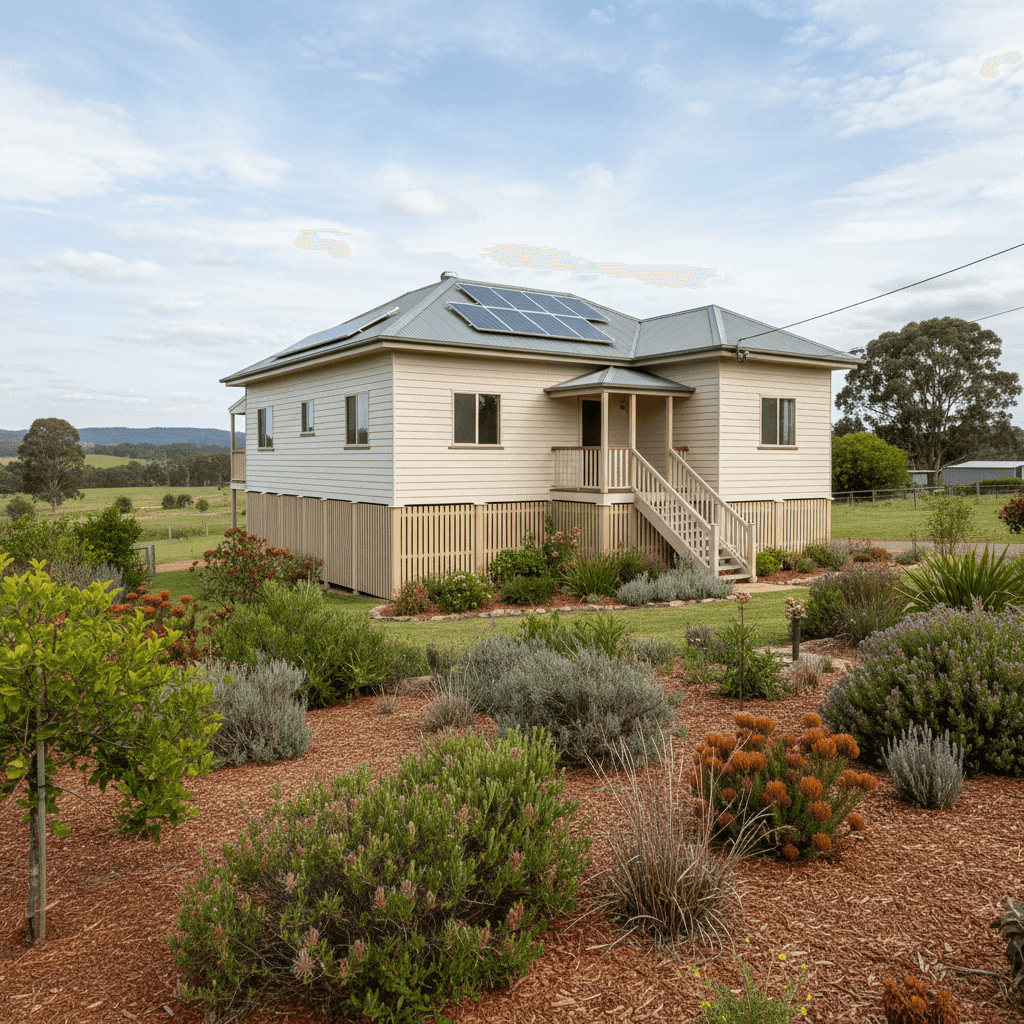
If you own a free standing home in Elsmore, NSW 2360, you've probably noticed that home insurance isn't cheap — and you may be wondering whether the quote you've received is reasonable or if you're paying too much. This article breaks down a real home and contents insurance quote for a three-bedroom, one-bathroom weatherboard home in Elsmore, comparing it against local, state, and national benchmarks to help you make a more informed decision.
---
Is This Quote Fair?
The quote in question comes in at $6,366 per year (or $597 per month) for combined home and contents cover, with a building sum insured of $554,000 and contents valued at $50,000. The building excess is set at $2,500, with a separate contents excess of $500.
Based on our pricing data, this quote is rated Expensive — above average for the Elsmore area. The suburb average sits at $4,664 per year, meaning this quote is approximately $1,700 above what most comparable properties in the postcode are paying. It also exceeds the suburb's 75th percentile of $5,348 per year, placing it firmly in the more costly tier of quotes seen locally.
That said, context matters. Several property-specific factors — which we'll explore below — can legitimately push a premium higher than the local average, so it's worth understanding why before shopping around.
---
How Elsmore Compares
To put this quote in perspective, here's how Elsmore stacks up against broader benchmarks:
| Benchmark | Average Premium | Median Premium |
|---|---|---|
| Elsmore (NSW 2360) | $4,664/yr | $4,648/yr |
| New South Wales | $9,528/yr | $3,770/yr |
| National | $5,347/yr | $2,764/yr |
| Gwydir LGA | $43,287/yr | — |
A few things stand out here. The NSW state average of $9,528 per year is dramatically higher than the state median of $3,770 — a sign that a small number of very expensive properties (likely in flood- or bushfire-prone areas) are pulling the average upward significantly. Similarly, the Gwydir LGA average of $43,287 is an extreme outlier, almost certainly driven by rural and agricultural properties with very high replacement values or elevated risk profiles.
When you focus on the Elsmore suburb median of $4,648 per year, the quote of $6,366 is noticeably above the pack — though it's worth noting the local sample size is 15 quotes, so the data is indicative rather than exhaustive. Compared to the national median of $2,764, this quote is more than double, which reflects the higher cost of insuring regional NSW properties relative to much of the rest of Australia.
---
Property Features That Affect Your Premium
Several characteristics of this property are likely contributing to the above-average premium. Understanding these can help you have a more productive conversation with insurers.
Weatherboard Timber Construction
The external walls are weatherboard wood, which is one of the more expensive construction types to insure. Timber is more susceptible to fire, termite damage, and general weathering than brick or rendered masonry. Insurers typically apply higher risk loadings to timber-framed and timber-clad homes, particularly in regional NSW where bushfire risk can be elevated.
Steel/Colorbond Roof
On the positive side, a Colorbond steel roof is generally viewed favourably by insurers. It's durable, resistant to fire embers, and low maintenance — all factors that can help moderate the premium compared to older tile or fibrous cement roofing.
Elevated on Stumps
The home sits on stump foundations, elevated by less than one metre. While this style of construction is common in regional NSW and Queensland-influenced areas, it can introduce risk around underfloor maintenance, pest access, and — in some cases — flood resilience. Insurers assess stumped homes carefully, particularly in areas with any history of inundation.
Timber/Laminate Flooring
Timber and laminate flooring throughout the home adds to the replacement cost calculation. These materials are more expensive to repair or replace after water damage or fire than concrete slab floors, which can influence both the building sum insured and the premium.
Solar Panels
The property has solar panels, which are increasingly common across regional NSW. Most insurers include solar panels under building cover, but their presence adds to the overall replacement value of the home — a factor that contributes to the $554,000 sum insured.
Building Age — 1985
At approximately 40 years old, this home sits in a bracket where insurers begin to factor in the age of electrical wiring, plumbing, and structural components. Older homes can carry a higher likelihood of claims related to wear and tear or outdated systems, which may be reflected in the premium.
---
Tips for Homeowners in Elsmore
If you're looking to get better value on your home insurance, here are four practical steps worth considering:
- Compare multiple quotes. The single most effective way to reduce your premium is to shop around. A quote that's above the local average doesn't mean every insurer will price your property the same way — risk models vary significantly between providers. Use CoverClub's quote comparison tool to see what else is available for your address.
- Review your sum insured carefully. At $554,000, the building sum insured is a significant driver of your premium. Make sure this figure reflects the actual rebuilding cost of your home (not its market value), and consider using a professional building calculator to avoid both over-insuring and the risks of underinsurance.
- Increase your excess strategically. The building excess on this policy is $2,500. If you have the financial buffer to absorb a higher out-of-pocket cost in the event of a claim, opting for a higher excess at renewal can meaningfully reduce your annual premium.
- Ask about timber construction discounts or risk mitigation credits. Some insurers offer premium reductions for homes with ember guards, upgraded subfloor pest protection, or other risk-mitigation measures. Given the weatherboard construction and stump foundations, investing in these improvements may pay off over time.
---
Compare Your Options with CoverClub
Whether you're renewing your policy or shopping for the first time, it pays to know where your quote stands. CoverClub makes it easy to benchmark your premium against real data from your suburb, state, and across Australia — so you can walk into any renewal conversation with confidence.