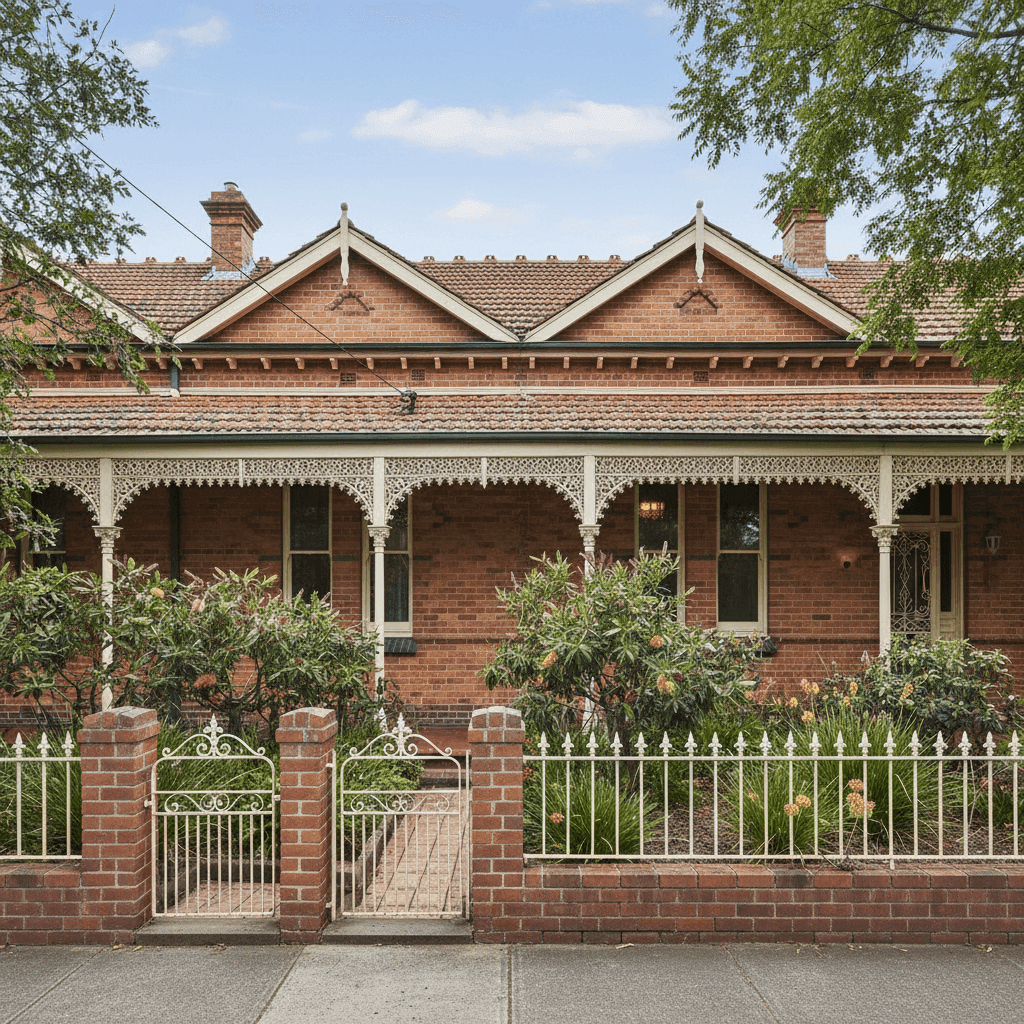
Elwood is one of Melbourne's most coveted bayside suburbs — a leafy, character-filled pocket of Port Phillip where Federation-era architecture lines the streets and proximity to the beach commands a premium. It's also a suburb where home insurance can be a surprisingly significant line item in the household budget. This article takes a close look at a real building insurance quote for a three-bedroom, two-bathroom semi detached home in Elwood (VIC 3184), built in 1905, and puts the numbers into context so you can make a more informed decision about your own cover.
---
Is This Quote Fair?
The annual premium on this quote comes in at $3,634 per year (or $358/month), covering the building only with a sum insured of $768,000 and a building excess of $3,000. Our rating for this quote is FAIR — Around Average.
That assessment holds up when you dig into the local data. The suburb average premium in Elwood sits at $3,716/year, meaning this quote is actually tracking slightly below what most homeowners in the postcode are paying. The spread of premiums across the 40 quotes in our Elwood dataset is wide — from $1,702/year at the 25th percentile all the way to $5,330/year at the 75th percentile — which tells you that individual property characteristics play a significant role in where your premium lands.
So while this quote isn't a bargain, it's not an outlier either. For a heritage property of this age, size, and construction type in a sought-after bayside suburb, landing close to — or just under — the local average is a reasonable result.
---
How Elwood Compares
To understand whether Elwood premiums are high in a broader sense, it helps to zoom out.
| Benchmark | Average Premium | Median Premium |
|---|---|---|
| Elwood (3184) | $3,716/yr | $2,113/yr |
| Port Phillip LGA | $3,109/yr | — |
| Victoria | $2,921/yr | $2,694/yr |
| National | $2,965/yr | $2,716/yr |
You can explore the full breakdown on the Elwood suburb stats page, or compare against all Victorian postcodes and the national picture.
A few things stand out here. First, Elwood's average premium ($3,716) runs notably higher than both the Victorian average ($2,921) and the national average ($2,965) — a gap of roughly $750–$800 per year. Second, the large difference between Elwood's average ($3,716) and its median ($2,113) suggests the distribution is skewed by a cohort of high-value or high-risk properties pulling the average upward. This is common in suburbs with a mix of modest units and substantial period homes.
For the property in question — a 169 sqm, above-average-fittings home with a $768,000 sum insured — sitting at $3,634 is consistent with what you'd expect for a well-appointed heritage dwelling in this market.
---
Property Features That Affect Your Premium
Several characteristics of this property have a meaningful influence on the premium, and it's worth understanding why.
Age and Construction (1905, Double Brick)
At 120 years old, this home predates most modern building codes by decades. Heritage properties carry inherent complexity when it comes to repairs — sourcing matching materials, engaging specialist tradespeople, and meeting council requirements for period homes in Port Phillip can all add cost. Insurers price this in.
That said, double brick construction is generally viewed favourably by underwriters. It's durable, fire-resistant, and structurally sound when well-maintained. Compared to timber-framed homes of the same era, double brick tends to attract more competitive pricing.
Stump Foundations and Timber Flooring
Homes on stumps — very common in Melbourne's older inner suburbs — introduce a specific set of risks, including subsidence, stump deterioration, and pest ingress. Timber and laminate flooring above a subfloor void can be costly to repair or replace if moisture or pest damage occurs. These factors contribute to a higher sum insured and, consequently, a higher premium.
Tiled Roof
A tiled roof is a neutral-to-positive factor for insurers. Tiles are durable and widely understood by builders, making repairs more straightforward than some alternative roofing materials. However, on an older home, re-roofing or tile replacement can still be expensive if the underlying structure needs attention.
Above-Average Fittings and Ducted Climate Control
The above-average fittings quality rating and the presence of ducted climate control both push the rebuild cost — and therefore the sum insured — higher. Ducted systems in particular are expensive to replace, and their inclusion in the building sum insured is appropriate here.
Semi Detached Format
Shared-wall properties introduce a nuance that standalone homes don't have: the party wall. Damage originating from the adjoining dwelling, or disputes about shared structures, can complicate claims. Some insurers factor this into their pricing.
---
Tips for Homeowners in Elwood
1. Review your sum insured carefully — and update it regularly. With a $768,000 sum insured on a 169 sqm period home with quality fittings, the rebuild cost estimate needs to reflect current construction prices, not last year's. Building costs in Melbourne have risen sharply in recent years. Underinsurance is a real risk, and it pays to revisit this figure annually or after any renovation.
2. Ask about heritage property specialists. Not all insurers have the same appetite for pre-1920s homes. Some specialist underwriters have more experience pricing and managing claims on heritage properties, and may offer more appropriate cover — sometimes at a more competitive rate. It's worth comparing beyond the mainstream brands.
3. Maintain your stumps and subfloor. Proactive maintenance of stump foundations — including regular pest inspections and ensuring adequate subfloor ventilation — can prevent costly damage and demonstrates to insurers that the property is well cared for. Some insurers may ask about maintenance history during the claims process.
4. Compare quotes before your renewal date. The wide premium spread in Elwood (from $1,702 to $5,330 per year across our dataset) shows that different insurers price this suburb very differently. Loyalty doesn't always pay — shopping around at renewal time is one of the most effective ways to keep your premium in check without sacrificing cover quality.
---
Ready to Compare?
Whether you're reviewing an existing policy or insuring a property for the first time, comparing quotes is the single best step you can take. CoverClub makes it easy to see how your premium stacks up against real data from your suburb and beyond. Get a quote at CoverClub and find out if you're paying a fair price — or if there's a better deal waiting for you.