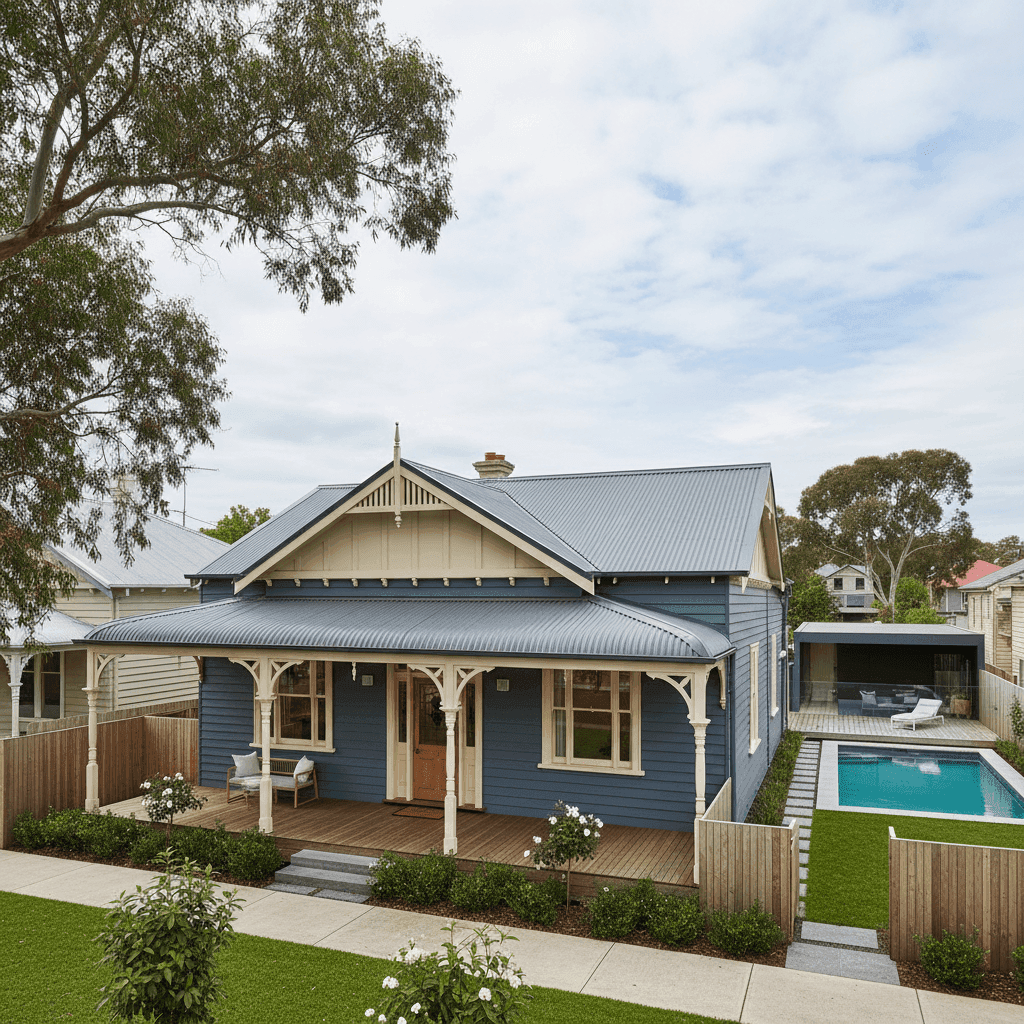
Elwood is one of Melbourne's most sought-after bayside suburbs — a leafy, character-filled pocket of Port Phillip where Federation and Edwardian homes line quiet streets just minutes from the beach. If you own a free standing home here, you already know the area commands premium real estate prices. But what about the cost of protecting it? This article breaks down a real home and contents insurance quote for a four-bedroom, weatherboard home in Elwood, and puts the numbers in context so you can judge whether your own policy is working hard enough for you.
---
Is This Quote Fair?
The quote in question comes in at $2,570 per year (or $251 per month) for combined home and contents cover, with a building sum insured of $1,190,000 and contents valued at $232,000. Both the building and contents excess sit at $2,000.
Our price rating for this quote is FAIR — Around Average, and the data backs that up. Compared to the suburb average for Elwood of $3,575 per year, this quote is sitting comfortably below the mean — roughly 28% cheaper than what many Elwood homeowners are paying. It also tracks below the suburb median of $2,857 per year, which means it's better than what at least half the quotes in this postcode are coming in at.
That said, "fair" doesn't mean "the best available." There's a 25th percentile benchmark of $1,886 per year in Elwood, which tells us that some homeowners in this suburb are securing meaningfully cheaper cover — though those policies may reflect different levels of cover, lower sums insured, or different property characteristics. The 75th percentile sits at $4,454 per year, so this quote is well clear of the expensive end of the market.
In short: for a heritage-listed, century-old weatherboard home with a pool and a $1.19 million building sum insured, this is a reasonable result — but not the cheapest available.
---
How Elwood Compares
Understanding where Elwood sits in the broader insurance landscape helps put any individual quote in perspective.
| Benchmark | Annual Premium |
|---|---|
| This Quote | $2,570 |
| Elwood Suburb Average | $3,575 |
| Elwood Suburb Median | $2,857 |
| Port Phillip LGA Average | $2,943 |
| VIC State Average | $3,000 |
| VIC State Median | $2,718 |
| National Average | $5,347 |
| National Median | $2,764 |
A few things stand out here. First, Elwood's average premium of $3,575 is notably higher than both the Victorian state average ($3,000) and the Port Phillip LGA average ($2,943). This reflects the higher property values in the suburb — larger sums insured naturally push premiums up.
Second, the national average of $5,347 is dramatically higher than what Elwood homeowners typically pay. This is largely driven by high-risk regions in Queensland, Western Australia, and Northern Australia where cyclone, flood, and storm risk significantly inflates premiums. Victoria, and Melbourne's inner suburbs in particular, benefit from relatively benign natural hazard profiles compared to much of the country.
For a deeper look at how Elwood stacks up, visit the Elwood suburb stats page or explore Victoria-wide insurance data.
---
Property Features That Affect Your Premium
This particular property has a number of characteristics that insurers weigh carefully when calculating risk. Here's how each one plays into the final premium:
Heritage Overlay
The property sits under a Heritage Overlay, which is common for pre-war homes in inner Melbourne. Heritage-listed properties can be more expensive to repair or rebuild to their original specifications — think ornate cornicing, VJ board walls, leadlight windows, and period-appropriate materials. Insurers factor in the higher cost of like-for-like restoration, which can push premiums upward.
Weatherboard Construction
Weatherboard timber walls are among the most common external wall types for homes of this era in Melbourne, but they carry a higher fire risk than brick veneer or double brick. They're also more susceptible to rot, termite damage, and general wear — all of which insurers consider when pricing a policy.
Age of the Property (Built 1915)
At over 110 years old, this home is well into its second century. Older properties often have ageing plumbing, wiring, and structural elements that increase the likelihood of an insurable event. The stump foundation is typical for this era and adds complexity to any structural repair work.
Swimming Pool
A pool on the property introduces additional liability exposure — insurers account for the risk of accidental injury or drowning, particularly involving third parties. Pool-related claims can be costly, and this is reflected in the premium.
Ducted Climate Control
Ducted heating and cooling systems are a significant asset and a potential source of claims — whether from mechanical failure, water damage from ducting issues, or fire risk from older systems. Including this in the contents or building cover adds to the overall insured value.
Colorbond Roof
On the positive side, a steel Colorbond roof is generally viewed favourably by insurers. It's durable, fire-resistant, and less prone to storm damage than terracotta tiles or older corrugated iron. This likely helps moderate the premium compared to what it might otherwise be for a property of this age.
Timber and Laminate Flooring
Timber flooring in a heritage home adds to its character — and its rebuild cost. Restoring or replacing period timber floors can be expensive, and this is captured in the building sum insured.
---
Tips for Homeowners in Elwood
Whether you're reviewing your current policy or shopping for new cover, here are four practical steps worth taking:
- Review your building sum insured carefully. The $1,190,000 building sum insured on this quote is substantial, but for a heritage-listed, 205 sqm weatherboard home, it may be appropriate — or it may need adjusting. Use a qualified quantity surveyor or an online rebuild cost calculator to make sure you're not underinsured (or paying for more cover than you need).
- Declare your heritage overlay status accurately. Some homeowners omit heritage details when applying for cover, either unknowingly or to save money. This can lead to a claim being denied or only partially paid if the insurer finds the property requires heritage-compliant restoration. Always disclose this upfront.
- Shop around at renewal time. The gap between Elwood's 25th percentile ($1,886) and 75th percentile ($4,454) is enormous — over $2,500 per year. That spread tells you there's real variation in what insurers are charging for comparable properties. Don't let your policy auto-renew without checking alternatives.
- Consider your excess level strategically. This quote carries a $2,000 excess on both building and contents. A higher excess typically lowers your annual premium, which can make sense if you have the financial buffer to cover it in a claim. Conversely, if cash flow is a concern, a lower excess might be worth the slightly higher premium.
---
Compare Your Own Quote
Every home in Elwood is different, and so is every insurance quote. Whether your property is a similar weatherboard classic or a more modern renovation, it pays to see what the market is offering. Get a home insurance quote through CoverClub to compare options side by side and make sure you're getting the right cover at a competitive price. With over 50 quotes on record for this postcode alone, we have the local data to help you make an informed decision.