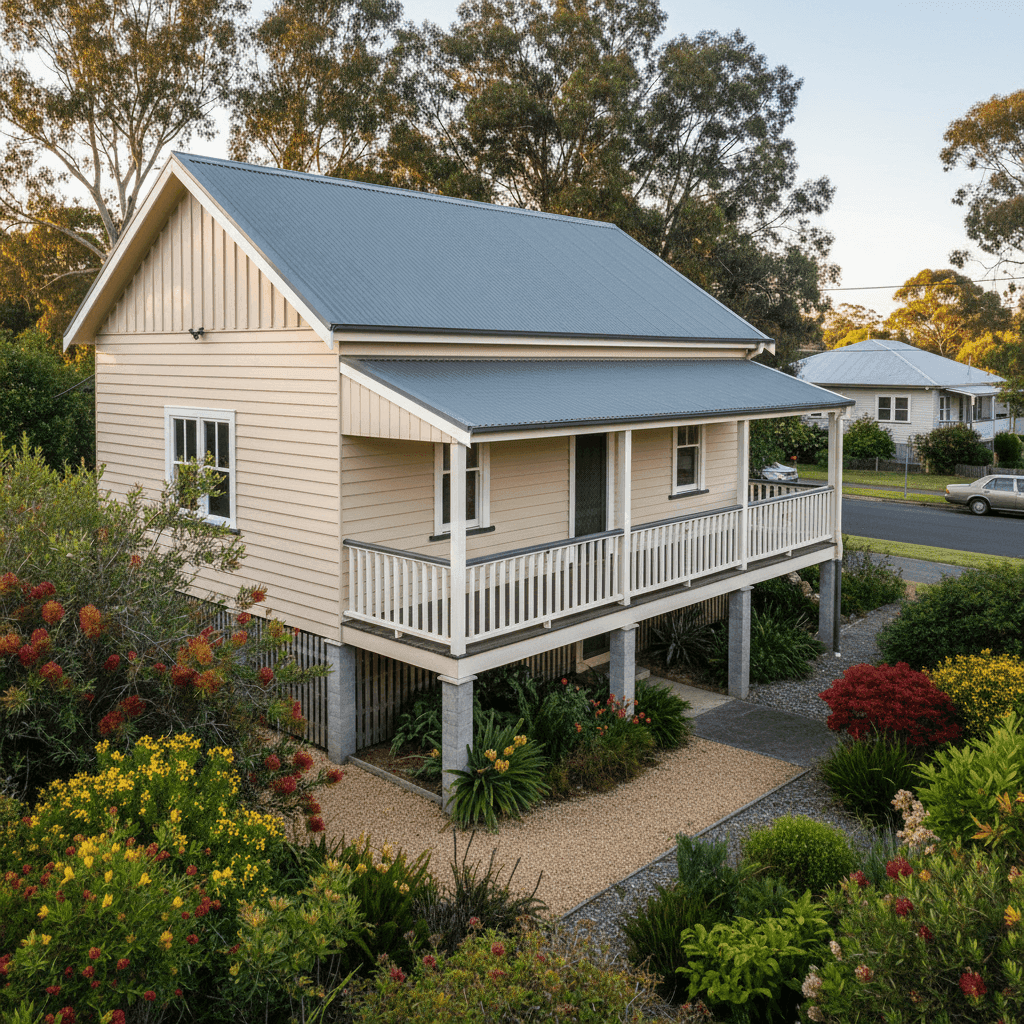
If you own a free standing home in Emu Heights, TAS 7320, understanding what you should be paying for building insurance is one of the smartest financial moves you can make. Premiums vary significantly depending on where you live, how your home is built, and the level of cover you choose — so having a benchmark to compare against is invaluable. In this article, we analyse a real building-only insurance quote for a three-bedroom weatherboard home in Emu Heights and put it in context with local, state, and national data.
---
Is This Quote Fair?
The quote in question comes in at $2,961 per year (or $284/month) for building-only cover on a 130 sqm free standing home, with a $500 building excess and a sum insured of $485,000.
Our price rating for this quote is FAIR — Around Average, and the numbers back that up. Sitting just $147 above the Tasmanian state average of $2,814/yr, this premium is broadly in line with what many Tasmanian homeowners are paying. It's comfortably below the national average of $5,347/yr, which is a meaningful indicator that Tasmania — and Emu Heights in particular — doesn't carry the same extreme weather risk loading seen in parts of Queensland, Western Australia, or the Northern Territory.
That said, "around average" doesn't necessarily mean you're getting the best deal available. It means you're in the ballpark, but there may still be room to negotiate or shop around for a more competitive rate without sacrificing cover quality.
---
How Emu Heights Compares
Here's how this quote stacks up across different comparison points:
| Benchmark | Annual Premium |
|---|---|
| This Quote | $2,961 |
| LGA (Burnie) Average | $1,919 |
| TAS State Average | $2,814 |
| TAS State Median | $2,326 |
| National Average | $5,347 |
| National Median | $2,764 |
A few things stand out here. First, the LGA average for Burnie ($1,919/yr) is notably lower than this quote — a gap of over $1,000 annually. This could reflect a range of factors, including the specific risk profile of properties within the Emu Heights area, the age and construction type of this particular home, or simply the insurer's pricing model.
Second, while the quote exceeds both the Tasmanian state median ($2,326) and national median ($2,764), it remains well below the national average. This suggests that while the property isn't attracting the cheapest premiums in the region, it's far from being in high-risk territory by Australian standards.
You can explore more localised data on the Emu Heights insurance stats page, compare it against the broader Tasmanian picture, or see where it sits in the national landscape.
---
Property Features That Affect Your Premium
Every home tells a story through its construction, and insurers read that story carefully when calculating your premium. Here's how the key features of this Emu Heights property influence the cost of cover:
Age of Construction (1961)
Built in 1961, this home is over 60 years old. Older properties tend to attract higher premiums because ageing infrastructure — plumbing, wiring, roofing — carries a greater risk of failure or damage. Insurers factor this in, particularly when the home hasn't been recently renovated or upgraded.
Weatherboard Timber Walls
Weatherboard timber is a classic and charming construction material, but it comes with a higher fire risk rating compared to brick or rendered masonry. It's also more susceptible to moisture ingress and rot over time. These factors can push premiums upward, and they're likely contributing to this quote sitting above the LGA average.
Steel/Colorbond Roof
On the positive side, a Colorbond steel roof is generally viewed favourably by insurers. It's durable, fire-resistant, and performs well in adverse weather conditions. This may be helping to moderate what could otherwise be a higher premium given the timber wall construction.
Stump Foundation
Homes on stumps are common in older Tasmanian properties and can be a double-edged sword for insurance. They offer good ventilation and can be easier to inspect and repair, but they may also be more vulnerable to certain types of damage, including movement and pest activity, which insurers take into account.
Ducted Climate Control
The presence of ducted climate control adds to the replacement value of the home, which is reflected in the $485,000 sum insured. This is a mechanical system that would need to be replaced in the event of a total loss, and its inclusion is appropriate in calculating an accurate rebuild cost.
No Pool, No Solar Panels
The absence of a pool and solar panels simplifies the risk profile slightly and keeps the premium from climbing further. Both features, when present, can add meaningful cost to a policy.
---
Tips for Homeowners in Emu Heights
Whether you're reviewing an existing policy or shopping for the first time, these practical steps can help you get better value from your home insurance.
- Review your sum insured annually. Building costs in Tasmania have risen steadily in recent years. Make sure your $485,000 sum insured still reflects the true cost to rebuild your home — not just its market value. Underinsurance is one of the most common and costly mistakes homeowners make.
- Get multiple quotes before renewing. The gap between this quote and the LGA average is significant. Spending 20 minutes comparing quotes at renewal time could save you hundreds of dollars per year. Use a comparison platform like CoverClub to see what multiple insurers are offering for your specific property.
- Consider maintenance as a risk management tool. For a 1960s weatherboard home, staying on top of maintenance — particularly around the roof, stumps, and external cladding — can reduce the likelihood of a claim and may support a case for lower premiums over time. Some insurers reward well-maintained properties.
- Ask about discounts for bundling or loyalty. If you're insuring only the building, check whether adding contents cover (even at a modest level) might unlock a multi-policy discount. Equally, if you've been claim-free for several years, it's worth asking your insurer directly whether that's reflected in your pricing.
---
Ready to Compare?
A "fair" rating is a reasonable starting point, but it's not the finish line. The best way to know whether you're getting genuine value is to compare your options side by side. At CoverClub, we make it easy for Australian homeowners to benchmark their current premium and explore alternatives — all in one place. Get a quote today and see what's available for your Emu Heights home.