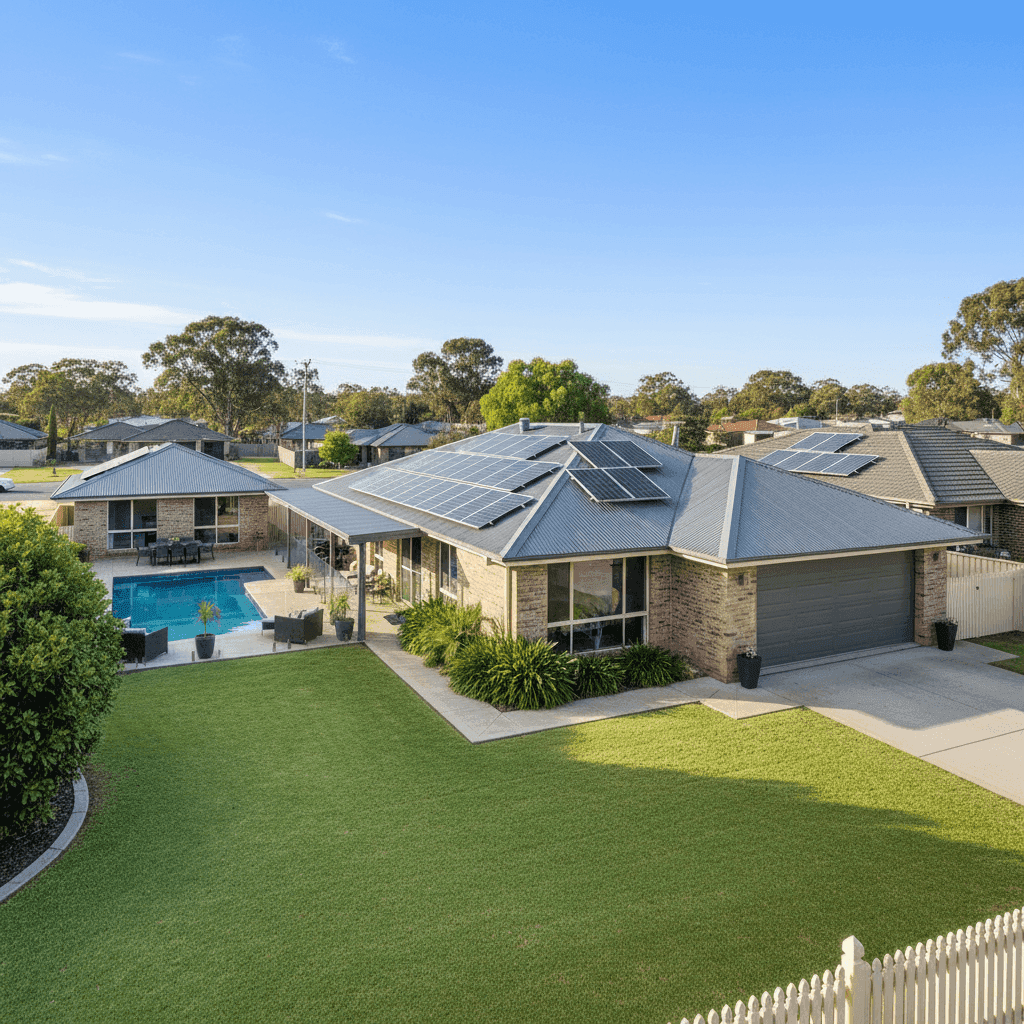
If you own a free standing home in Emu Plains, NSW 2750, you're probably curious whether what you're paying for home and contents insurance is reasonable — or whether you're leaving money on the table. This article breaks down a real quote for a four-bedroom, two-bathroom brick veneer home in the suburb, compares it against local, state, and national benchmarks, and offers practical tips to help you make a more informed decision at renewal time.
---
Is This Quote Fair?
The quote in question comes in at $11,632 per year (or $1,137 per month) for combined home and contents cover, with a building sum insured of $1,017,000 and contents valued at $125,000. Both the building and contents excess are set at $1,000.
Our price rating for this quote is Expensive (Above Average) — and the numbers back that up.
At $11,632 annually, this premium sits above the suburb's 75th percentile of $11,562, meaning it's more expensive than roughly three-quarters of comparable quotes in Emu Plains. It also exceeds the suburb average of $9,602 and the suburb median of $9,813 by a meaningful margin.
That said, context matters. The building sum insured of just over $1 million is on the higher end, and the property includes several features — a pool, solar panels, ducted climate control, and a granny flat — that collectively push premiums upward. The above-average fittings quality also plays a role. So while the premium is undeniably high, it's not entirely out of step with what you'd expect for a well-appointed property of this size and specification.
---
How Emu Plains Compares
To put this quote in perspective, here's how Emu Plains stacks up against broader benchmarks:
| Benchmark | Average Premium |
|---|---|
| Emu Plains (suburb average) | $9,602/yr |
| Emu Plains (suburb median) | $9,813/yr |
| NSW (state average) | $9,528/yr |
| NSW (state median) | $3,770/yr |
| National average | $5,347/yr |
| National median | $2,764/yr |
| Penrith LGA average | $2,220/yr |
A few things stand out here. First, the Emu Plains suburb average of $9,602 is already well above both the national average of $5,347 and the Penrith LGA average of just $2,220 — suggesting that insurers view properties in this pocket of Western Sydney as carrying above-average risk or replacement cost. The wide gap between the NSW state average ($9,528) and the NSW median ($3,770) also tells us that a relatively small number of high-value or high-risk properties are pulling the state average up significantly — and this property likely sits in that upper tier.
It's worth noting that the suburb sample size used for these comparisons is eight quotes, so the local data should be treated as directional rather than definitive. As more quotes are collected for Emu Plains, these benchmarks will become increasingly reliable.
---
Property Features That Affect Your Premium
Several characteristics of this property have a direct bearing on the premium quoted. Understanding them helps you assess whether the price is justified — and where there might be room to negotiate.
Brick veneer construction and Colorbond roof Brick veneer walls are generally well-regarded by insurers for their fire resistance and durability. A steel Colorbond roof is similarly low-maintenance and performs well in a range of weather conditions. Together, these materials typically attract more favourable premiums compared to weatherboard or tile roofs, so they're working in the homeowner's favour here.
Slab foundation and tile flooring A concrete slab foundation is standard for homes of this era in Western Sydney and doesn't typically attract a loading. Tiled flooring is durable and relatively inexpensive to replace, which is a mild positive from an underwriting perspective.
Swimming pool A pool introduces liability risk — particularly if it's accessible to visitors or neighbouring children — and also adds to the replacement cost of the property. Most insurers factor this into their pricing, and it's likely contributing a meaningful amount to this premium.
Solar panels Rooftop solar systems add to the insured value of the home and can complicate roof repairs. Insurers typically account for this in their building sum insured calculations, and it's important that the $1,017,000 building sum insured actually reflects the cost of reinstating the panels as part of a full rebuild.
Ducted climate control Ducted air conditioning is a significant fixed asset and contributes to the overall replacement cost of the home. It's another reason the building sum insured is as high as it is.
Granny flat The presence of a granny flat effectively increases the total floor area and replacement cost of the insured property. If the granny flat is occupied by a tenant, this may also introduce additional liability considerations depending on the policy.
Above-average fittings quality Higher-quality finishes — think stone benchtops, premium appliances, and custom joinery — cost more to replace. Insurers price this accordingly, and "above average" fittings quality is a notable driver of the elevated sum insured and, by extension, the premium.
---
Tips for Homeowners in Emu Plains
1. Review your building sum insured carefully At $1,017,000, the building sum insured is substantial. Make sure this figure reflects a current, accurate rebuild cost — not the market value of the property. Overcooking the sum insured is a common way homeowners end up paying more than necessary. Consider using a professional building estimator or the insurer's calculator to validate the figure.
2. Compare quotes before renewing Given that this premium sits above the suburb's 75th percentile, it's well worth shopping around. Getting a comparison quote through CoverClub takes only a few minutes and could reveal meaningfully cheaper options for the same level of cover.
3. Check whether your granny flat needs separate cover Some policies include a granny flat under the main home policy; others require it to be listed separately or may exclude it altogether. Read your Product Disclosure Statement carefully, especially if the flat is rented out, as this can affect both building and liability cover.
4. Ask about bundling discounts and excess adjustments Increasing your excess from $1,000 to $2,500 or more can reduce your annual premium noticeably. Similarly, if you hold other policies (car, landlord, life) with the same insurer, a multi-policy discount may be available. It's always worth asking directly — insurers don't always advertise these options prominently.
---
Ready to See If You Can Do Better?
Whether you're renewing soon or just doing your research, comparing quotes is the single most effective way to ensure you're not overpaying. At CoverClub, we make it easy to benchmark your current premium against the market and find cover that suits your property and budget. Start your free comparison today — it only takes a couple of minutes.