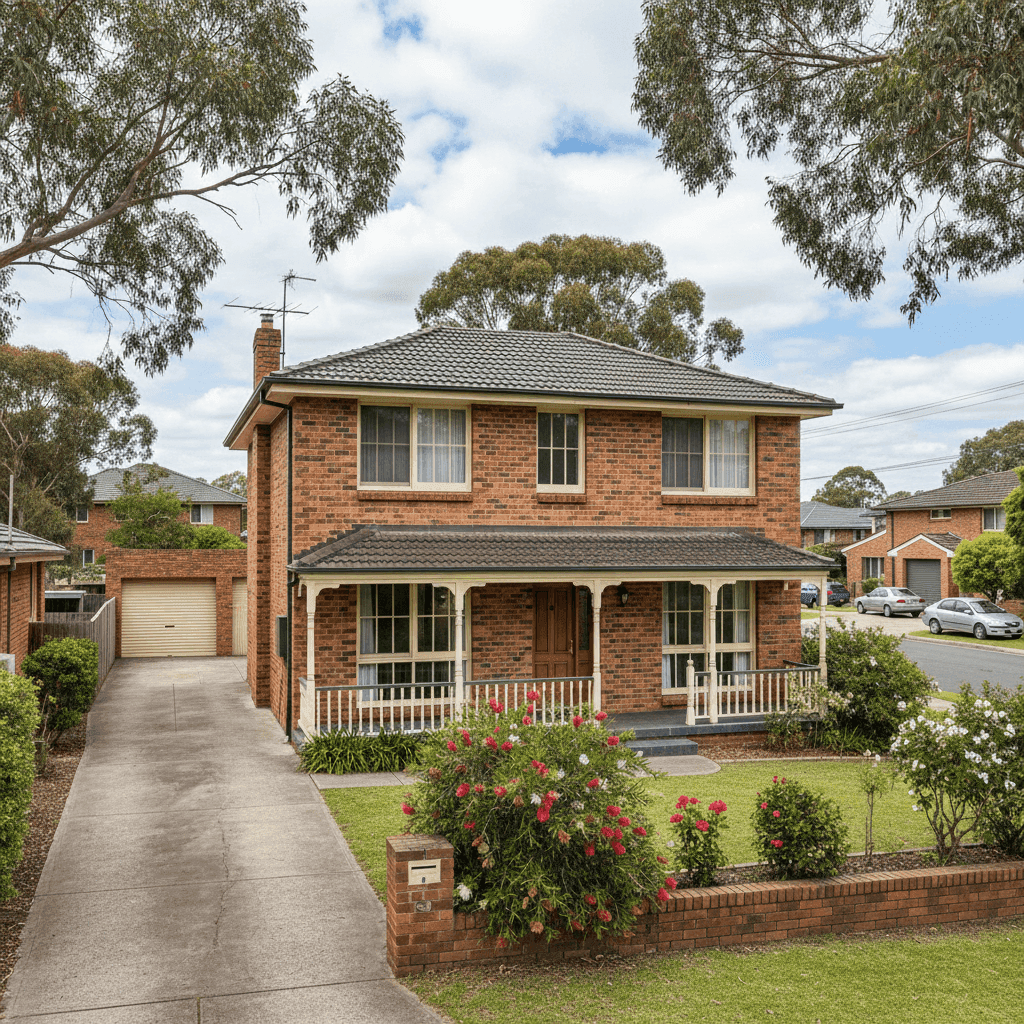
If you own a free standing home in Endeavour Hills, VIC 3802, you've probably wondered whether you're paying a fair price for home insurance — or whether there's a better deal waiting. In this article, we analyse a real home and contents insurance quote for a 3-bedroom, 2-bathroom brick veneer home in this south-eastern Melbourne suburb, and compare it against local, state, and national benchmarks to help you make a more informed decision.
---
Is This Quote Fair?
The quote in question comes in at $1,920 per year (or $193/month) for combined home and contents cover, with a $500,000 building sum insured and $80,000 in contents cover. Both the building and contents excess are set at $2,000.
Our rating for this quote is FAIR — around average. That's not a red flag, but it's also not a standout bargain. Here's what that actually means in context:
- The suburb average for Endeavour Hills is $1,718/yr, and the median sits at $1,667/yr — meaning this quote is roughly $200–$250 above the local midpoint.
- However, it falls comfortably below the suburb's 75th percentile of $2,235/yr, so it's not among the more expensive quotes in the area.
- Compared to the Victorian state average of $3,000/yr, this quote looks quite competitive — sitting around 36% below the state mean.
- Against the national average of $5,347/yr, the quote is exceptional value, though that figure is heavily influenced by high-risk regions in Queensland and Western Australia.
In short: this quote is slightly above the local median but well within a reasonable range. Whether it's the best available price for this property is another question — and that's exactly why comparing quotes matters.
---
How Endeavour Hills Compares
Endeavour Hills sits in the City of Casey, one of Melbourne's largest and fastest-growing local government areas. Based on 61 quotes collected for this suburb, the pricing landscape looks like this:
| Benchmark | Annual Premium |
|---|---|
| This quote | $1,920 |
| Suburb average | $1,718 |
| Suburb median | $1,667 |
| Suburb 25th percentile | $1,104 |
| Suburb 75th percentile | $2,235 |
| LGA (Casey) average | $2,142 |
| VIC state average | $3,000 |
| National average | $5,347 |
A few things stand out here. First, the LGA average for Casey ($2,142/yr) is actually higher than the Endeavour Hills suburb average — suggesting some neighbouring suburbs within Casey carry greater risk or higher property values. This quote, at $1,920, sits between the suburb and LGA averages, which is consistent with the "fair" rating.
Second, Victoria as a whole has seen premiums rise significantly in recent years, largely due to increased flood and storm events across the state. Endeavour Hills, being an established suburban area without major flood overlays, tends to attract more moderate premiums than regional or coastal Victorian towns.
For a broader picture, national home insurance data shows just how much geography influences pricing. Australians in cyclone-prone or flood-affected regions can pay multiples of what Melbourne suburbanites do for equivalent cover.
---
Property Features That Affect Your Premium
Several characteristics of this particular property influence how insurers price the risk:
Brick veneer construction with a tiled roof is generally viewed favourably by insurers. Brick veneer offers solid fire resistance and durability, while tiled roofs tend to perform well in storms compared to corrugated iron or Colorbond in certain conditions. This combination typically attracts standard or slightly reduced premiums.
Built in 1980, the home is now over four decades old. Older properties can attract higher premiums due to the potential for ageing plumbing, wiring, and structural components. Insurers may factor in the cost of replacing materials that no longer meet modern building codes. That said, a 1980s brick veneer home in a well-maintained suburb like Endeavour Hills is a fairly common risk profile for Victorian insurers.
Stump foundations are worth noting. Homes on stumps can be more susceptible to movement and subsidence, particularly in areas with reactive clay soils — which are common across Melbourne's south-east. This may contribute marginally to the premium compared to a slab-on-ground home.
Timber and laminate flooring is a contents and building consideration. Timber floors can be costly to repair or replace following water damage or impact events, which insurers account for in their pricing.
Ducted climate control adds to the replacement value of the home's fixtures and fittings. While the fittings quality is rated as standard, ducted systems represent a meaningful cost to repair or reinstall, and their inclusion is appropriate when setting the building sum insured.
The absence of a pool and solar panels simplifies the risk profile slightly — both can add complexity and cost to claims.
---
Tips for Homeowners in Endeavour Hills
1. Review your sum insured annually A $500,000 building sum insured for a 130 sqm home built in 1980 may be appropriate, but construction costs have risen sharply in recent years. Make sure your sum insured reflects current rebuild costs — not the market value of your property — to avoid being underinsured in the event of a total loss.
2. Consider your excess carefully Both the building and contents excess on this policy are set at $2,000. A higher excess typically reduces your annual premium, but make sure it's an amount you could genuinely afford to pay out of pocket at short notice. If $2,000 would be a stretch, it may be worth paying a slightly higher premium for a lower excess.
3. Check for discounts you might be missing Many insurers offer discounts for bundling home and contents (already done here), paying annually rather than monthly, or having security features like deadbolts and alarm systems. If your home has any of these, make sure your insurer knows about them.
4. Get competing quotes before renewal The gap between the 25th percentile ($1,104/yr) and 75th percentile ($2,235/yr) in Endeavour Hills is substantial — over $1,100 per year. That spread tells you there's real variation in the market, and shopping around at renewal time could yield meaningful savings without sacrificing cover quality.
---
Compare Your Home Insurance with CoverClub
Whether you're reviewing an existing policy or shopping for cover for the first time, CoverClub makes it easy to see how your quote stacks up. We publish real premium data from homeowners across Australia so you can benchmark your price before you commit.
Get a home insurance quote now and see how your premium compares to others in Endeavour Hills and beyond.