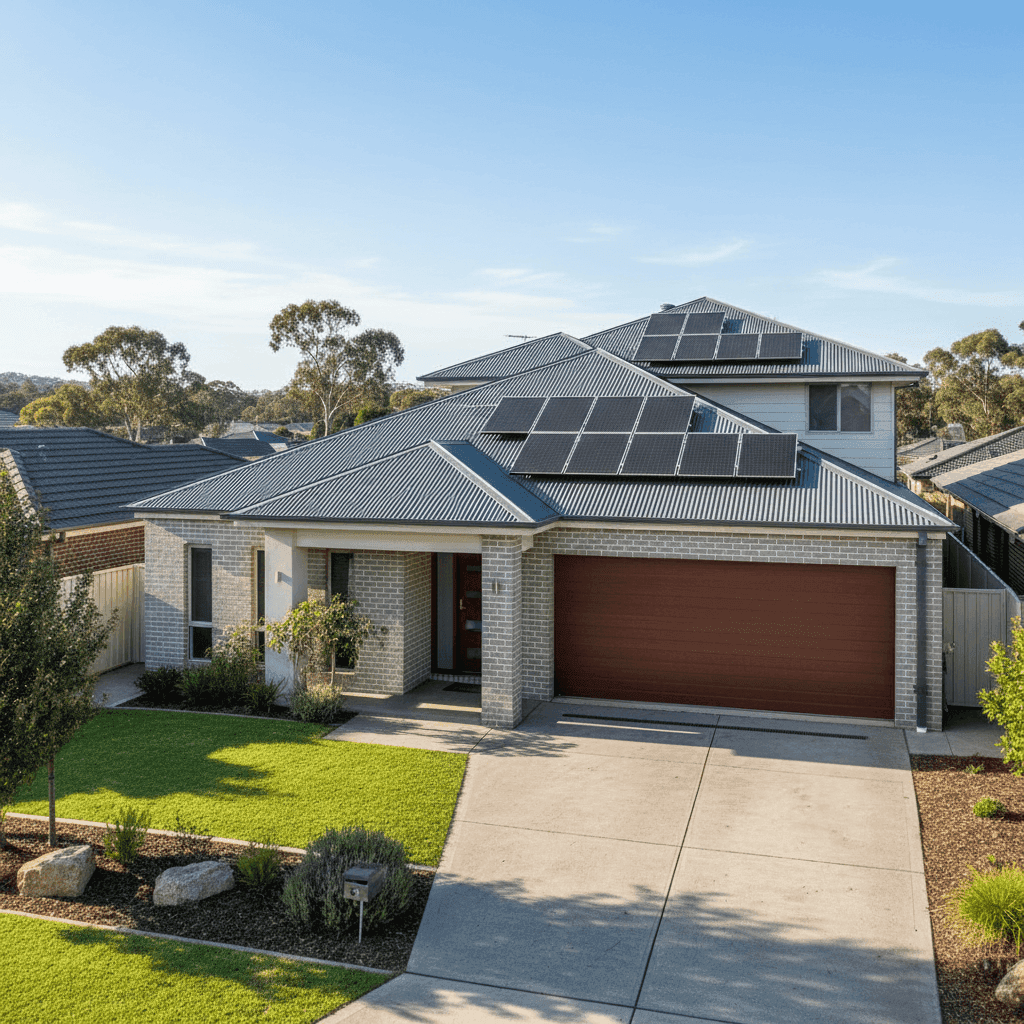
If you own a free standing home in Endeavour Hills, VIC 3802, you're probably wondering whether your home insurance premium is competitive — or whether you're quietly overpaying year after year. This article breaks down a real quote for a four-bedroom, two-bathroom home in the suburb, compares it against local, state, and national benchmarks, and highlights the property features most likely to influence what you pay.
---
Is This Quote Fair?
The annual premium for this property came in at $971 per year (or roughly $90 per month), covering both building and contents. The building is insured for $592,000, and contents are covered for $60,000 — a fairly typical setup for a well-appointed family home.
So, is $971 a fair price? In short: yes, it's very competitive. Our pricing model rates this quote as CHEAP — meaning it sits well below the average for comparable homes in the area. The suburb's 25th percentile (the threshold below which only 25% of quotes fall) sits at $1,014 per year, and this quote comes in under even that mark. That's a strong result.
To put it another way, the majority of homeowners in Endeavour Hills are paying significantly more for their cover. If your current insurer is charging you closer to the suburb average of $1,590 per year — or higher — it may be worth shopping around.
---
How Endeavour Hills Compares
Understanding where Endeavour Hills sits in the broader insurance landscape is useful context for any homeowner.
| Benchmark | Average Premium |
|---|---|
| Endeavour Hills (suburb) | $1,590/yr |
| Endeavour Hills (median) | $1,652/yr |
| Casey LGA | $2,122/yr |
| Victoria (state) | $2,921/yr |
| National average | $2,965/yr |
Based on 105 quotes collected for the Endeavour Hills area.
What stands out immediately is how much cheaper Endeavour Hills is compared to the rest of Victoria and the national average. The suburb average of $1,590 is roughly 46% below the Victorian state average of $2,921, and nearly half the national average of $2,965. Even the Casey LGA average of $2,122 sits well above what Endeavour Hills homeowners typically pay.
This is encouraging news for locals. The suburb appears to be a relatively low-risk area from an insurer's perspective, which translates into more affordable premiums across the board. You can explore the full pricing data for this suburb at CoverClub's Endeavour Hills stats page, or compare it against all of Victoria and the national picture.
---
Property Features That Affect Your Premium
Every home is different, and insurers weigh up a range of property characteristics when calculating your premium. Here's how the features of this particular home are likely to influence its pricing:
Brick Veneer Walls & Colorbond Roof
Brick veneer is one of the most common external wall types in Australian suburbia, and insurers generally view it favourably. It offers solid fire resistance and durability without the full cost of double-brick construction. Paired with a steel Colorbond roof — which is highly resistant to fire, wind, and corrosion — this combination typically attracts competitive premiums. Colorbond in particular is well-regarded in Victoria's variable climate, where summer heat and occasional storms can put older roofing materials under stress.
Slab Foundation
A concrete slab foundation is standard for modern builds and is generally considered low-risk by insurers. There's no subfloor cavity to worry about, and slabs tend to perform well in the relatively stable soil conditions found across much of Melbourne's south-eastern suburbs.
New Build (2023)
This home was built in 2023, making it essentially brand new. Newer homes benefit from modern building codes, updated wiring and plumbing standards, and materials that meet current fire and safety regulations. Insurers typically reward newer properties with lower premiums, as the likelihood of structural defects or ageing infrastructure claims is much reduced.
Solar Panels
Solar panels are noted on this property. While they add value to the home, they can also add a small amount of complexity to insurance — panels need to be covered for damage, and some insurers factor in the replacement cost. It's worth confirming with your insurer that your solar system is explicitly included in your building sum insured.
Ducted Climate Control
Ducted heating and cooling systems are a feature insurers take note of, primarily because they represent a meaningful portion of the home's value. Ensuring your building sum insured accounts for the replacement cost of this system is important when setting your coverage level.
Timber & Laminate Flooring
Timber and laminate flooring can be more susceptible to water damage than tiles, which may have a marginal effect on contents and building claims. That said, for a modern home with quality finishes, this is unlikely to significantly shift your premium.
No Pool
The absence of a swimming pool removes one potential liability factor from the equation. Pools can add to both the building sum insured and, in some cases, the liability component of a policy.
---
Tips for Homeowners in Endeavour Hills
Even if your current premium looks competitive, there are always ways to optimise your cover and make sure you're getting genuine value.
- Review your building sum insured regularly. Construction costs have risen sharply in recent years. A home built in 2023 may already be more expensive to rebuild than when it was first insured, especially with labour and material costs continuing to climb. Use a building cost calculator or speak with a quantity surveyor to ensure your $592,000 sum insured still reflects current rebuild costs.
- Confirm your solar panels are covered. As mentioned above, solar systems aren't always automatically included in standard building policies. Check your Product Disclosure Statement (PDS) to verify coverage, and consider whether the replacement value of your panels is reflected in your building sum insured.
- Consider your excess carefully. This quote carries a $2,000 building excess and a $600 contents excess. A higher excess generally lowers your premium, but make sure you could comfortably cover that amount out of pocket in the event of a claim. If $2,000 would cause financial stress, it may be worth paying a slightly higher premium for a lower excess.
- Don't set and forget. Insurance is one of those things that's easy to renew automatically without checking whether you're still getting a good deal. Endeavour Hills has a wide spread of premiums — from around $1,014 at the 25th percentile to $1,972 at the 75th — meaning the difference between a good deal and an average one can be close to $1,000 per year. Comparing quotes annually takes minutes and can save you significantly.
---
Compare Your Quote with CoverClub
Whether you're insuring a new home or reviewing an existing policy, CoverClub makes it easy to see how your premium stacks up. With real quote data from across Australia, you can quickly understand whether you're paying a fair price — or whether it's time to switch. Get a home insurance quote today and find out where you stand.