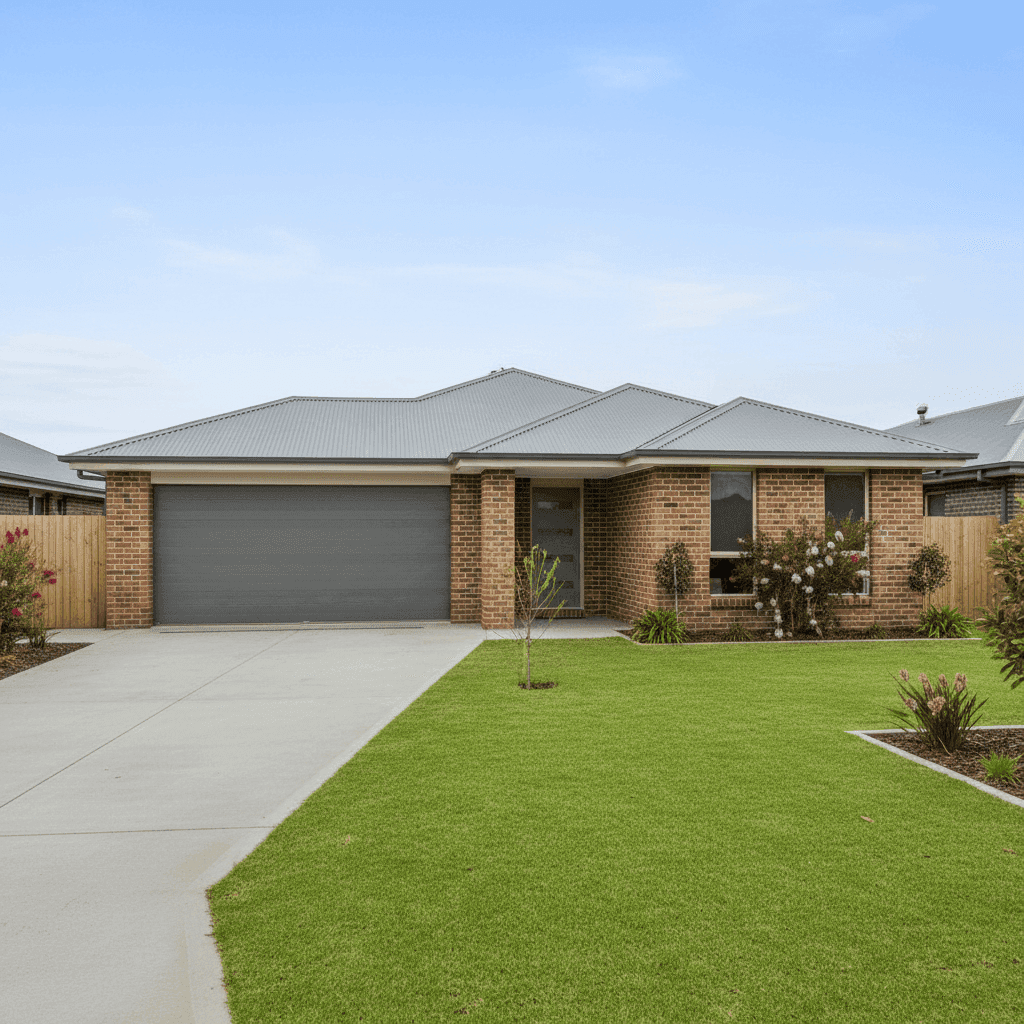
If you own a free standing home in Enfield, VIC 3352, you're probably curious about whether you're paying a fair price for home and contents insurance. This article breaks down a real insurance quote for a four-bedroom, two-bathroom brick veneer home in Enfield, comparing it against local, state, and national benchmarks — so you can make a more informed decision at renewal time.
---
Is This Quote Fair?
The quote in question comes in at $2,301 per year (or roughly $225 per month) for combined home and contents cover, with a building sum insured of $766,000 and contents valued at $50,000. Both the building and contents excess are set at $1,000 each.
Our pricing analysis rates this quote as CHEAP — below average for the area. That's genuinely good news for the homeowner. It suggests the insurer has assessed the risk profile of this property favourably, and the premium reflects that.
To put it in perspective: the Victorian state average sits at $3,000 per year, meaning this quote is approximately $699 cheaper than what the typical Victorian homeowner pays. That's a meaningful saving — nearly 23% below the state average — for what appears to be comprehensive cover.
---
How Enfield Compares
Understanding where Enfield sits in the broader insurance landscape helps you gauge whether your own premium is reasonable. Here's how the numbers stack up:
| Benchmark | Annual Premium |
|---|---|
| This Quote | $2,301 |
| LGA (Corangamite) Average | $2,766 |
| VIC State Average | $3,000 |
| VIC State Median | $2,718 |
| National Average | $5,347 |
| National Median | $2,764 |
A few things stand out here. First, this quote beats the Corangamite LGA average of $2,766 by $465, which suggests it's competitively priced even within the local government area. Second, the national average of $5,347 is strikingly high by comparison — largely driven by elevated premiums in cyclone-prone regions of Queensland and Western Australia, as well as flood-affected areas across New South Wales.
Enfield, sitting in regional Victoria, benefits from a relatively benign natural hazard profile. The area is not classified as a cyclone risk zone, which immediately removes one of the biggest premium loading factors that affects homeowners in northern Australia.
You can explore more local pricing data on the Enfield suburb stats page, or broaden your view with Victoria-wide insurance statistics and national home insurance data.
---
Property Features That Affect Your Premium
Insurance underwriters don't just look at your postcode — they assess the specific characteristics of your home to calculate risk. Here's how the features of this Enfield property likely influence the premium:
Brick Veneer Walls
Brick veneer is one of the most common and well-regarded external wall materials in Australia. It offers solid fire resistance and durability, which insurers generally view favourably. Compared to timber-clad or weatherboard homes, brick veneer properties often attract lower premiums due to reduced fire spread risk.
Steel / Colorbond Roof
A Colorbond steel roof is a popular choice in regional Victoria, and for good reason. It's lightweight, durable, and highly resistant to ember attack — a significant consideration in bushfire-prone areas. From an insurance perspective, metal roofing typically performs better than older materials like terracotta tiles or asbestos sheeting, contributing to a more favourable risk profile.
Concrete Slab Foundation
Slab-on-ground construction is structurally sound and less susceptible to certain types of movement damage compared to pier-and-beam or suspended floors. This can reduce the likelihood of subsidence-related claims, which insurers take into account.
Construction Year: 2002
A home built in 2002 benefits from relatively modern building codes, including improved standards for wind resistance and energy efficiency. It's young enough to avoid the significant maintenance concerns associated with older homes, but established enough that any early construction defects would likely have already surfaced.
Ducted Climate Control
The presence of ducted climate control is worth noting. While it adds to the overall replacement value of the home (reflected in the $766,000 sum insured), it's a standard inclusion in many regional Victorian homes and doesn't typically create a significant premium loading on its own.
No Pool, No Solar Panels
The absence of a swimming pool removes a liability risk that can increase premiums for some policies. Similarly, no solar panels means there's no additional equipment to insure or potential roof-penetration risk to factor in — keeping things straightforward for the underwriter.
---
Tips for Homeowners in Enfield
Whether you're reviewing your current policy or shopping around for the first time, here are four practical steps to make sure you're getting the best value:
- Review your sum insured annually. Building costs in regional Victoria have risen considerably in recent years. Make sure your $766,000 sum insured still reflects the true cost of rebuilding your home from scratch — not just its market value. Underinsurance is one of the most common and costly mistakes homeowners make.
- Bundle building and contents cover. As demonstrated by this quote, combining home and contents insurance with a single insurer often results in a better overall price than taking out two separate policies. It also simplifies the claims process if you ever need to make one.
- Consider your excess carefully. A $1,000 excess on both building and contents is fairly standard, but increasing your excess can meaningfully reduce your annual premium. If you have a solid emergency fund and are unlikely to make small claims, a higher excess could save you money over time.
- Compare quotes at renewal — every year. Insurers regularly reprice their books, and loyalty doesn't always pay. Even if your current premium seems reasonable, running a comparison at renewal takes only a few minutes and could reveal a better deal. The Corangamite LGA average of $2,766 shows there's a range of pricing in this area, so it pays to shop around.
---
Ready to Compare?
Whether you're a first-time buyer or a long-term Enfield resident, getting the right home insurance at the right price matters. At CoverClub, we make it easy to compare real quotes from leading Australian insurers — so you can see exactly where your premium sits against the market.
Get a home insurance quote today and find out if you could be paying less for the same level of cover.