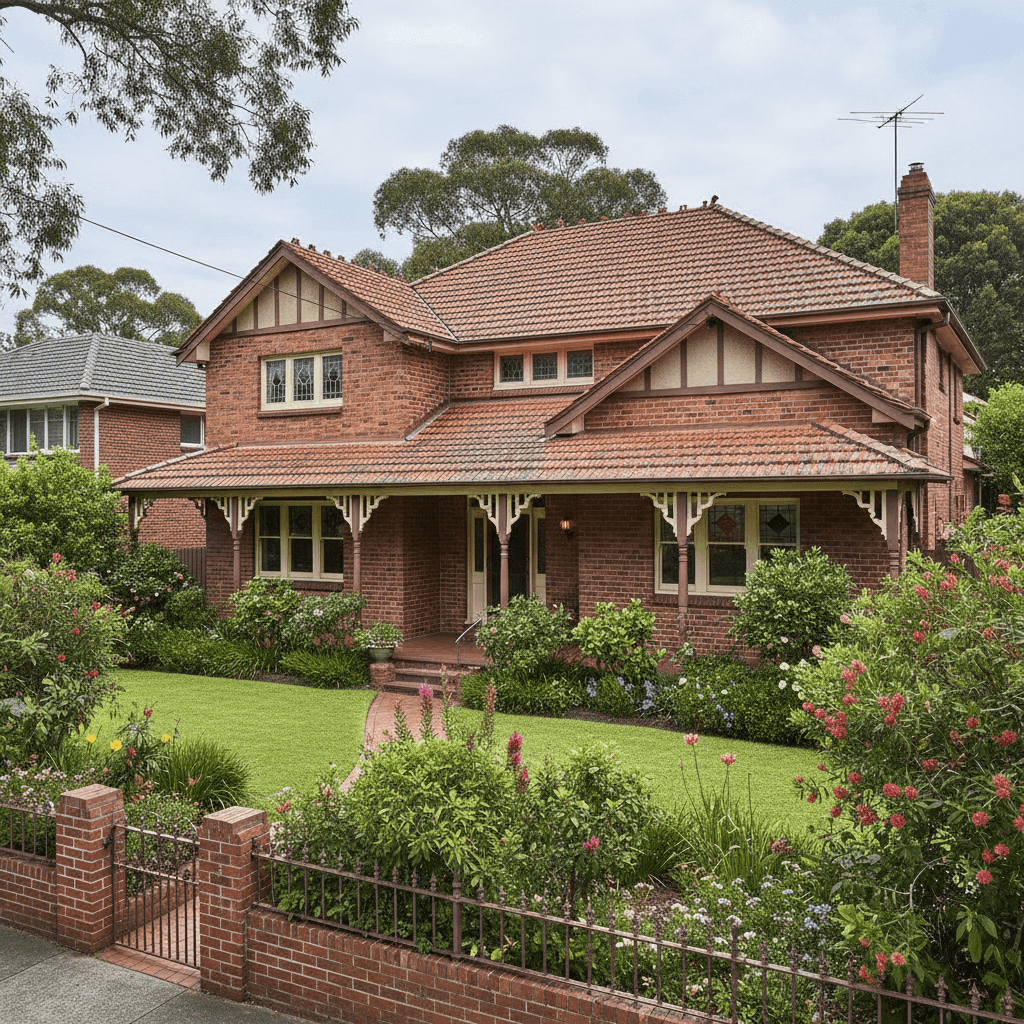
Epping is one of Sydney's most sought-after upper north shore suburbs — a leafy, established neighbourhood where Federation and interwar homes line wide, tree-canopied streets. If you own a free standing home here, you already know the premium that comes with the postcode. But what about your insurance premium? This article breaks down a real home and contents insurance quote for a five-bedroom, three-bathroom free standing home in Epping NSW 2121, and helps you understand exactly what's driving the cost.
---
Is This Quote Fair?
The quote in question comes in at $3,031 per year (or $298/month), covering both building and contents for a substantial heritage property with a building sum insured of $1,844,000 and contents valued at $50,000.
Our price rating for this quote is Expensive (Above Average) — and the data backs that up when viewed through a local lens.
Compared to the Epping suburb average of $1,583/year, this quote is nearly double what other homeowners in the area are paying. Even against the suburb's 75th percentile of $1,895/year, this quote sits well above the pack.
However, context matters enormously here. This isn't a standard three-bedroom brick veneer on a modest block. We're talking about a 367 sqm heritage-listed home built in 1930, with above-average fittings, timber flooring, a stump foundation, and a replacement cost of $1.844 million. These factors push the premium into territory that most Epping homes simply don't occupy.
When benchmarked against NSW state averages ($3,801/year average, $3,410 median) and the national average of $2,965/year, the quote actually looks more reasonable — sitting below the NSW average and only modestly above the national average. The Hornsby LGA average of $3,666/year also provides useful context, placing this quote comfortably below what many comparable properties in the region are paying.
So while the "expensive" rating is accurate relative to the suburb, it's worth keeping in mind that this property is far from typical.
---
How Epping Compares
Here's a snapshot of how this quote stacks up across different benchmarks:
| Benchmark | Premium |
|---|---|
| This Quote | $3,031/yr |
| Epping Suburb Average | $1,583/yr |
| Epping Suburb Median | $1,636/yr |
| Epping 75th Percentile | $1,895/yr |
| Hornsby LGA Average | $3,666/yr |
| NSW State Average | $3,801/yr |
| NSW State Median | $3,410/yr |
| National Average | $2,965/yr |
| National Median | $2,716/yr |
Note: Suburb sample size is 6 quotes, so the local figures should be treated as indicative rather than definitive.
What this table reveals is that Epping's local premiums are actually quite low compared to the broader state and national picture — likely reflecting the suburb's relatively low natural hazard risk profile (no cyclone zone, minimal flood exposure in most streets) and the predominantly solid brick construction common in the area. This particular property, however, carries a unique risk profile that justifies a higher premium.
You can explore more local data on the Epping insurance stats page.
---
Property Features That Affect Your Premium
Several characteristics of this home have a direct bearing on what insurers charge. Understanding them helps you have more informed conversations with your insurer — and potentially find savings.
Heritage Overlay
Perhaps the single biggest premium driver here. Heritage-listed properties are subject to strict council controls on materials and construction methods. If the roof, façade, or period features are damaged, insurers must fund like-for-like restoration using approved tradespeople and authentic materials — which can cost significantly more than a standard repair. This risk is baked into the premium.
Age and Construction (1930, Brick Veneer, Stumps)
A home built in 1930 carries inherent age-related risks: older electrical wiring, ageing plumbing, and the potential for structural wear that modern builds don't face. The stump foundation, while common for this era, can be susceptible to movement and termite activity over time. Brick veneer walls are generally well-regarded by insurers, but the combination of age and foundation type adds complexity.
Roof Type (Tiles)
Tiled roofs are durable and widely accepted by insurers, but older terracotta or Marseille-style tiles common on 1930s homes can crack or shift, and replacement tiles for heritage properties may need to be sourced specially. This can elevate claims costs.
Size and Fittings Quality
At 367 sqm with above-average fittings, this is a large, high-quality home. The $1,844,000 building sum insured reflects the genuine cost of rebuilding a home of this calibre — and a higher sum insured means a higher premium. Underinsuring to save on premiums would be a costly mistake here.
Ducted Climate Control
Ducted air conditioning systems are an insurable asset and can be expensive to repair or replace. Their inclusion contributes modestly to the overall premium.
---
Tips for Homeowners in Epping
1. Review your building sum insured regularly Construction costs have risen sharply in recent years. For a heritage home, rebuild costs can escalate quickly due to specialist labour and materials. Make sure your sum insured reflects current replacement costs — not what you paid for the property, and not what it's worth on the market.
2. Document your heritage features Keep detailed records, photos, and valuations of your home's heritage elements: original cornices, fireplaces, leadlight windows, period joinery. In the event of a claim, this documentation can significantly speed up the process and help ensure like-for-like restoration rather than a cheaper modern substitute.
3. Compare quotes — but compare apples with apples The Epping suburb average of $1,583/year might look appealing, but it almost certainly reflects smaller, newer, or less complex properties. When shopping around, ensure every insurer is quoting on the same sum insured, the same excess, and the same level of cover for heritage and period features. Get a tailored quote at CoverClub to see what's available for your specific property.
4. Consider your excess settings strategically This quote carries a $3,000 building excess and $1,000 contents excess. Opting for a higher excess is a common way to reduce premiums, but for a heritage property where even minor repairs can be costly, it's worth modelling whether a lower excess might offer better value over time — particularly if you're concerned about storm or water damage to period features.
---
Ready to Find a Better Deal?
Whether this quote is the right one for your home or not, it always pays to compare. CoverClub makes it easy to see multiple home and contents insurance options side by side, tailored to your specific property in Epping. Start your comparison today at CoverClub — it takes just a few minutes and could save you hundreds of dollars a year.