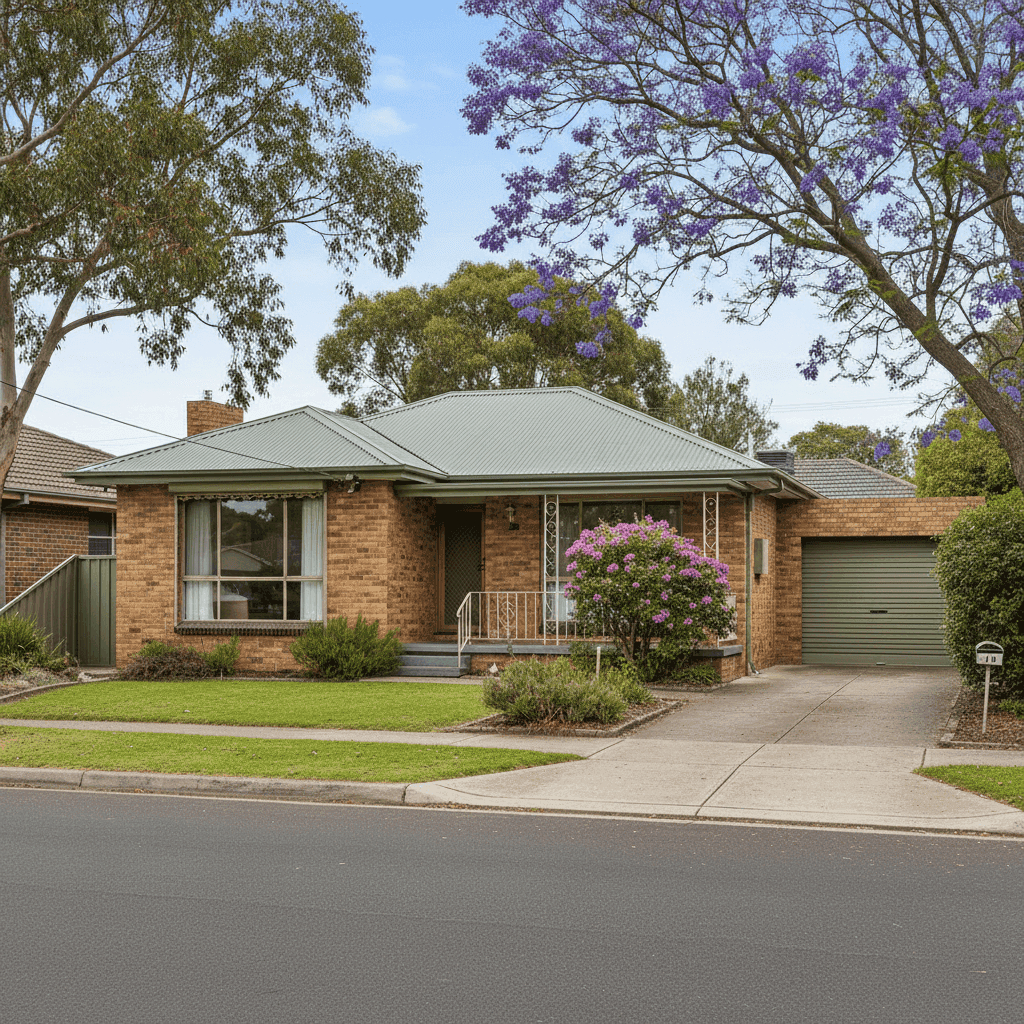
If you own a four-bedroom free standing home in Epping, VIC 3076, you're probably wondering whether the premium sitting in your inbox is actually competitive — or whether you're quietly paying more than you need to. This article breaks down a real home and contents insurance quote for a brick veneer property in Epping, comparing it against suburb, state, and national benchmarks so you can make a genuinely informed decision.
---
Is This Quote Fair?
The quote in question comes in at $1,622 per year (or roughly $155 per month) for combined home and contents cover, with a building sum insured of $375,000 and contents valued at $50,000. Both the building and contents excess sit at $500.
Our price rating for this quote is FAIR — Around Average.
That assessment is well supported by the data. Based on 68 quotes collected for Epping (3076), the suburb average premium is $1,700 per year, which means this quote lands about $78 below the local average — a modest but meaningful saving. It's also comfortably within the interquartile range of $1,275 to $1,852, confirming it's neither a standout bargain nor an overpriced outlier.
In short: this is a reasonable premium for the area, but there's still room to do better if you shop around.
---
How Epping Compares to the Rest of Victoria and Australia
One of the more striking takeaways from this analysis is just how affordable Epping is relative to broader benchmarks.
| Benchmark | Average Premium | Median Premium |
|---|---|---|
| Epping (3076) | $1,700/yr | $1,511/yr |
| LGA: Whittlesea | $1,774/yr | — |
| Victoria | $3,000/yr | $2,718/yr |
| National | $5,347/yr | $2,764/yr |
The quote of $1,622 sits 46% below the Victorian state average and is a fraction of the national average of $5,347 — though it's worth noting that national figure is heavily skewed by high-risk regions in Queensland and Western Australia where cyclone, flood, and bushfire exposure can send premiums soaring.
Even against the Victorian state average, Epping homeowners are in a relatively enviable position. The suburb's median of $1,511 suggests that roughly half of all quotes in the area come in below that figure, which means savvy shoppers who compare multiple insurers could potentially land something even more competitive.
For a broader picture of how premiums vary across the country, the national insurance statistics page is a useful reference point.
---
Property Features That Affect Your Premium
Insurance pricing isn't arbitrary — it's driven by a combination of location risk, construction materials, and the specific characteristics of your home. Here's how the features of this particular property are likely influencing the premium.
Brick Veneer Walls
Brick veneer is one of the most common external wall types in Melbourne's northern suburbs, and insurers generally view it favourably. It offers solid fire resistance and structural durability compared to lightweight cladding materials, which can translate to more competitive premiums.
Steel / Colorbond Roof
A Colorbond steel roof is a strong asset from an insurance perspective. It's highly resistant to ember attack (a key risk factor in many parts of Victoria), handles heavy rain well, and has a long lifespan. Insurers tend to price this construction type more favourably than older terracotta or concrete tiles that may be prone to cracking or water ingress.
Stump Foundation
The property sits on stumps, which is common for homes built in the 1980s across Melbourne's outer suburbs. While this foundation type can be susceptible to movement over time — particularly in areas with reactive clay soils — it doesn't typically attract a significant premium loading on its own.
Timber / Laminate Flooring
Timber and laminate floors can be costly to repair or replace following water damage or fire, which may factor into how insurers calculate building replacement costs. Ensuring your sum insured accurately reflects the cost to rebuild (not just the market value) is particularly important with this type of flooring.
Construction Year: 1980
A home built in 1980 is over four decades old. While many such homes are well-maintained, older properties can attract slightly higher premiums due to ageing electrical wiring, plumbing, and roofing components. If your home has been significantly renovated or rewired since construction, it's worth noting this when obtaining quotes.
No Pool, Solar, or Ducted Climate Control
The absence of a swimming pool, solar panel system, and ducted air conditioning keeps this quote relatively straightforward. Each of these additions can increase both the replacement cost and the liability exposure of a property, so their absence helps keep the premium lean.
---
Tips for Homeowners in Epping
Whether you're reviewing your current policy or shopping for the first time, here are four practical steps to make sure you're getting the best value.
1. Don't rely on a single quote. The spread between the 25th percentile ($1,275) and 75th percentile ($1,852) in Epping is nearly $600 per year — that's a significant range for essentially the same suburb and property type. Comparing at least three to four quotes gives you a much clearer sense of where the market sits.
2. Review your sum insured carefully. At $375,000, the building sum insured needs to reflect the full cost of rebuilding your home from scratch — including demolition, materials, labour, and professional fees. With construction costs rising sharply across Victoria in recent years, many homeowners find their sum insured is outdated. Underinsurance is one of the most common and costly mistakes in home insurance.
3. Consider your excess strategically. Both excesses on this policy are set at $500. Opting for a higher voluntary excess (say, $1,000 or $1,500) can reduce your annual premium noticeably. This approach works well if you have the financial buffer to cover a larger out-of-pocket cost in the event of a claim.
4. Check what's included in contents cover. With $50,000 in contents cover, it's worth doing a room-by-room audit to confirm that figure is realistic. Many households significantly underestimate the replacement value of their belongings — particularly electronics, furniture, clothing, and appliances. At the same time, if $50,000 is more than you need, reducing that figure could lower your premium.
---
Ready to Compare?
A "fair" rating means you're not being ripped off — but it also means there's a reasonable chance you could find a better deal. The only way to know for certain is to compare. At CoverClub, we make it easy to see how your current quote stacks up and explore alternatives side by side.